Choose the working end
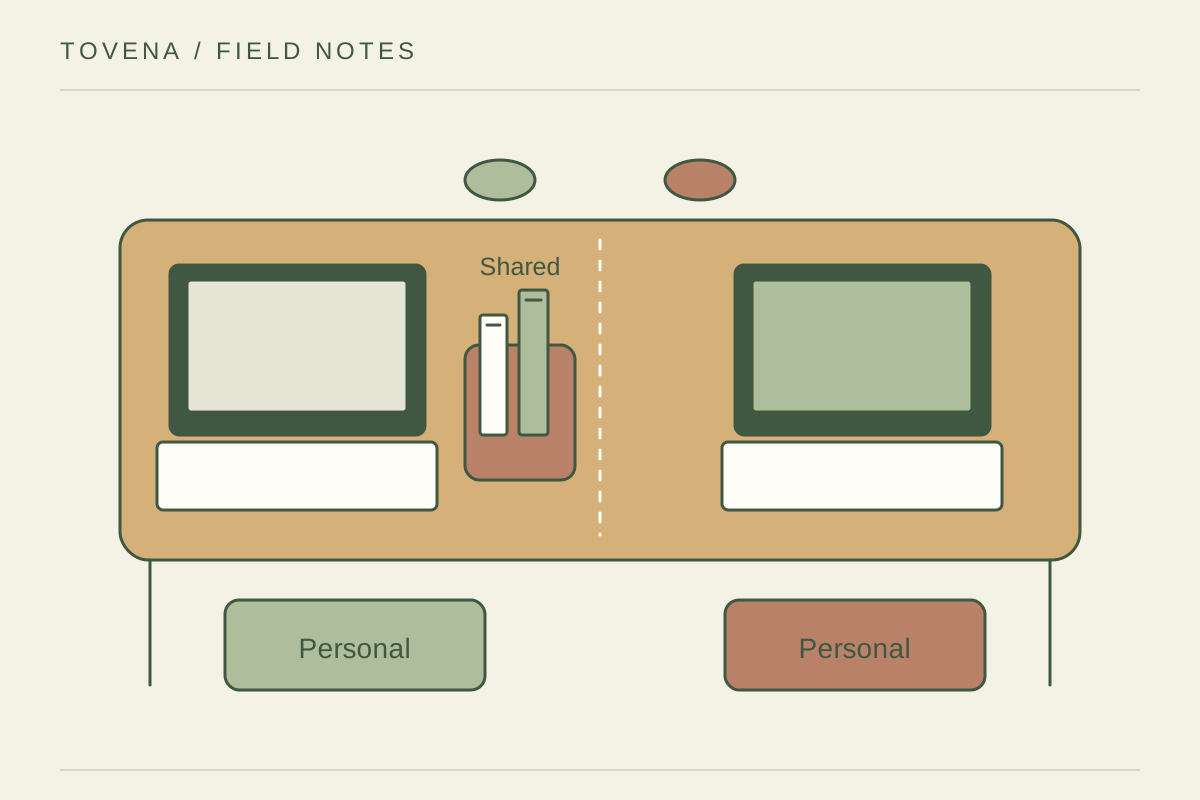
Decide which part of the table belongs to work and which must remain useful for meals. Place the laptop or monitor, keyboard if used, and notebook on that area before adding organizers. Sit with the chair you actually own and notice whether you are reaching or hunching. A dining table may need a temporary screen support and a separate keyboard for your preferred working position; test with stable items before buying dedicated accessories.
Keep one movable work kit
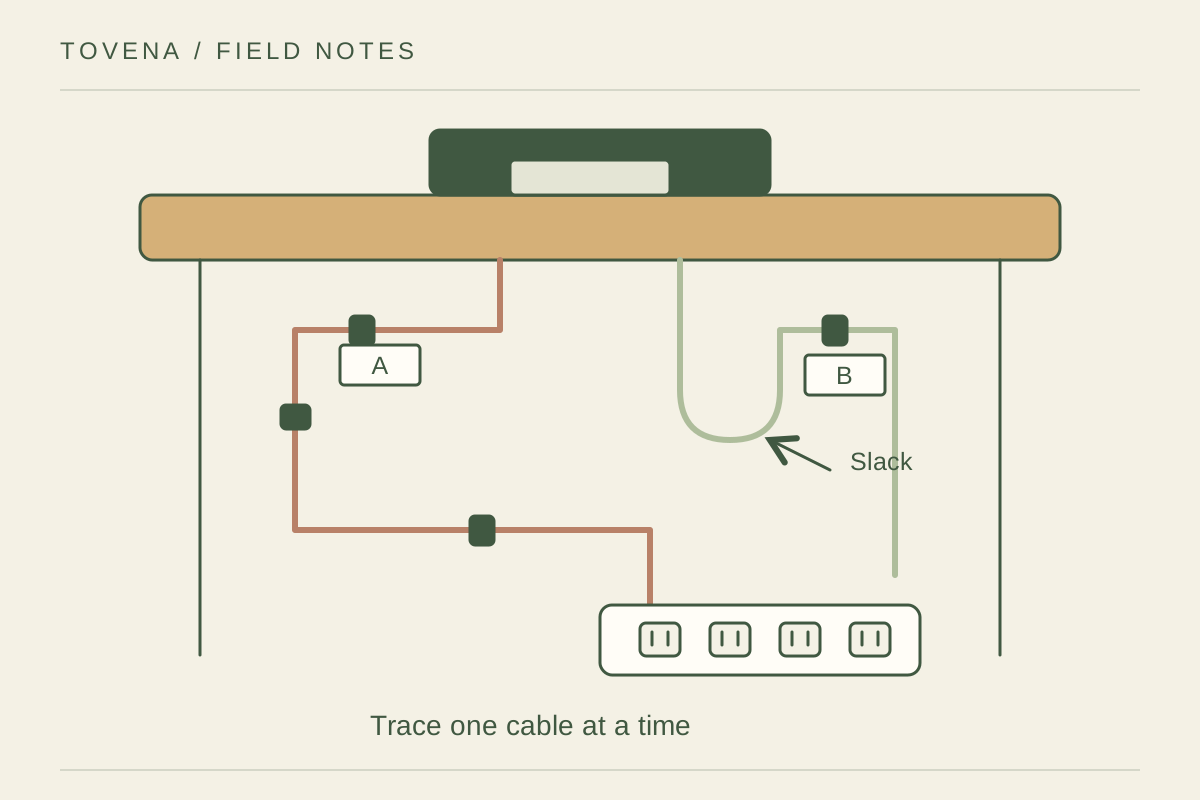
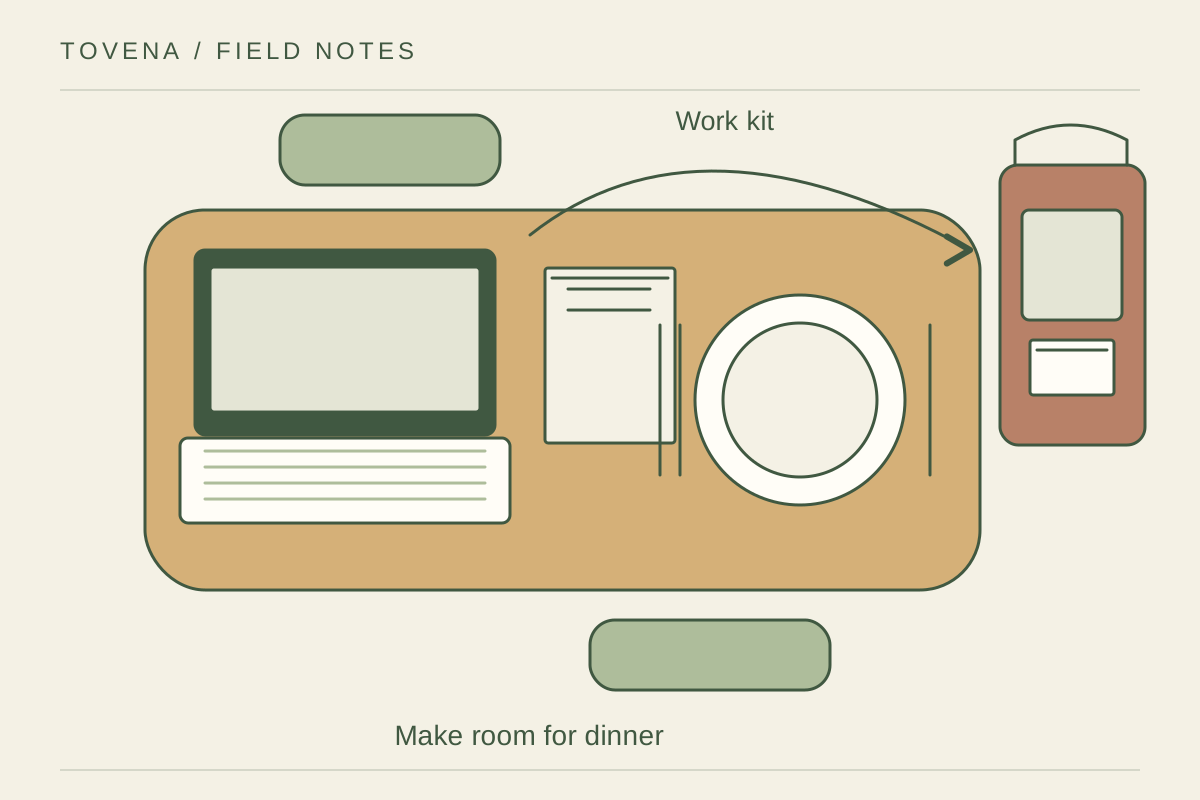
Use a tray, tote, or nearby drawer for the small items that have to leave at mealtime. Size it to the actual kit rather than allowing it to become a second office cabinet. Route the charging cable away from chairs being pulled out. Keep drinks and food separate from the electronics when the table changes roles. If someone else uses the table during your workday, agree on a clear area rather than renegotiating the whole surface every morning.
Rehearse a five-minute changeover
At the end of a trial work session, put everything away and set two places for a meal. Notice what has no home: a headset, charger, papers awaiting a decision. Give each a specific destination. Store the computer in a dry, protected place without leaving leads stretched across the room. The success test is not how polished the desk looks at noon, but whether the table can return to its other job without a long clearing exercise.