Map the interruptions
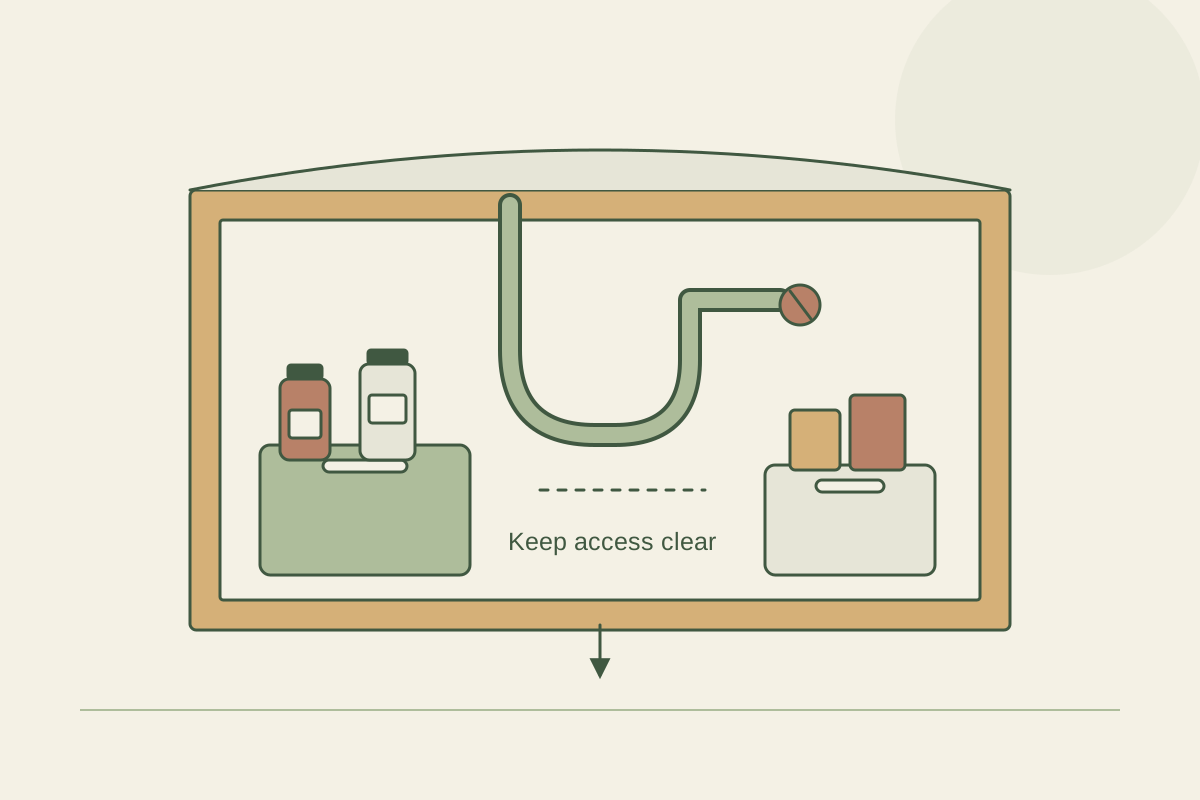
Open the cabinet and photograph the empty interior. Note the trap, flexible hoses, shutoff valves and any disposal equipment. Measure usable rectangles around them rather than recording only the cabinet width. Keep access to valves and plumbing clear; an organizer should not require dismantling before a repair. If the cabinet floor is already damp or stained, investigate that issue before adding containers. Covering it with a mat will not explain where the water came from.
Keep categories liftable
Use a small handled caddy for the supplies you carry to other rooms and a separate shallow bin for dishwashing refills. Follow product labels for storage and keep products in their original packaging. A removable tray can make small drips visible, but check beneath it rather than assuming it keeps the cabinet dry. Avoid fitting tall items tightly around a pipe: bottles should lift out vertically without scraping or pushing against plumbing.
Buy for the awkward shape
A narrow bin beside the pipes may work better than a full-width two-tier rack. Check whether pull-out rails clash with hinges and whether an upper shelf blocks the tallest bottle. Leave room to put an item back without rearranging everything else. After a week, remove duplicates you rarely reach for and store them in another appropriate place. This cabinet needs to remain inspectable and practical; it does not have to resemble a miniature pantry.