Start with the pan you use tonight
Take the cookware out and set the pieces you use for an ordinary week on the counter. Keep their matching lids beside them. The small saucepan for oatmeal deserves a different position from the stockpot used a few times a year. This exercise is about access, not making every pan fit into one impressive tower.
Open the cupboard as you normally would while cooking. Notice which side is easiest to reach, whether a door stops against an appliance, and where you can safely set a pan down. Assign that easy position to a daily pan. A cupboard can look tidy and still be frustrating if every dinner begins by unloading it.
Measure handles as well as round bases
Measure the usable shelf depth from the closed door to the back, allowing for hinges and any center stile. Then measure a pan from the far edge of its bowl to the tip of its handle. A round pan may fit on a shelf while its handle prevents the door from closing. Check that before choosing an organizer.
Try the proposed arrangement with the real cookware and a strip of removable tape marking the front edge. Put the tallest lid in place too. Move the door slowly through its swing without forcing it. If a handle must be turned every time, decide whether that small movement is acceptable or whether another shelf would be easier.
Use short stacks where nesting makes sense
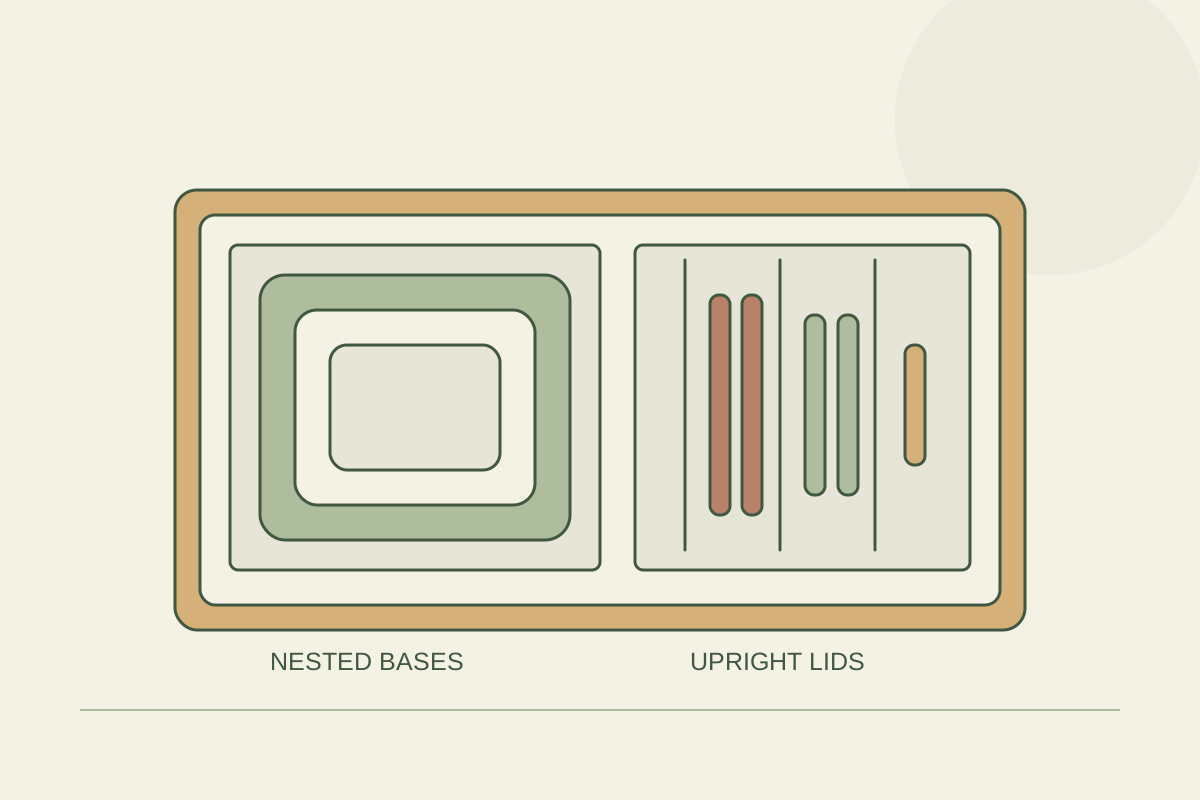
Nest compatible pots in a short group rather than combining every material and shape. Follow each cookware maker’s storage instructions, particularly for coated surfaces. If a protector is recommended, include it in the trial stack because it changes the height. Store everything clean and dry. Do not use storage space as a reason to damage the finish.
Test the middle pot, not just the one on top. Can you remove it while supporting the pieces above without balancing them on the floor? If not, split the stack into two groups or give the daily pot a separate position. A modest amount of empty space can make the cupboard easier to use than a tightly packed arrangement.
Give lids a position their knobs can occupy
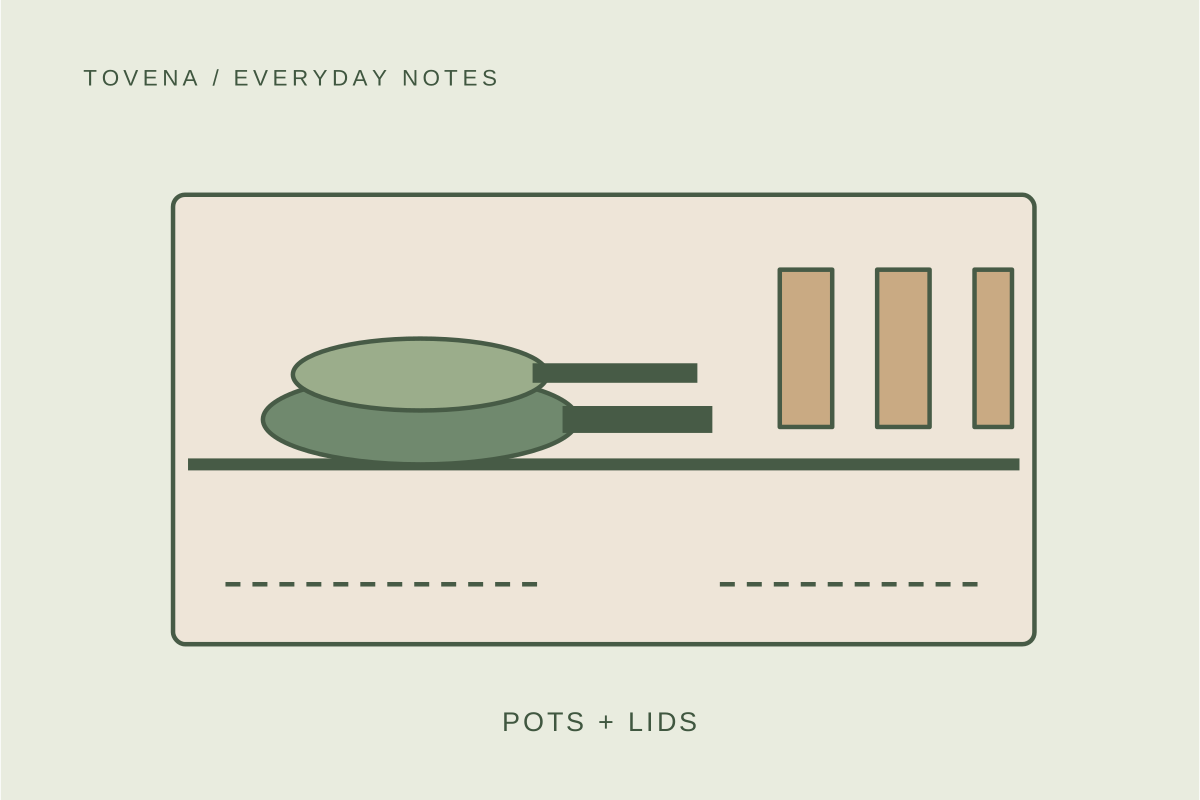
A freestanding lid rack can keep individual lids separated; IKEA’s VARIERA is one example of that format. That does not mean every rack suits every lid. Compare the available slots with thick rims, long handles, and tall knobs. Place the largest lid in the intended position first, then add the smaller pieces around it.
A cabinet-door holder needs a second test: what happens when the door closes? A lid can collide with the shelf or the pans behind it. Follow the holder’s mounting and load instructions and obtain any permission required for a rental. If installation is unsuitable, a freestanding rack on the shelf is a simpler arrangement to trial.
Separate occasional pieces without losing track
Move a rarely used roasting pan or large stockpot to a less convenient cupboard only if you can retrieve it comfortably. Keep a short note inside the main cabinet identifying its location. A forgotten pan in a distant closet does not help, but occasional cookware need not take the position you reach for several times a day.
Keep the occasional piece’s lid with it unless another method is clearly easier. You might place one lid upside down on its own pot if the manufacturer permits that arrangement and it sits securely. Avoid putting heavy cookware high overhead merely because the space is empty. Choose storage you can use without awkward lifting.
Check the arrangement after real meals
After several cooking and washing cycles, notice which pieces are left on the counter. A pan that never gets put away may have a difficult storage position rather than an undisciplined owner. Move that piece to the front, shorten its stack, or remove the unnecessary divider. Change one thing so the effect is easy to judge.
Before keeping a new rack, put every piece away at once. Include the pan that is usually in the dishwasher and the lid drying by the sink. Open and close the cupboard again. The useful result is a set of positions that still works when everything is clean, not a photograph taken while half the cookware is missing.
Compare the options
| Arrangement | Works well when | Check first |
|---|---|---|
| Short nested groups | Compatible pots share a shape | Surface care and middle-pot access |
| Separate vertical slots | Pans can stand securely | Rack load rating and handle clearance |
| A lid rack beside pots | Lid knobs make stacking awkward | Slot spacing and closed-door clearance |
Your checklist
0 / 5 completed
Common questions
Should every lid stay on its pot?
Only when that arrangement fits and is easy to use. A separate lid position often makes a short nested group more practical.
Can I store heavy pans on a door?
Use only a holder and mounting method approved for that load and door. Otherwise use a suitable shelf.
Do I need a new organizer?
Try rearranging the actual pans first. Buy only for a specific access problem the trial reveals.