Gather the pieces across a complete washing cycle
Bring together the containers in cupboards, lunch bags, and the dishwasher. Account for pieces currently holding food in the refrigerator before deciding a lid is an orphan. Give unmatched pieces a small temporary box and check again after the next washing cycle. That is easier than hunting through several cupboards every time you pack lunch.
Try lids on their intended bases. Similar diameter does not guarantee a proper fit. Look for manufacturer names, model marks, or size information when several container families look alike. Set damaged pieces aside and consult the maker’s replacement or disposal guidance rather than keeping them in the everyday stack.
Choose attached lids or separate storage deliberately
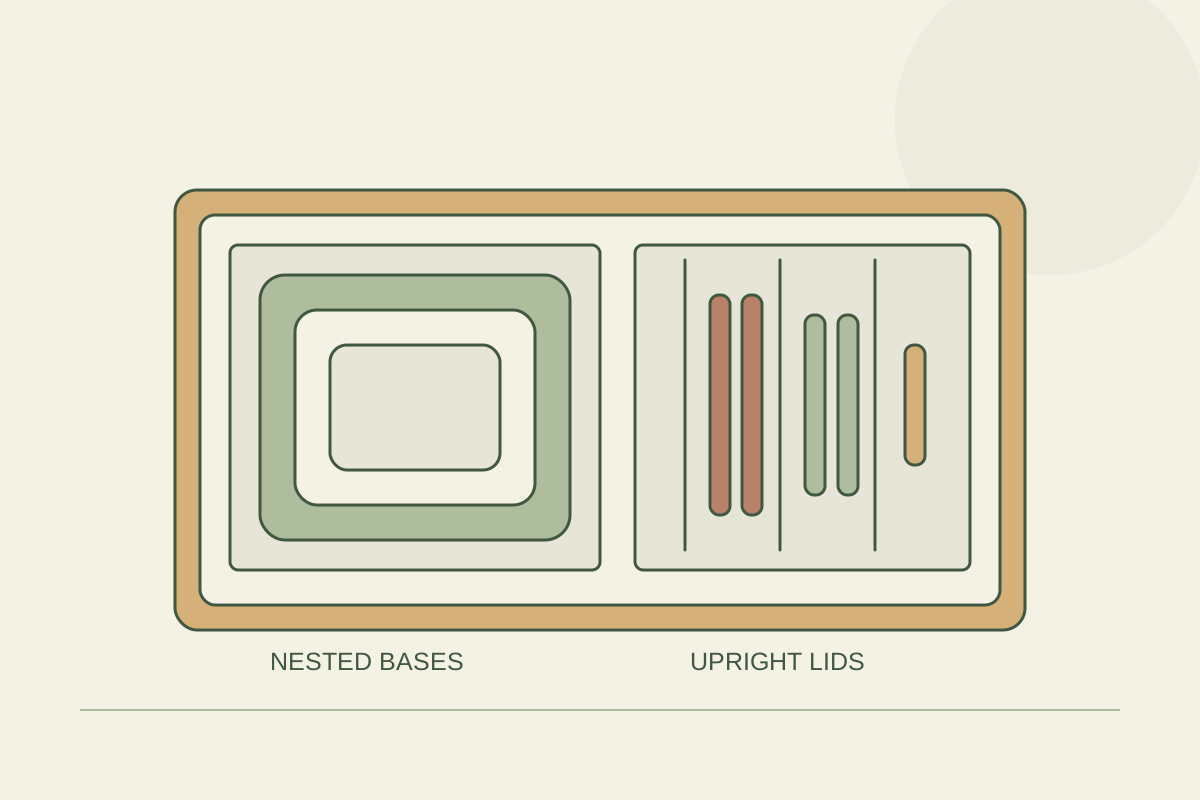
Lids attached work well for a small collection used constantly: each piece comes out ready to fill. The tradeoff is shelf space. Nested bases with lids upright can hold more compatible pieces in a smaller footprint, but tall stacks add handling when the size you need is at the bottom.
Separate lids by container family or broad shape if that helps you recognize the match. A rack does not need one slot for every identical lid. Several can share a roomy section if removing one does not pull the rest out. Small lids often need a shallow bin so they cannot disappear between larger pieces.
Check the largest pieces before buying a rack
Measure the cupboard opening, the shelf height above, and the drawer’s internal dimensions. Hold the tallest lid in its proposed upright position and close the drawer slowly without forcing it. A lid may fit while the drawer is open yet catch on the cabinet frame during the final part of closing.
For a hypothetical 18-inch-wide drawer, a 10-inch-wide nest of bases beside a 6-inch-wide lid bin leaves 2 inches across before accounting for divider feet and handles. Make a paper outline, then set the real pieces on it. The arithmetic only describes the footprint; it does not prove your fingers can grip and remove a lid.
Reserve room for the containers that are in use
An organizer that is already full while several containers are holding dinner has nowhere for those pieces to return. Lay out the complete collection when choosing the arrangement. Keep frequently used sizes toward the front. A large occasional container may deserve a less convenient shelf rather than crowding everyday lunch boxes.
Let clean pieces dry before stacking them for storage. Follow each product’s directions for washing, heating, freezing, and drying; a base and its lid can have different permissions. Do not transfer assumptions from one brand or material to another. A tidy arrangement cannot make a piece suitable for a use the manufacturer does not permit.
Review the arrangement while packing real meals
A well-matched lid is useful, but finding the pair is not a food safety check. FDA guidance recommends covered containers or sealed storage bags for refrigerated foods and checking storage directions on labels. Keep relevant storage and reheating information accessible when repacking food, rather than relying on the appearance of the container.
After a few ordinary lunches, look for the piece that keeps ending up on the counter. Its section may be too tight, too far back, or confused with another size. Move one divider or shorten the stack. Replace a repeatedly missing size only if it fills a real need; a whole new set may simply recreate the crowded cupboard.
Compare the options
| Arrangement | Useful for | Check first |
|---|---|---|
| Lids attached | Small frequently used set | Whole collection footprint |
| Nested bases and upright lids | Several compatible sizes | Stack depth and height |
| Bins by container family | Mixed shapes and brands | Clear grouping and return space |
Your checklist
0 / 5 completed
Common questions
Is it better to keep lids attached?
For a small collection, often yes: it removes a second search. A larger collection may use less room with nested bases. Compare both arrangements using every piece, including those currently in use.
What should I do with unmatched lids?
Use a small temporary holding place and check the refrigerator, dishwasher, and lunch bags. If the mate is truly missing, check for a manufacturer replacement before buying another complete set.
Can all lids share one rack?
Yes, if the rack holds them without bending, tipping, or preventing the drawer from closing. Separate small lids when they slip between larger ones. Sort by the feature that helps you recognize the correct match.