Count the dishes from one meal
Set out the plates, glasses and utensils that usually need to dry after one meal. This is a better guide than buying the largest rack that fits beside the sink. Check the tallest glass against any cabinet above and make sure the faucet still moves freely. If the rack only fits by covering the main preparation area, consider a smaller setup with a second washable mat that appears only when you have extra dishes.
Follow the water
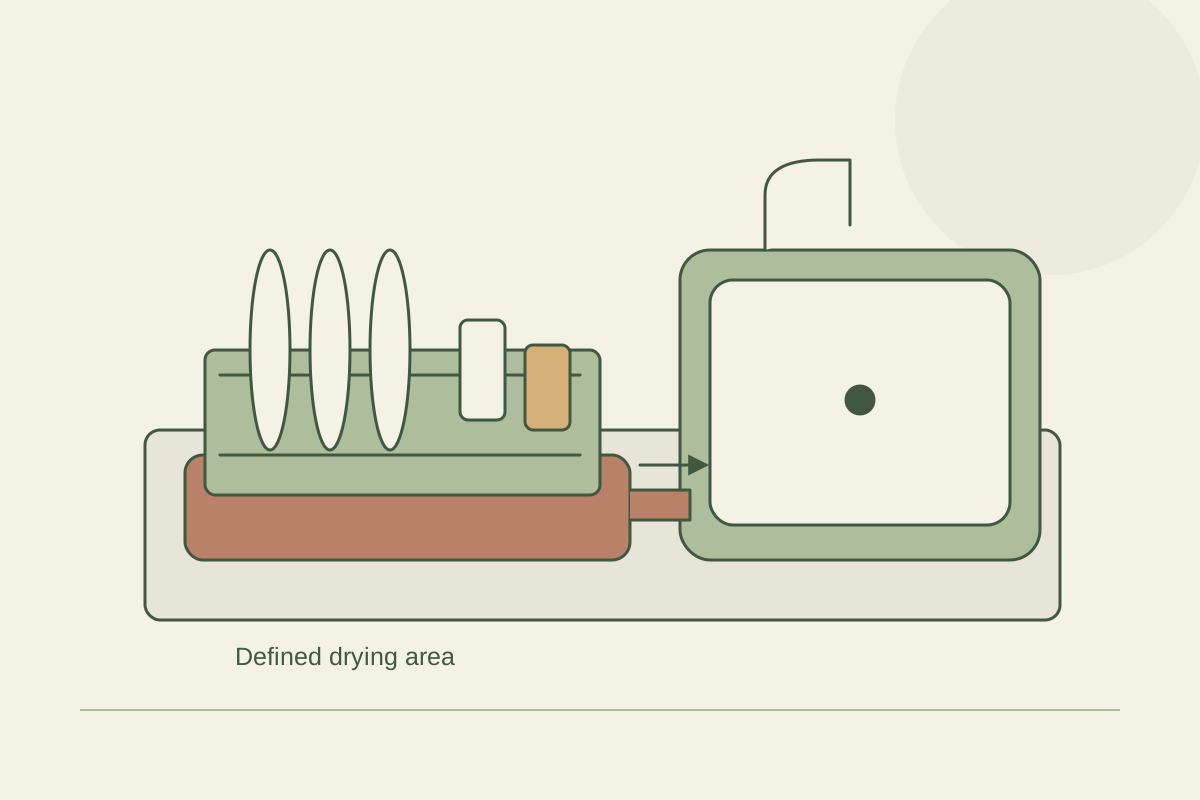
Choose a rack and tray arrangement that lets you see and empty collected water. A drain spout must actually reach the sink in your layout; product photographs cannot establish that for your counter. Keep the setup clear of the backsplash enough to wipe behind it. Follow care instructions for mats and removable parts, and do not assume a decorative fabric towel underneath can remain indefinitely without washing and drying.
Finish the cycle
A drying station becomes a second cabinet when dry dishes never leave it. Put the pieces away before starting the next round so you can see whether the rack is genuinely undersized. Keep the return route short: everyday plates should not require crossing the room around an open dishwasher. If the arrangement repeatedly overflows, change the washing rhythm or increase capacity in one deliberate step. Avoid surrounding the rack with several smaller, permanently damp landing spots. Leave space to remove the tray without first lifting every dish.