Read the local rules before choosing bins
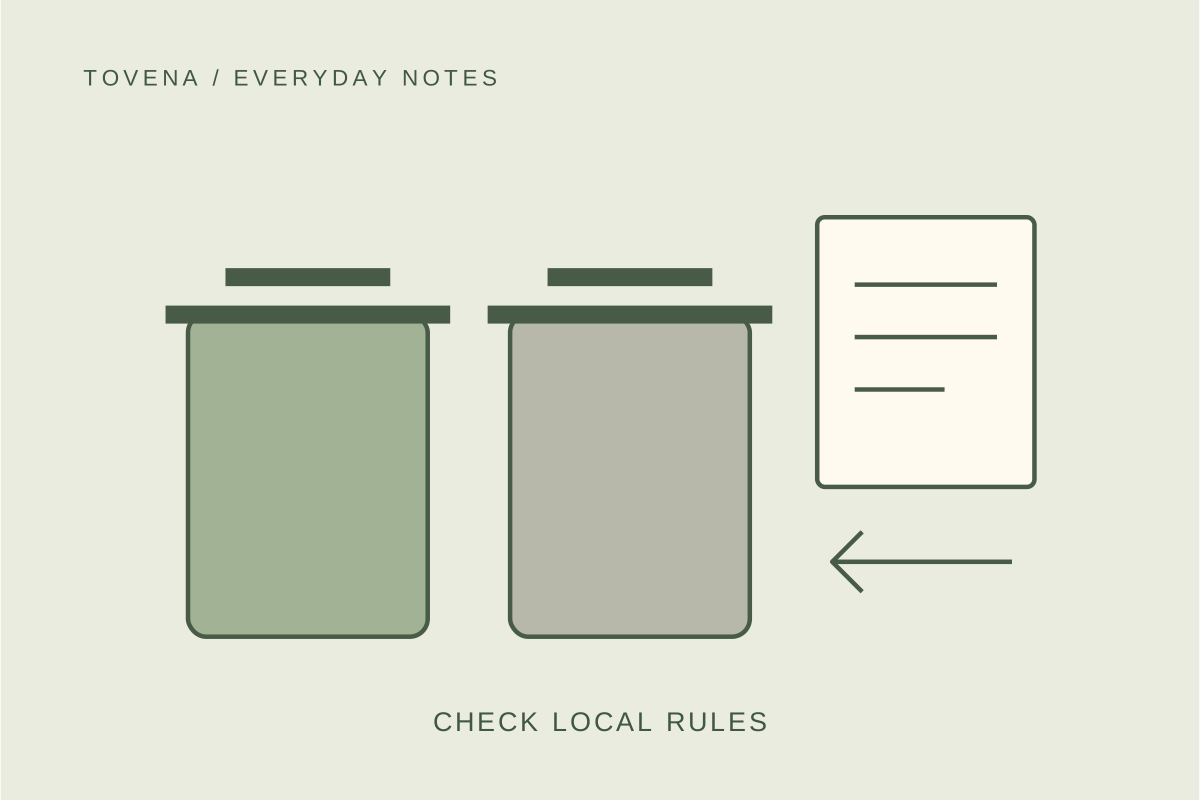
Find the current recycling guide from your city, county, building manager, or waste provider. Save its link and check whether your address receives the service described. EPA explains that accepted materials vary between local programs. Do not turn a general recycling symbol into a household rule: the local collection instructions determine what belongs in your particular bin.
Write down only the streams your home actually needs. That might be trash and mixed recycling, or separate categories required by your provider. Food-scrap collection is another local question, not an automatic extra bin. A kitchen station should reflect the service available to your household rather than a photograph of a system used in another city.
Notice what fills up first
Look at the packaging and discards from an ordinary week without handling unsafe waste. Is the problem bulky delivery cardboard, beverage containers, or frequent small trash bags? Use that information to assign space. Equal-sized matching bins can be attractive, but the compartment that fills first will determine how often the entire station needs attention.
Keep large cardboard out of a tiny kitchen bin if your building offers a suitable approved collection location. Follow its instructions for preparation and storage. Do not leave a stack in a doorway while waiting for collection. Plan a specific place and a routine trip so oversized items do not gradually take over the path between kitchen and exit.
Trial the location with ordinary movement
Place an empty box where the proposed bin would stand. Open the dishwasher, refrigerator, cabinet doors, and any nearby drawers. Walk past while another person stands at the sink. This reveals whether a freestanding station blocks a common movement. Also try the bin with its lid fully open, since the closed footprint does not tell the whole story.
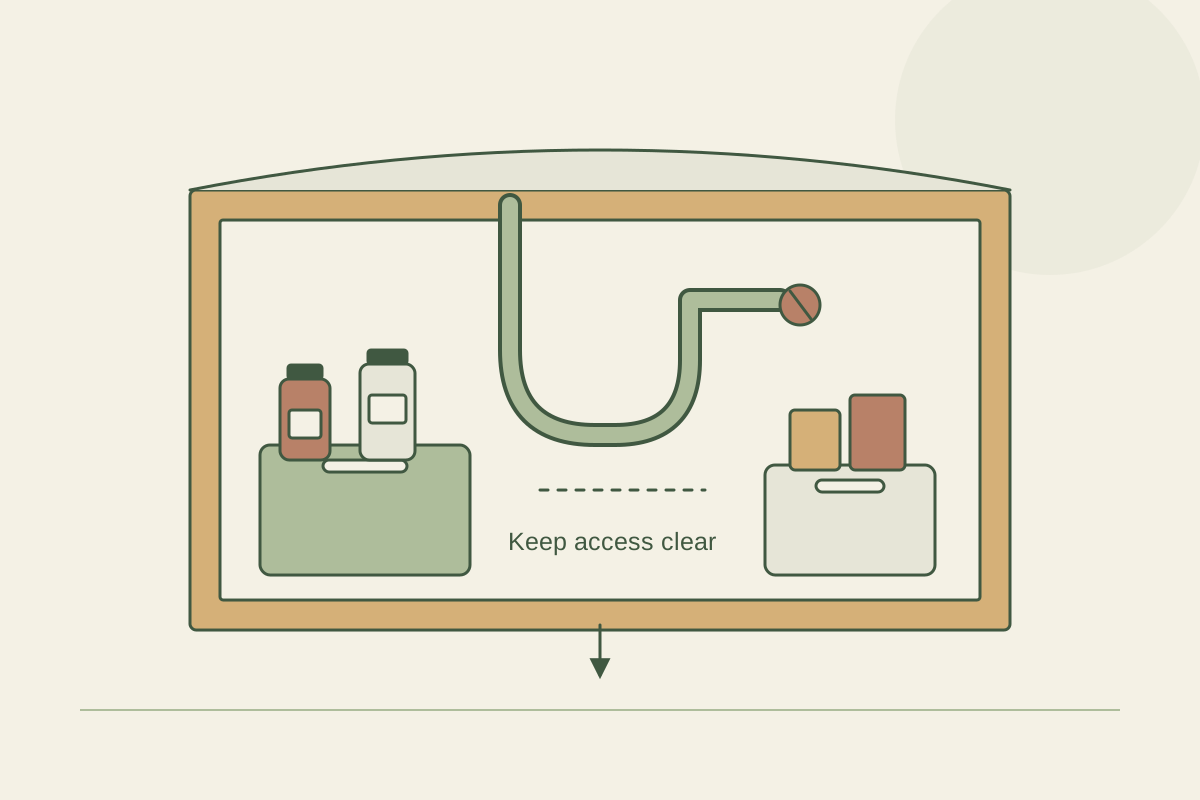
For an under-cabinet system, check the usable interior around pipes and hardware and the manufacturer’s mounting requirements. Make sure each container can come out through the door opening. A bin that fits behind plumbing but cannot lift out when full is difficult to maintain. Avoid sacrificing access to shutoff valves or other equipment that needs to remain reachable.
Put short, local labels where people decide
Use the words and examples from your actual provider’s guide. A brief label near the opening can be more useful than a long instruction sheet hidden inside a cupboard. Include the frequent household items that cause confusion, then link or refer to the full local guide for unusual materials. Update the label when your provider changes its instructions.
EPA cautions against putting plastic bags and wraps into ordinary curbside recycling unless the local program specifically allows them. Verify appropriate drop-off options separately. Keep batteries and other special waste out of the kitchen recycling stream and consult the relevant local disposal guidance. An uncertain item needs an answer from the provider, not a hopeful toss into the recycling bin.
Make emptying and wiping straightforward
Choose containers with surfaces you can reach and maintain according to their care instructions. Check the handle position before buying liners or building a surrounding frame. Practice taking the container to the collection point while empty first. Narrow passages and stairs make an apparently compact but awkward container much less convenient once it is carrying a household’s discards.
Store only the necessary replacement liners near the station if you use them, and follow your provider’s rules about how recycling must be presented. Do not assume recyclables should be bagged because trash is. Keep food residue managed according to the local preparation instructions and remove waste on a schedule that suits your home, rather than waiting for overflow.
Review the station after collection day
Once the bins are emptied, look for the items that collected beside them. These tell you whether the opening is too small, a label is unclear, or a particular material needs a separate plan. Change the relevant feature rather than adding another container immediately. A second bin without a defined collection route can simply become permanent storage for unresolved packaging.
Keep the provider’s contact information or guide link accessible for the household. Check the system again when you move, change waste companies, or receive new building instructions. A small kitchen can support a useful sorting station, but it works through a clear destination for each stream and an easy emptying routine, not through the largest possible set of bins.
Compare the options
| Arrangement | Works well when | Check first |
|---|---|---|
| Two freestanding bins | Trash and mixed recycling are collected | Lid swing and walking route |
| Cabinet pull-out | Cabinet allows approved installation | Pipes, access, and removal path |
| Small kitchen bin plus cardboard route | Large boxes dominate the waste volume | Building storage and collection rules |
Your checklist
0 / 5 completed
Common questions
Does a recycling symbol mean curbside acceptance?
No. Check your local program’s accepted-material list.
Should recycling go in a plastic bag?
Follow your provider’s presentation instructions. Many programs do not accept bagged recycling.
Do I need a food-scrap bin?
Confirm whether a collection or composting option is available and what it accepts before adding one.