Give dinner leftovers the first place in line
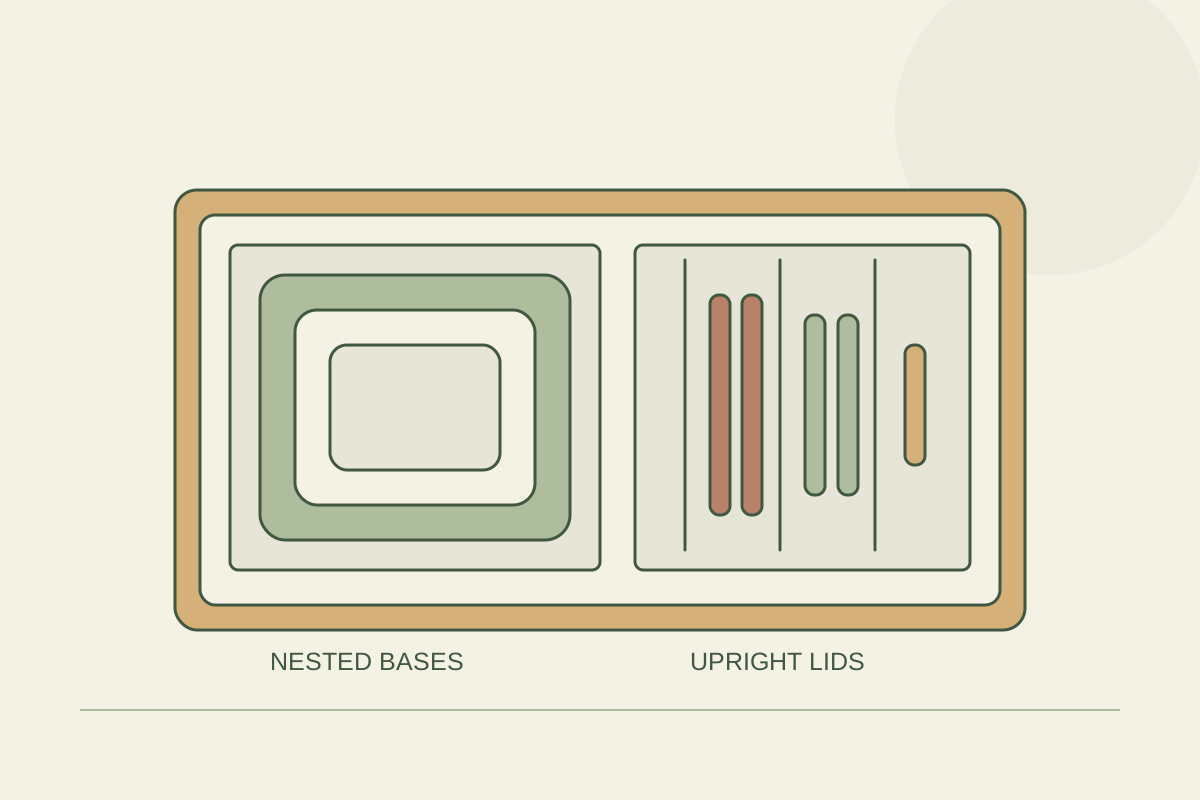
Before wiping counters or loading plates, collect the food you intend to keep. Get containers and their matching lids together so the food does not sit while you search a cupboard. FoodSafety.gov advises refrigerating perishable food within two hours, or within one hour when temperatures are above 90°F. Count time already spent out during preparation and serving; clearing the table does not restart the clock.
Use shallow containers for leftovers and keep the refrigerator at 40°F or below, as the same guidance recommends. Label what you will otherwise forget. These are food-storage steps, separate from the question of how tidy the kitchen looks. If you have doubts about how long food has been left out, check official food-safety guidance rather than judging it by smell.
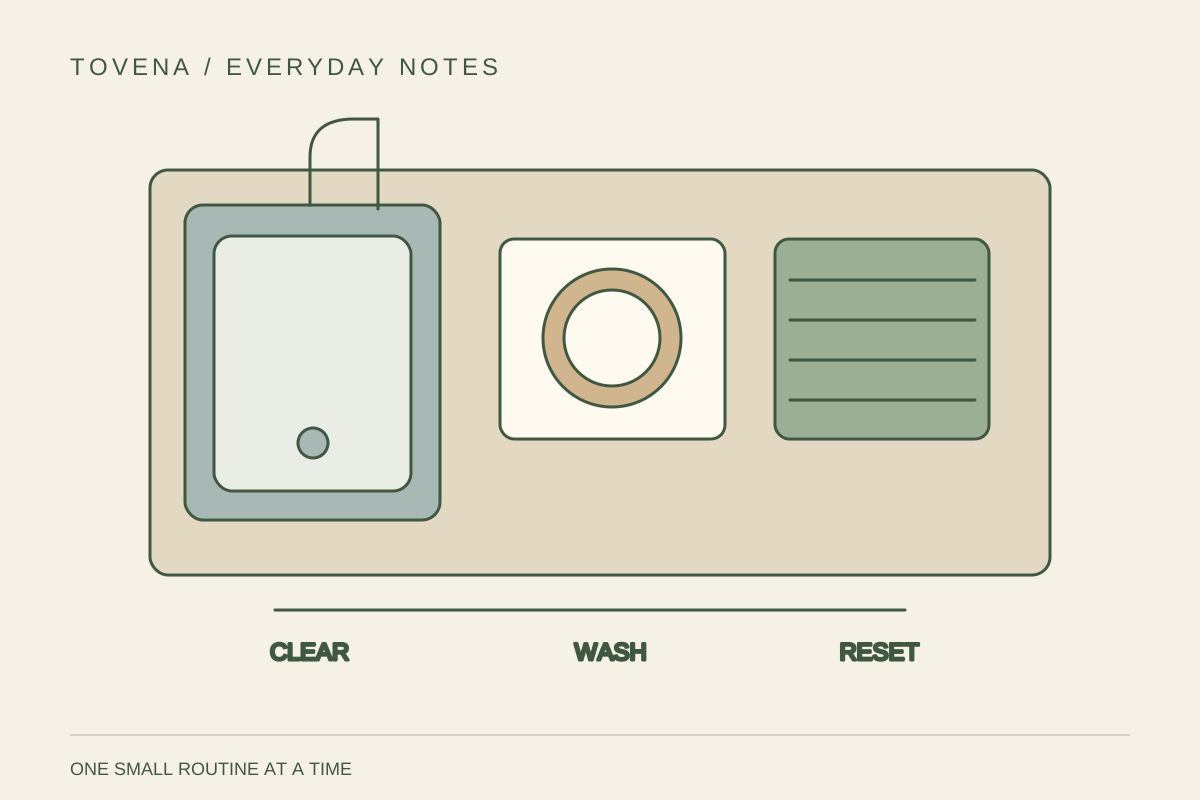
Open the route from table to sink
Bring cups, plates and utensils toward one landing spot instead of scattering them across every counter. Leave a separate space for clean dishes. In a small kitchen, even one baking sheet holding dirty utensils can keep drips contained while you clear the table.
Scrape scraps into the appropriate waste container. Keep sharp knives visible and handle them separately; do not drop them into cloudy dishwater. Return serving bottles and pantry items to their places now, so they do not have to move again when you wipe the counter. If someone is helping, give them a whole job, such as clearing the table, rather than having two people compete for the sink.
Choose the dish route before turning on the tap
If you use a dishwasher, put away the clean load first when possible. Then load dinner dishes according to the appliance instructions, keeping anything that needs hand washing aside. Avoid stacking dirty dishes into a clean drying rack just because the sink is full.
For hand washing, clear enough room to set down washed pieces without balancing them. Work through a manageable batch, with less-soiled items before greasy cookware when that suits the load. Follow each item's care instructions. Let a stubborn pan soak only where it will not block the entire washing area, and use a method appropriate to its material. A narrow sink is easier to use with one pan in it than with every pan from dinner.
Clear one complete counter, then wipe it
Choose the stretch of counter you will need first tomorrow. Remove crumbs and food residue, then clean it with a product and method suitable for the surface. Follow label directions, including any food-contact rinsing instructions. Keep cleaning products in their labeled containers and never combine them.
Move small appliances only when you can do so safely and according to their instructions; wait for hot surfaces to cool. The point tonight is to remove dinner's mess, not to clean every hidden corner. A sticky spot needs attention. A cupboard that could use new dividers can wait. Finish the table or eating surface too, so breakfast does not begin with yesterday's crumbs.
Leave the sink and tools ready to dry
Remove food scraps from the strainer and clean the sink using its care instructions. Put reusable cloths into the appropriate washing routine and let reusable cleaning tools dry as directed. Keep used wiping cloths separate from clean dish towels.
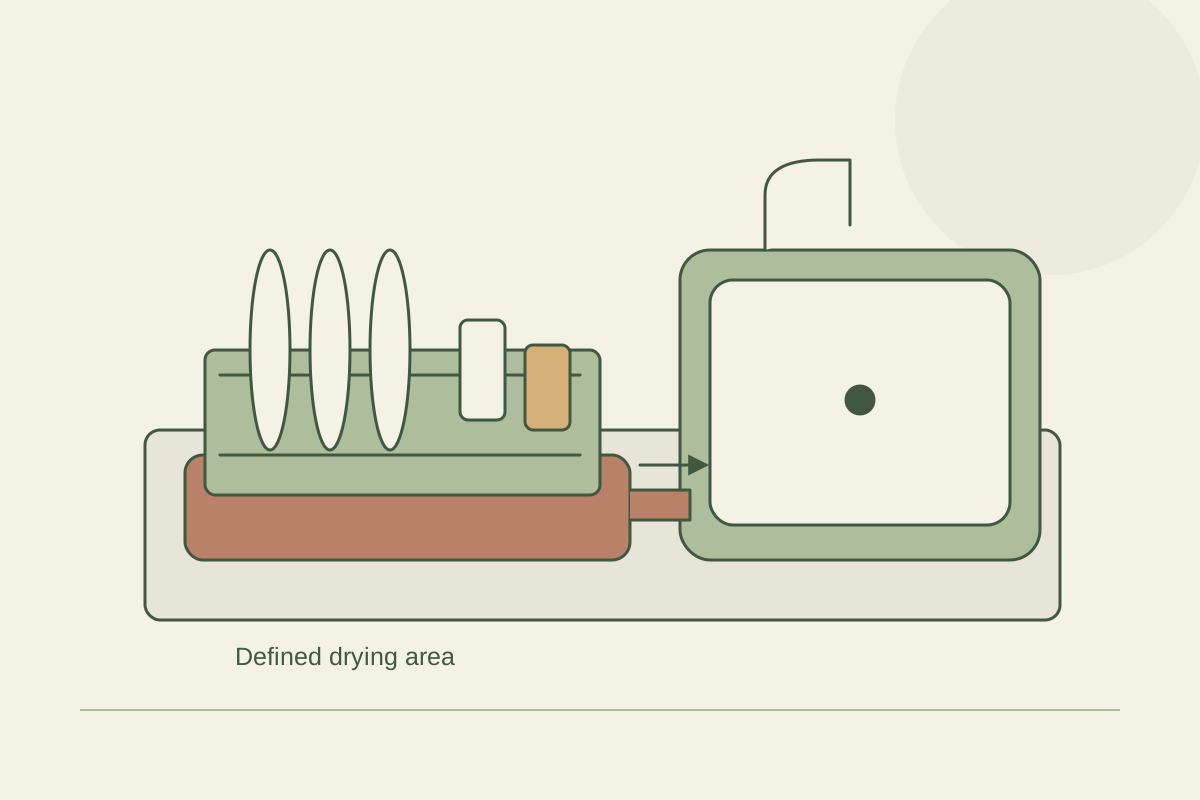
A drying rack is working storage, so leave airflow and avoid a tall mixed pile. Put away dry pieces before adding another batch. If waste needs taking out, do it before laying out clean breakfast items, then wash your hands. These small handoffs keep the last part of the routine from undoing the clear counter you just made.
Stop when the morning has somewhere to start
Leave an empty, dry spot for the breakfast board or coffee cup. Set out only nonperishable items that belong there, and keep them away from a hot cooktop. The kitchen does not need to look unused; it needs a usable sink, a workable dish plan and a clear place to prepare food.
If evenings are consistently difficult, identify the jam: no matching lids, a full clean dishwasher or too little drying space. Fix that recurring obstacle on another day. Adding a longer nightly checklist will not help when the same pan has nowhere to go.
Compare the options
| Situation | Do tonight | Leave for another session |
|---|---|---|
| Simple dinner and a ready dishwasher | Food away, dishes loaded, counter wiped | Cupboard rearranging |
| Hand-wash cookware and limited drying space | Wash in batches and put away dry pieces | Appliance deep cleaning |
| Very little energy left | Safe food storage, essential dishes and one clear work area | Decorating or reorganizing shelves |
Your checklist
0 / 5 completed
Common questions
Does an evening reset have to take ten minutes?
No. The time depends on the meal, the dish load and the people helping. Use the sequence to reduce repeated handling, and choose a realistic stopping point rather than rushing food storage or safe cleaning.
Can the drying rack stay out overnight?
It can remain in use when dishes are arranged to drain and dry properly. Avoid crowding it, and put away dry items before the next batch. A rack full of dry dishes will be tomorrow's first bottleneck.
What should I do when the dishwasher is already full?
First check whether the load is clean or dirty. Put away a clean load; run an appropriately loaded dirty one according to its instructions. Hand wash the items you need next rather than leaving food-covered cookware across every available surface.