Find the space you actually prepare food in
Put your everyday cutting board on the counter with a mixing bowl beside it. Open the drawer below and the nearest cabinet. If either forces you to move the board, try another position before organizing the surrounding objects. Measure this working footprint in inches and keep it out of the permanent display. A corner that looks empty may still be awkward to reach; the best preparation spot is the one where you can comfortably stand, work and put ingredients down.
Contain the drink routine, not the entire collection
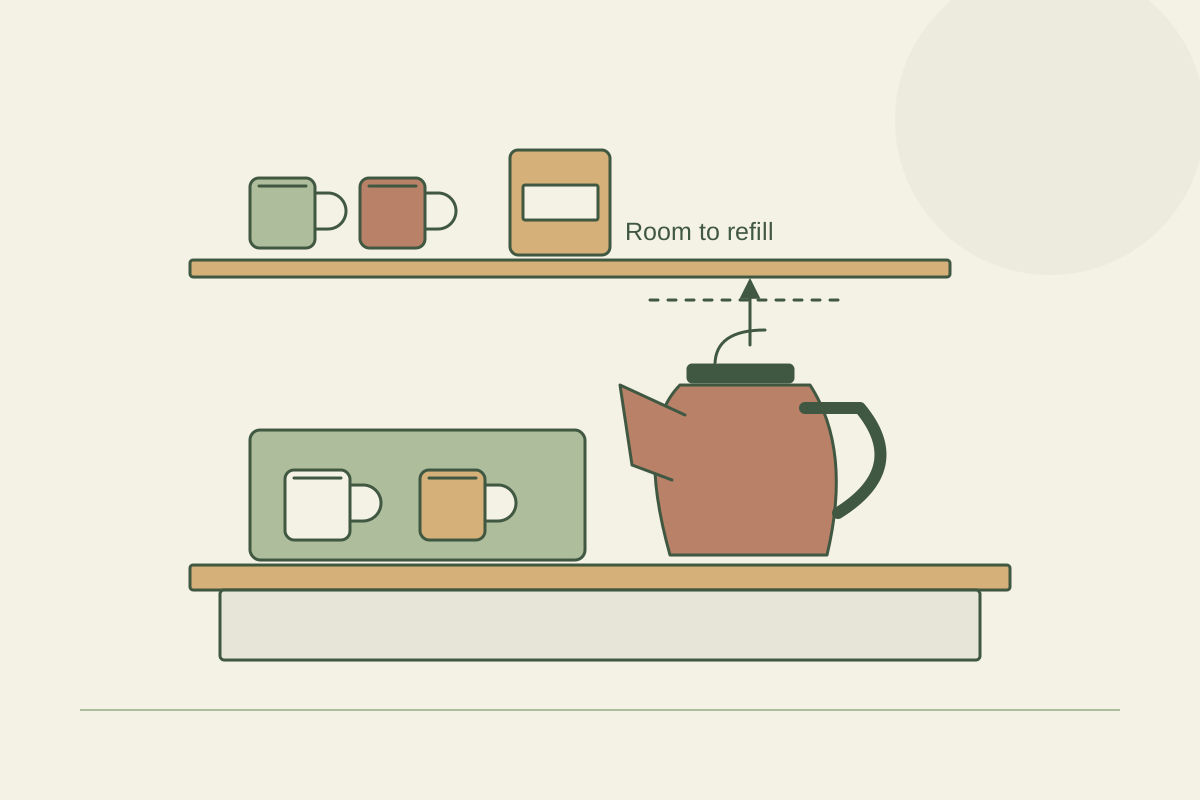
Set out what you need for your usual coffee or tea, including the cup and spoon. Keep those pieces together near their storage, with unopened refills elsewhere. Measure with any appliance lid open or water tank removed and follow its placement instructions. A tray can define this zone, but it should remain easy to lift when loaded. If the tray itself takes more space than the objects it contains, skip it or choose a smaller one.
Give wet dishes a destination
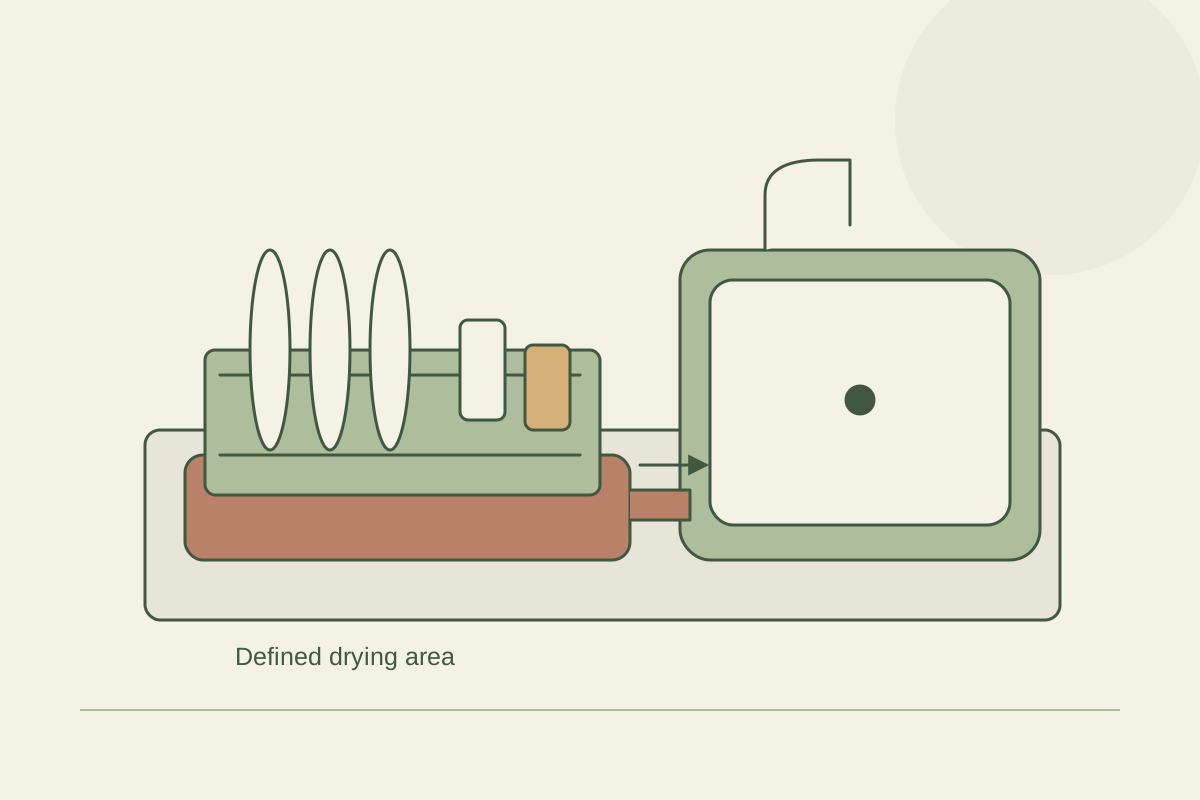
Place the dishes from one ordinary meal in the proposed drying area. Check whether the tallest glass fits beneath the cabinet and whether the rack's drain actually reaches your sink. Keep a way to remove or empty the tray without lifting the whole arrangement. Put dry dishes away before judging the rack's capacity. Otherwise, you may buy a larger rack to solve what is really an unfinished return step, sacrificing the counter space you were trying to recover.
Work through a small-counter example
Illustrative example: a household has one 48-inch usable stretch beside the sink and a separate 24-inch return. Their board and bowl occupy 28 inches when tested together. They keep that patch clear, use the remaining sink-side area for a compact drying setup, and place their drink items on the return. These are example measurements, not required clearances. Another kitchen may need a different split because drawers, appliance instructions or two people cooking change how the space works.
Remove items by frequency, not by appearance
List the appliances and objects that remain outside overnight. For each, ask when you last used it and how difficult it would be to retrieve from storage. Try putting the least-used object away for a week. Keep its cabinet location convenient enough that you will actually return it afterward. Do not move something into a crammed cupboard simply to improve one view. The counter and the storage beneath it need to work as a connected system.
Run the layout through dinner
Cook an ordinary meal and notice where grocery bags, scraps and hot cookware need to land. Follow cookware and surface instructions when choosing resting places. Keep a temporary open patch rather than assigning every inch a permanent object. After washing up, check which item interrupted you repeatedly, then move just that item. Photograph the finished working layout for your own reference. Review it after a busy evening, when the dishes and tools have all returned, rather than only immediately after tidying.
Compare the options
| Setup | Best use | Check first |
|---|---|---|
| Small removable tray | Daily drink tools | Loaded weight and refilling access |
| Compact rack with tray | Regular dish drying | Drain position and full meal capacity |
| Open counter patch | Food preparation | Board, bowl and drawer movement |
| Temporary drying mat | Occasional overflow | Cleaning, drying and storage routine |
Your checklist
0 / 5 completed
Common questions
Should a small kitchen counter be completely empty?
No. Daily-use objects can remain outside when retrieving them repeatedly would add work. Protect the preparation space first, then keep the remaining setup small enough to move for cleaning. An empty-looking counter is not useful if every meal requires unpacking several cabinets.
What if I have only one continuous stretch?
Use time as well as space. Keep a washable temporary drying surface that can be put away once dishes are dry, and gather drink items in one compact group. Do not place a movable setup where it interferes with appliance instructions or a normal working movement.
Do I need matching countertop containers?
Only if they solve a specific problem. Measure the real objects before buying. Existing containers may be entirely adequate, while keeping original food packaging preserves useful product information. A coordinated appearance can come later, after the layout has proved comfortable through several ordinary meals.