Decide what the room needs to hold
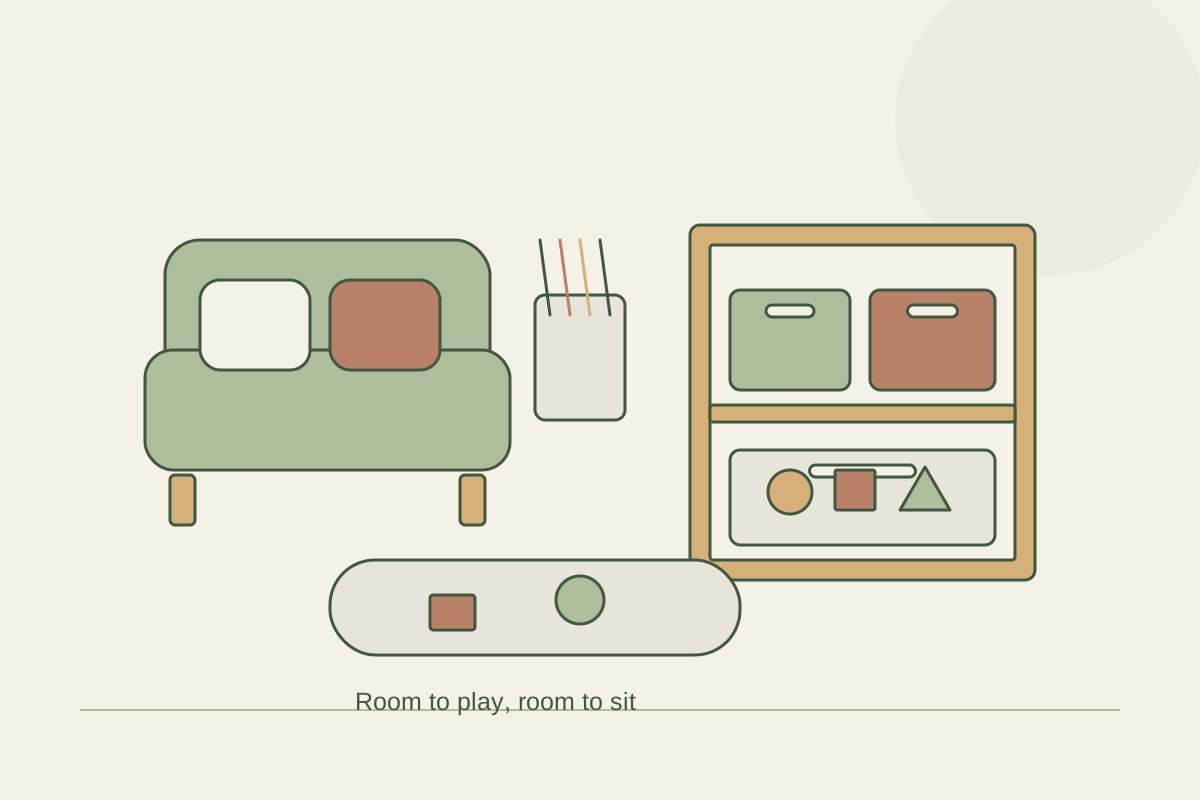
Start with the toys regularly used in the living room rather than moving the entire household collection there. Notice which activities need an open floor and which happen at a table. Give each a defined storage area nearby, while preserving seats and walkways for everyone sharing the room. This is a room-planning exercise, not a reason to buy a wall of storage furniture. Existing low shelves or a cabinet may already provide enough space.
Keep categories broad enough to return
A few understandable groups, such as drawing materials, building pieces and pretend-play items, are easier to maintain than a separate container for every shape. Choose containers compatible with the toys' own age and storage guidance, and follow furniture instructions for installation. Use simple words or pictures to show where things belong. Keep sets that need all their pieces together in their own package or pouch rather than letting them dissolve into a general basket.
Try a shared end-of-day reset
Test whether the usual amount of play can be put away without rebuilding an elaborate display. Leave spare capacity in each container; a box filled to its rim before play begins will overflow afterward. Keep unfinished work only in an agreed spot rather than letting it occupy every horizontal surface. If the room still feels permanently crowded, reduce the living-room selection and rotate other items in deliberately. More containers cannot create an unlimited amount of shared floor space.