Name the next destination, not just the pile
A box marked donate can stay in a hallway for months because the label describes an intention rather than an action. Begin with the items already waiting to leave. Decide whether they are suitable for a donation organization, a named friend, a confirmed giveaway, or another local disposal or recycling route. Different destinations should not share one mystery bag.
Do not turn every unwanted item into a future project. A chipped mug, an incomplete appliance, and a useful spare blanket need separate decisions. Check each potential recipient’s rules instead of assuming they can accept whatever you no longer want. The goal is to pass along appropriate items through a route that actually exists in your area.
Use one container with a visible boundary
Choose an existing box or bag you can move comfortably. Put it somewhere you will notice without blocking a door, walkway, or daily household task. A spacious hidden cupboard can make outgoing items disappear from attention. If the container fills, arrange its departure before starting a second collection in the next room.
Keep undecided belongings separate from confirmed outgoing ones. Apartment Therapy’s outbox method includes reviewing uncertain items and making a plan for their next destination. You can borrow that decision point without creating a permanent holding room. A clearly labeled maybe container, if needed, should have its own review date rather than quietly joining the donations.
Check the actual receiving location
Look up the organization and the specific branch or collection site you plan to use. Goodwill notes that acceptance policies vary by local organization. Confirm the item types, condition requirements, hours, and any appointment or pickup arrangements directly with the receiving location. A national page is useful background, but it cannot confirm a particular branch’s capacity on your intended day.
Keep the answer with the task. A note such as approved clothing and books, Saturday afternoon drop-off, is more useful than a saved homepage you must search again later. If you cannot confirm an unusual item, set it aside while you ask. Do not include it simply because it fits inside the same box as accepted items.
Pack for the handoff you arranged
Keep the parts belonging to an item together so the recipient can understand what is being offered. Remove your personal belongings from pockets and storage compartments. Follow the receiving organization’s packing requests, including any distinctions between fragile items and textiles. Use boxes you can lift and handle reasonably rather than filling the largest available carton.
If the plan involves a friend or a local giveaway, agree on the item and handoff before treating it as accepted. Avoid surprising someone with additional bags they did not request. Keep contact details and the agreed time available, and move the item back into a secure temporary place if the arrangement falls through instead of leaving it outside indefinitely.
Attach the trip to a real appointment
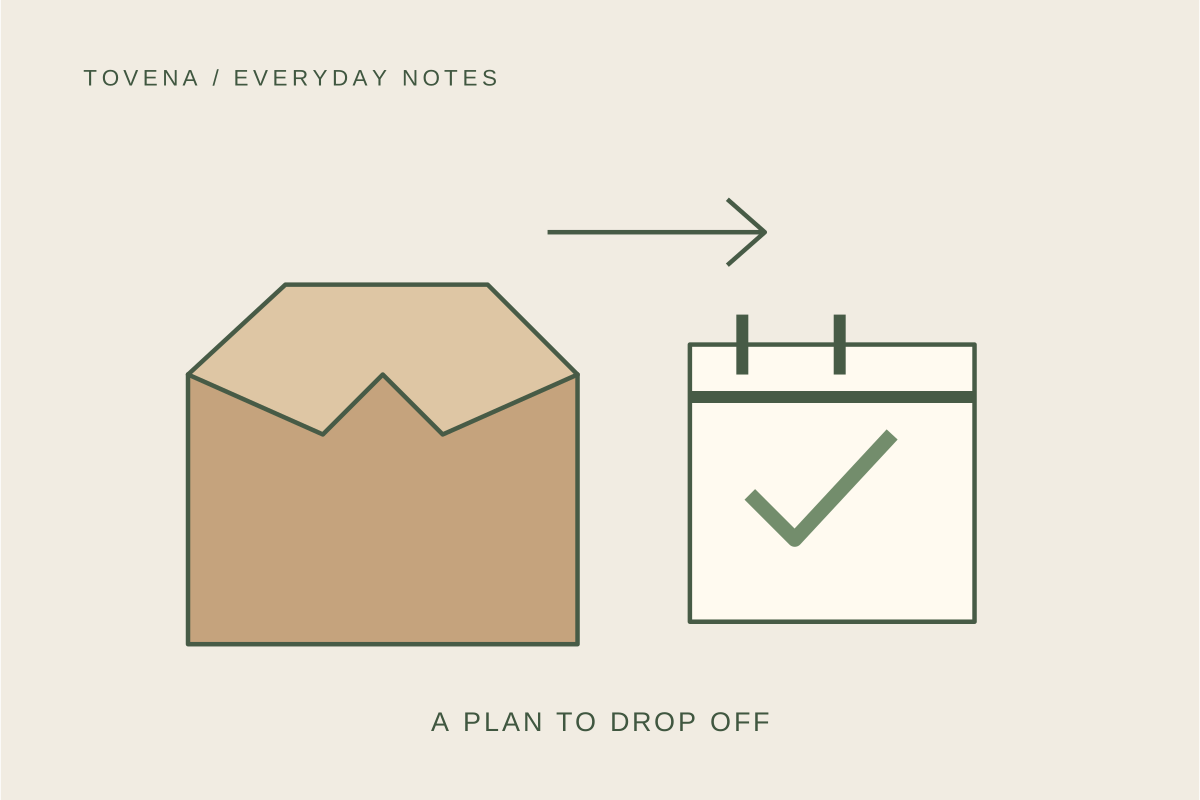
Choose a date and a route you can complete during the receiving site’s actual hours. Put the handoff on the calendar, including the location and any confirmation. Link it to an existing errand only if the timing and transport work. Adding donation drop-off to a busy workday is not useful if the center closes before you can get there.
A car trunk can be a temporary transport step, but it should not become the new storage area for several seasons. Check the calendar when the box moves into the car. If transport is the obstacle, ask the organization about its available options; do not assume free pickup, coverage, or an appointment is available for every item.
Close the loop when the items are accepted
After the handoff, remove the reminder and return any reusable container to its normal purpose. If some items are declined, bring them back and identify another appropriate route. Do not leave them outside a closed collection center. Follow the location’s instructions for any acknowledgment or receipt you want, rather than expecting every drop-off to work the same way.
Notice why the outbox had stalled. The problem may have been unclear acceptance rules, a container too heavy to carry, or no actual time reserved. Adjust that specific problem for the next round. A smaller load that reaches its recipient is more useful than an impressive decluttering pile that continues occupying the only clear corner of your home.
Compare the options
| Option | Useful when | Watch for |
|---|---|---|
| Donation center | The branch confirms acceptance | Hours and rules vary locally |
| Named recipient | A person agrees to take the item | Confirm the handoff before packing extras |
| Temporary maybe box | You need a separate decision stage | Give it a review date |
Your checklist
0 / 5 completed
Common questions
Does every Goodwill accept the same items?
No. Goodwill directs donors to the local organization for its acceptance rules.
What if the donation center rejects something?
Take it back and find an appropriate alternative rather than leaving it outside.
Should I start with a huge box?
Use a container you can move and complete. A large box can make transport the next obstacle.
Useful references
- Goodwill: Donate goods and local acceptance policies ↗
- Apartment Therapy: Refresh the living room and empty the outbox ↗