Use the household's own words
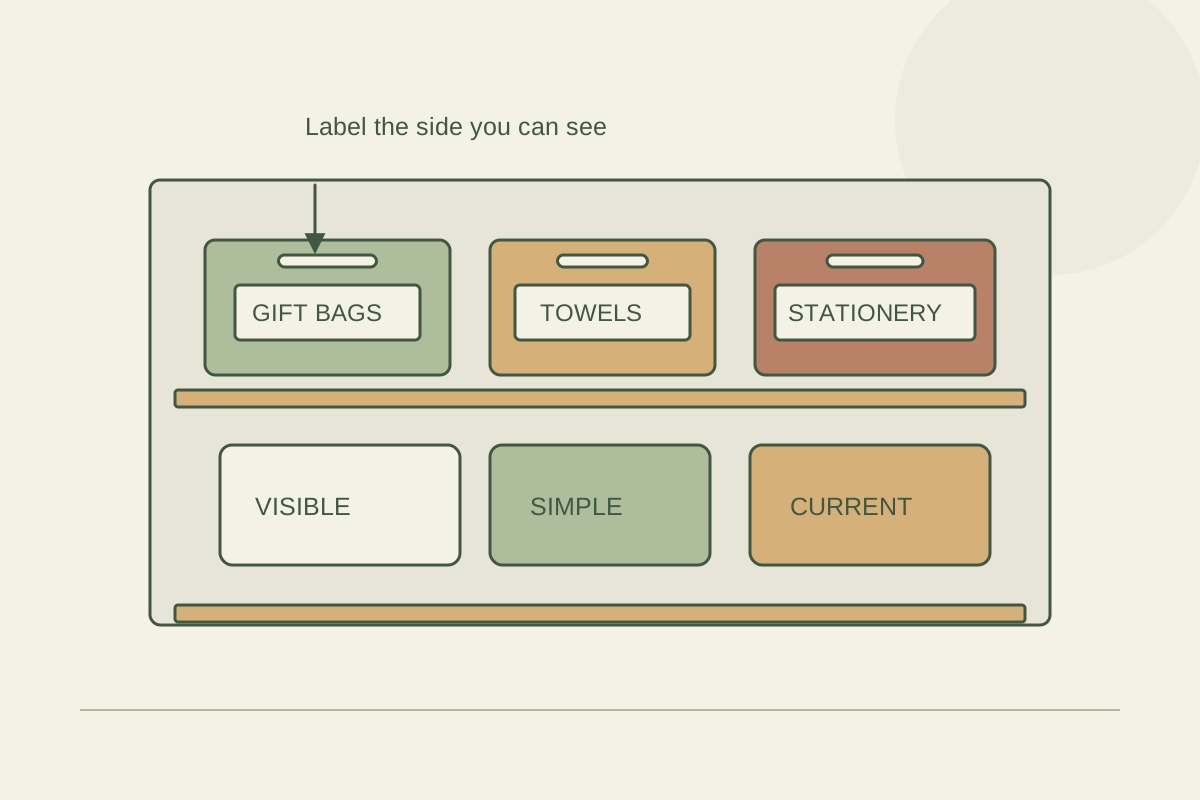
Listen to what people ask for: spare bulbs, tea towels or gift bags. Those words often make better labels than broad categories such as miscellaneous or lifestyle. A label should shorten a search, not require a second explanation. Keep the scope realistic for the space: a small basket marked stationery should not quietly contain batteries, birthday candles and old receipts. If several unrelated groups share one shelf, label the separate containers rather than the entire shelf.
Place it where you look
Stand in front of the storage and check which surface is visible before opening or lifting anything. A label on the lid is unhelpful on a high shelf; one on the front may work better. Test removable paper labels before committing to permanent lettering. Use readable contrast and a size you can see at your normal distance. Consistency helps, but there is no need to repackage everything simply to make the typography match.
Let labels change
Use labels to describe the system you actually use, not the version you hope to maintain someday. Leave a basket unlabeled temporarily if its role is still changing. Review labels when seasons or routines change, and remove obsolete ones rather than placing a new name over an old assumption. If a container keeps collecting the wrong items, ask whether its location suggests another use. Relocating the category can be more effective than printing a larger warning.