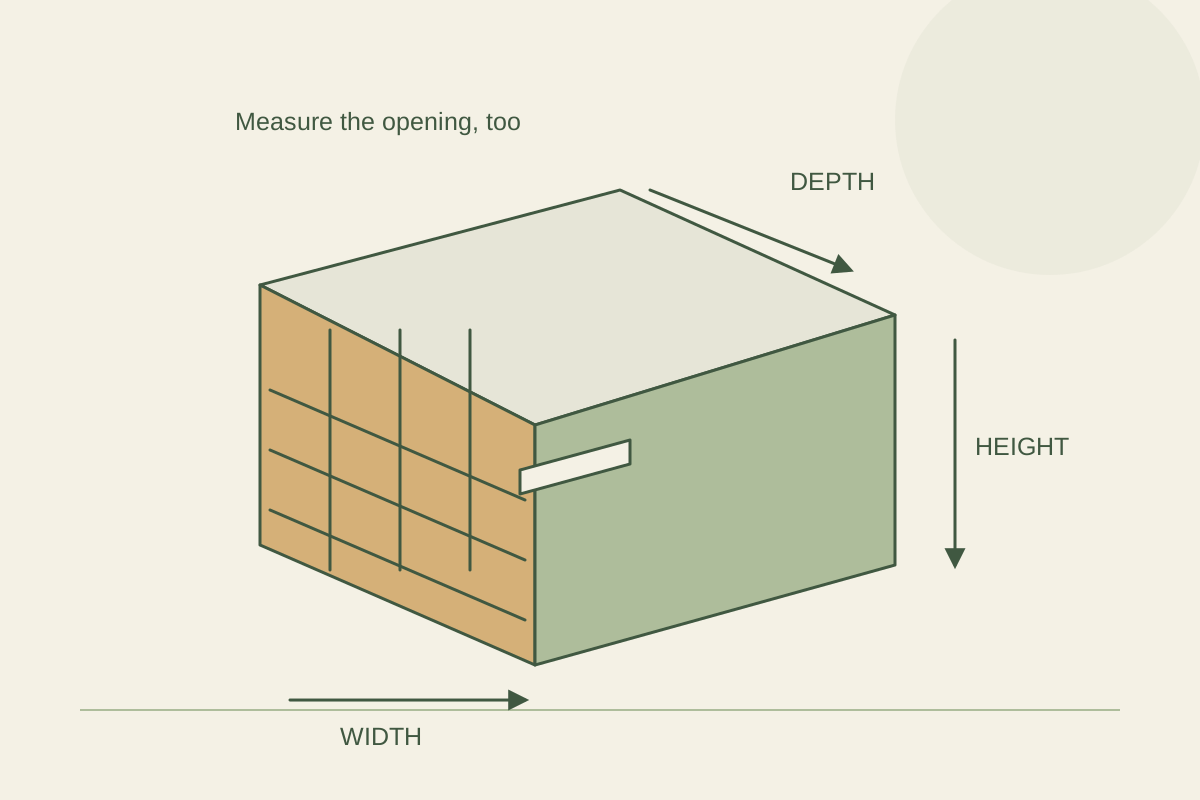
Measure the opening as well as the shelf
Record the shelf's internal width, usable depth and height in inches. Then measure the narrowest opening the basket must pass through. A hinge can interrupt an otherwise generous opening, while a door may not swing far enough to expose the entire shelf. Check the standing space in front, too. If you plan to remove the whole basket, it needs a practical route into your hands. The largest rectangle inside the cabinet is not necessarily the largest basket you can use comfortably.
Check what the advertised dimensions include
Compare the seller's dimensions with the basket's widest point, including projecting handles, lid hinges and a flared rim. Look for interior measurements when you need to store a particular item. Thick woven sides can make the inside noticeably smaller than the outside. Ask for missing measurements rather than guessing from a styled photograph. For a shelf holding several baskets, add their outer widths together and allow the actual hand space you need between them; do not rely on a universal gap.
Choose shape and material around the contents
A soft basket can accommodate throws, while small pieces are easier to manage in a container with a more enclosed interior. Wide, deep baskets can bury little objects under layers. Two narrower groups may be clearer, but only if both remain comfortable to retrieve. Consider cleaning instructions and the environment where the basket will live. A decorative texture does not automatically suit a splash-prone bathroom. Keep items with specific storage requirements in conditions appropriate to their own labels.
Compare two options with real measurements
Illustrative example: a shelf is 30 inches wide inside, but the cabinet opening is only 27 inches. Two baskets listed as 14 inches wide would fit side by side on the shelf, yet neither may pull straight past the central obstruction when the other remains in place. Instead, test a smaller pair or one basket with a separate open section. Use cardboard boxes with similar dimensions to rehearse the movement. This example explains the decision; it does not prescribe a basket size for every cabinet.
Load one basket before buying the rest
Fill the trial basket with the objects you actually intend to keep there. Lift it from the highest and lowest planned positions and return it without rearranging the neighboring contents. Notice whether its sides sag, the handle is awkward or small items disappear below the rim. A basket that works empty can be inconvenient when full. Leave capacity for the item currently in use elsewhere; the shelf should still function after all the towels, toys or accessories come back.
Decide whether the basket earned its space
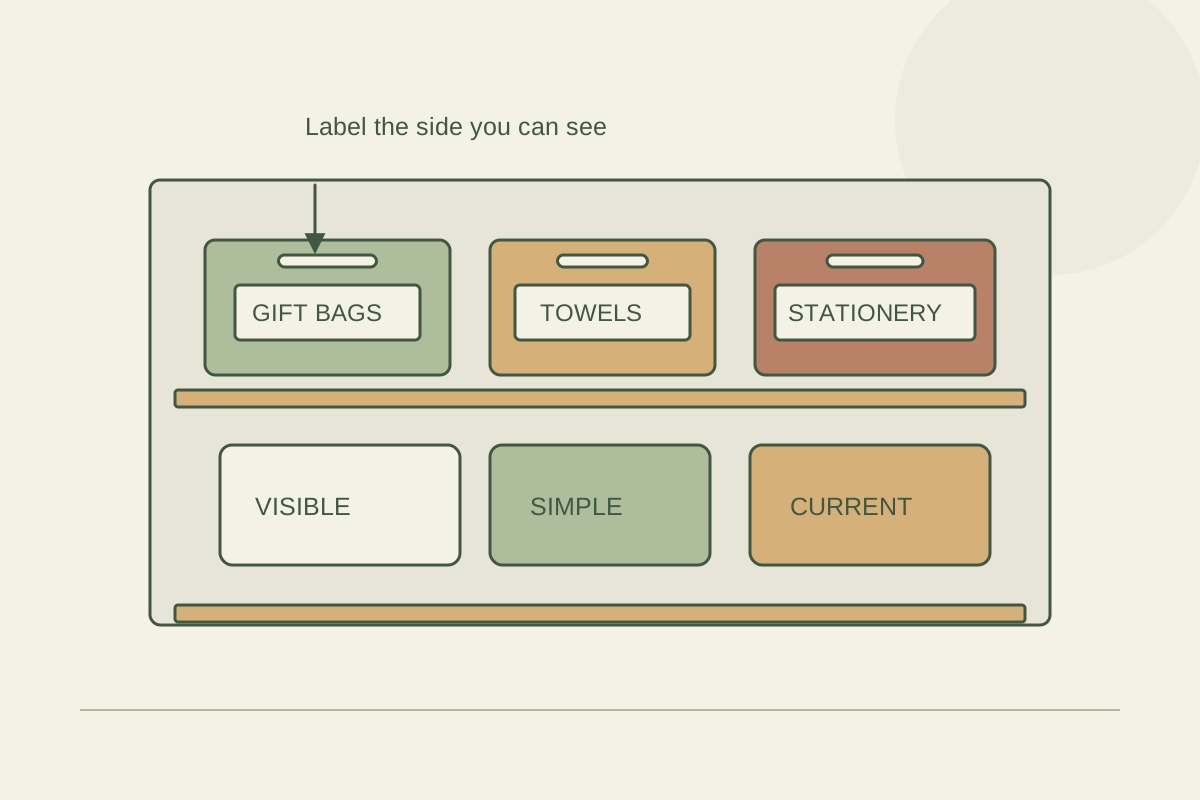
Use the trial for a week. If returning items requires careful stacking, reduce the contents or try a different shape. Label the visible face only after its role settles. Consider whether you need a basket at all: large recognizable items may sit more conveniently on an open shelf, while shallow drawers already contain small pieces. Repeat a successful format where it helps, but avoid buying matching baskets for unrelated tasks simply to complete a visual pattern across the room.
Compare the options
| Format | Useful for | Tradeoff |
|---|---|---|
| Wide flexible basket | Throws and bulky textiles | Small pieces can disappear |
| Two narrow bins | Separate daily categories | More edges and handles |
| Shallow tray | Visible small items | Limited vertical capacity |
| Open shelf, no basket | Large recognizable objects | Less visual concealment |
Your checklist
0 / 5 completed
Common questions
How much smaller should the basket be than the shelf?
There is no single allowance. It depends on the opening, handles, where your fingers grip and whether you remove the entire basket. Test those movements with a box or trial basket. A small numerical gap is not enough if a hinge blocks the route.
Are two smaller baskets better than one large basket?
Often, when the contents form two useful categories or the loaded large basket is awkward. One larger basket can be simpler for bulky textiles. Compare usable capacity and the number of movements needed, rather than assuming more compartments always mean better organization.
Should every basket in a room match?
Matching can make visible storage quieter, but function comes first. You can repeat one color or material while using different sizes. Hidden storage does not need the same format as an open shelf, especially when the contents and cleaning requirements differ.