Start with the beds, not the cupboard
List the beds in use and write down the sizes of the sheets that actually fit them. Then gather spare sheets, pillowcases, towels, and blankets in manageable groups. Keep regular household linens separate from pieces saved for sentimental reasons; the two groups need different decisions and may need different storage.
Try a complete set on its intended bed when its size is uncertain. A label that has faded is not a reason to keep guessing every laundry day. Put a temporary size note with the set after checking it. Set aside unmatched pillowcases that still have a useful job rather than hiding them inside every folded sheet.
Choose a quantity for your laundry rhythm
Count how many sets are in use, how long washing and drying take, and how often overnight guests actually stay. A household that washes bedding and remakes the same bed that afternoon works differently from one using a shared laundry room. There is no single correct number of spare sets for every home.
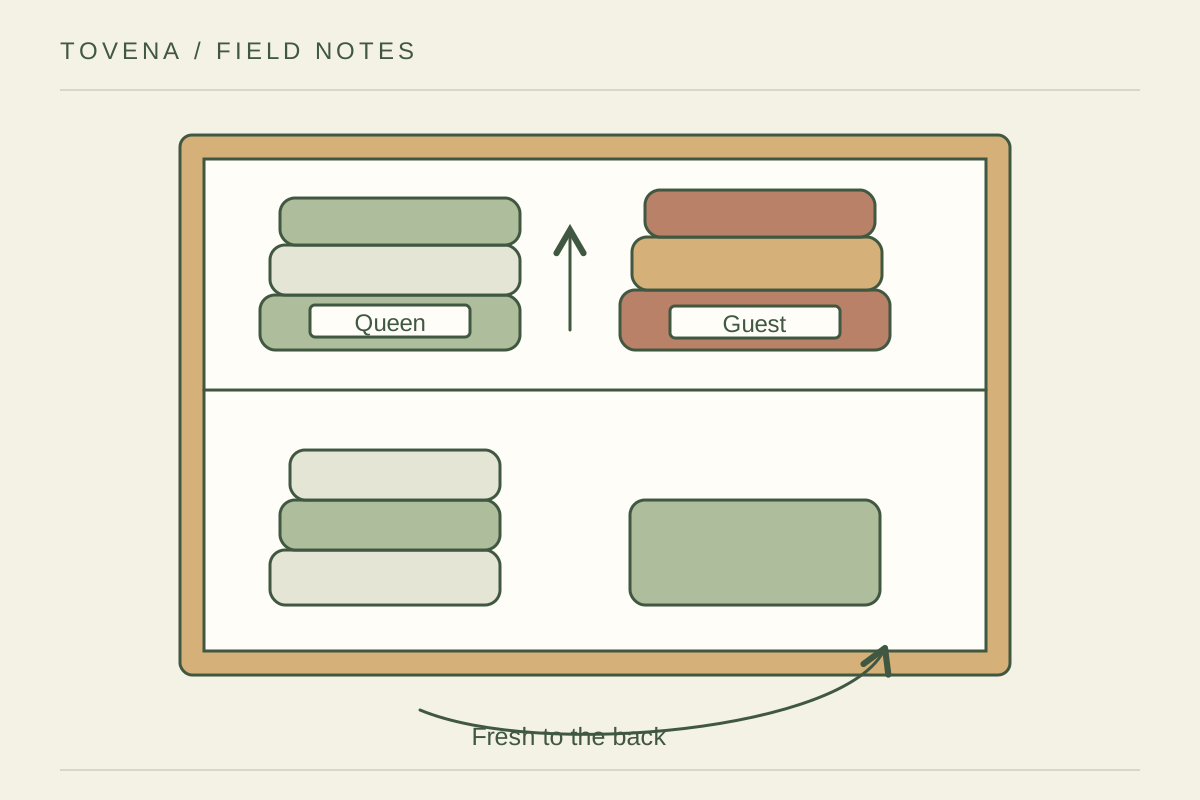
Build the easy-access area around that routine. Keep the next usable set in front, and move occasional guest bedding to a less convenient shelf if it is still reachable when needed. If the stack cannot be lifted without pulling everything down, reduce the stack or divide it instead of folding it ever tighter.
Use a folded sample to plan the shelf
Fold one complete set as you normally would, then measure its width, depth, and height without pressing it flat. Compare those measurements with the clear shelf space and the way the door opens. Check whether a hand can reach behind the set; otherwise an apparently roomy shelf can still be frustrating.
Imagine a 24-inch-wide shelf and two folded bundles each 10 inches wide. The remaining 4 inches could provide handling space, but only if their depth and height also work. These are example measurements, not a storage standard. A shallow basket may help hold loose pillowcases, while broad sheets may be easier to lift directly.
Choose a suitable location for textiles
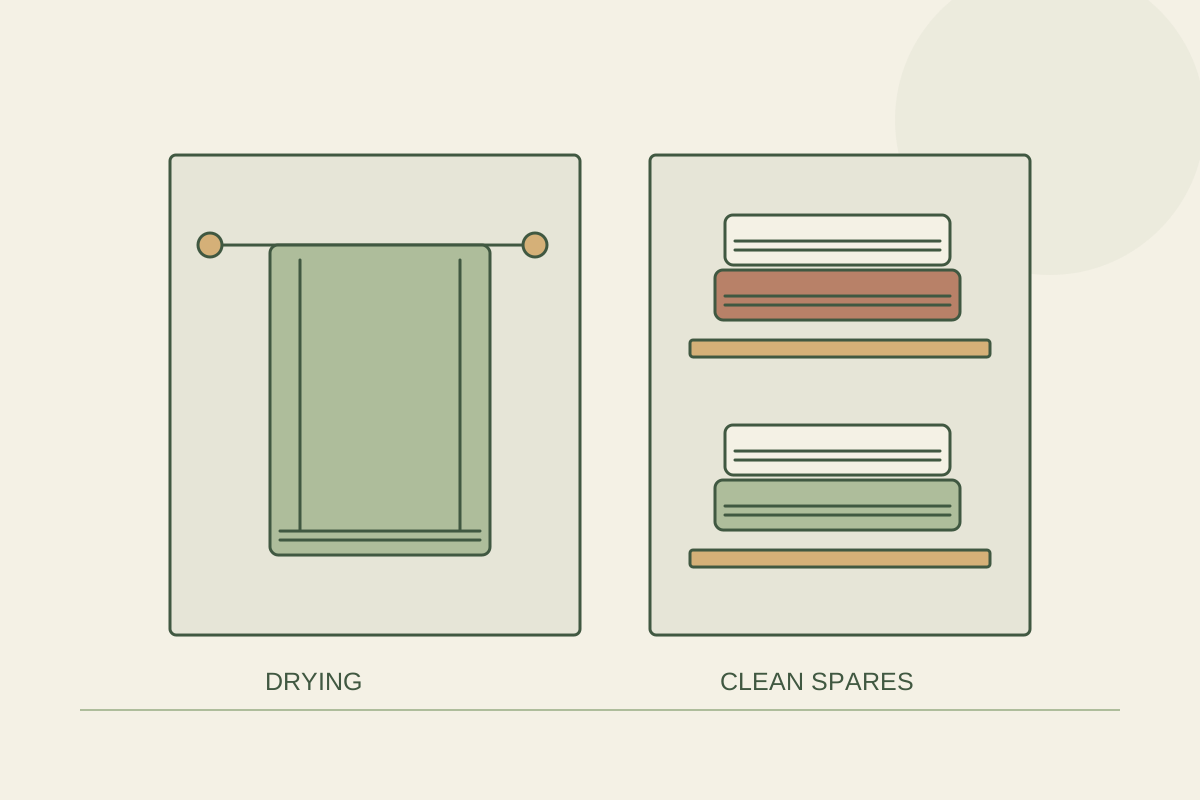
Put linens away only when they are clean and completely dry. The Canadian Conservation Institute recommends a cool, dark, dry location with ventilation for stored textiles. Do not close up a still-damp towel merely because it feels almost dry; finish drying it according to its care instructions first.
Look at the location before buying a container. A shelf beside a recurring leak or a damp wall is not improved by an attractive basket. Address the moisture problem and use another location meanwhile. Fragile heirlooms, embellished textiles, and damaged pieces need advice specific to their condition rather than the everyday folding routine described here.
Make labels useful during a hurried change
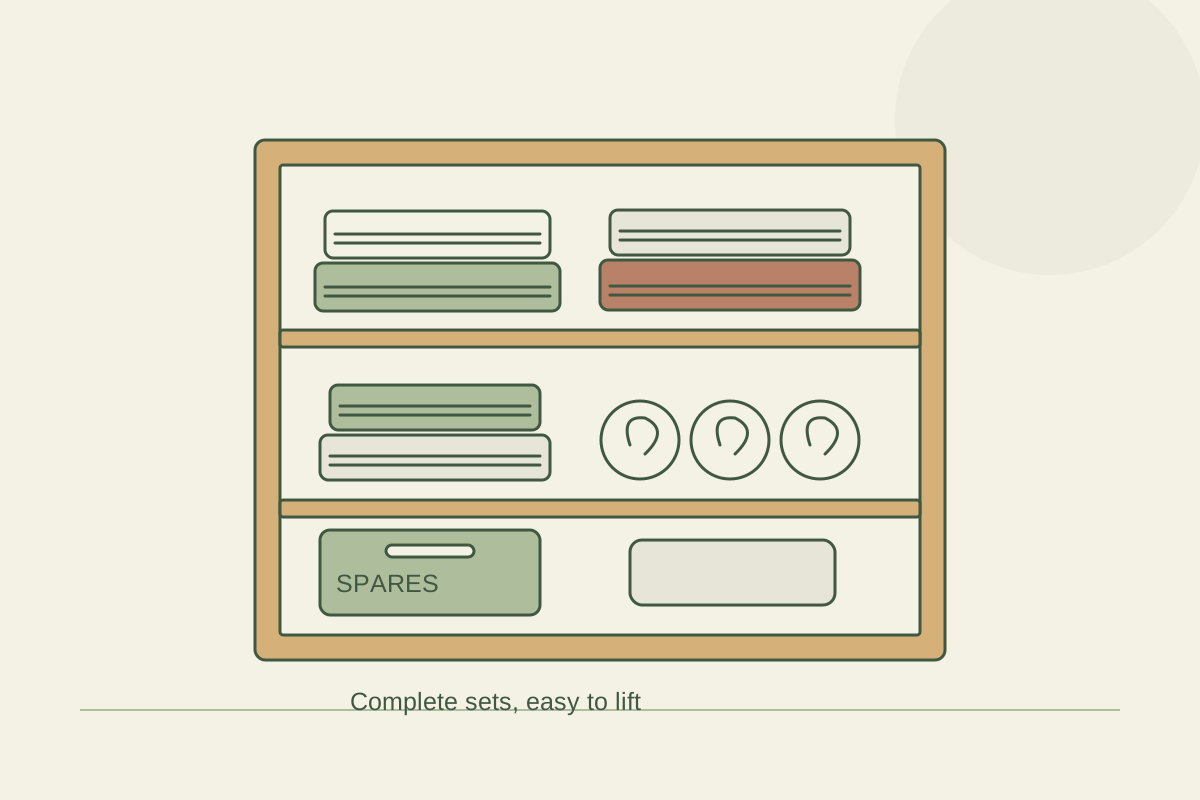
Label by what someone needs to do: “queen bed,” “guest twin,” or “hand towels.” Color can help, but written size labels are easier for a visitor or another household member to understand. Keep a complete set together if that saves searching; separate pillowcases if your household changes those more frequently.
After laundry day, return the newly washed set behind the clean spare when the shelf allows it. Check the arrangement after the next guest visit or bedding change. Move the group that caused a search, and remove empty packaging or unrelated bathroom supplies that have quietly claimed the linen space.
Compare the options
| Option | Useful for | Check before choosing |
|---|---|---|
| Open folded stacks | Complete sheet sets | Stack height and hand access |
| Shallow divided basket | Loose pillowcases or washcloths | Visibility without digging |
| Labeled occasional-use container | Guest linens | Dry contents and accessible location |
Your checklist
0 / 5 completed
Common questions
Must all linens live in one closet?
No. Sheets can live near their bed and towels near the bathroom if those locations are suitable and everyone knows the plan. Central storage is useful only when it makes finding and returning things easier.
Should I put each set inside a pillowcase?
Try it with one set. It can keep matching pieces together, but it may make a bulky bundle awkward to lift. Use the method that suits your shelf and how often you change individual pieces.
What belongs on the highest shelf?
Occasional, manageable items that you can retrieve safely with suitable access. Avoid putting a heavy mixed container overhead. Frequent-use linens should be in a position you can reach comfortably.