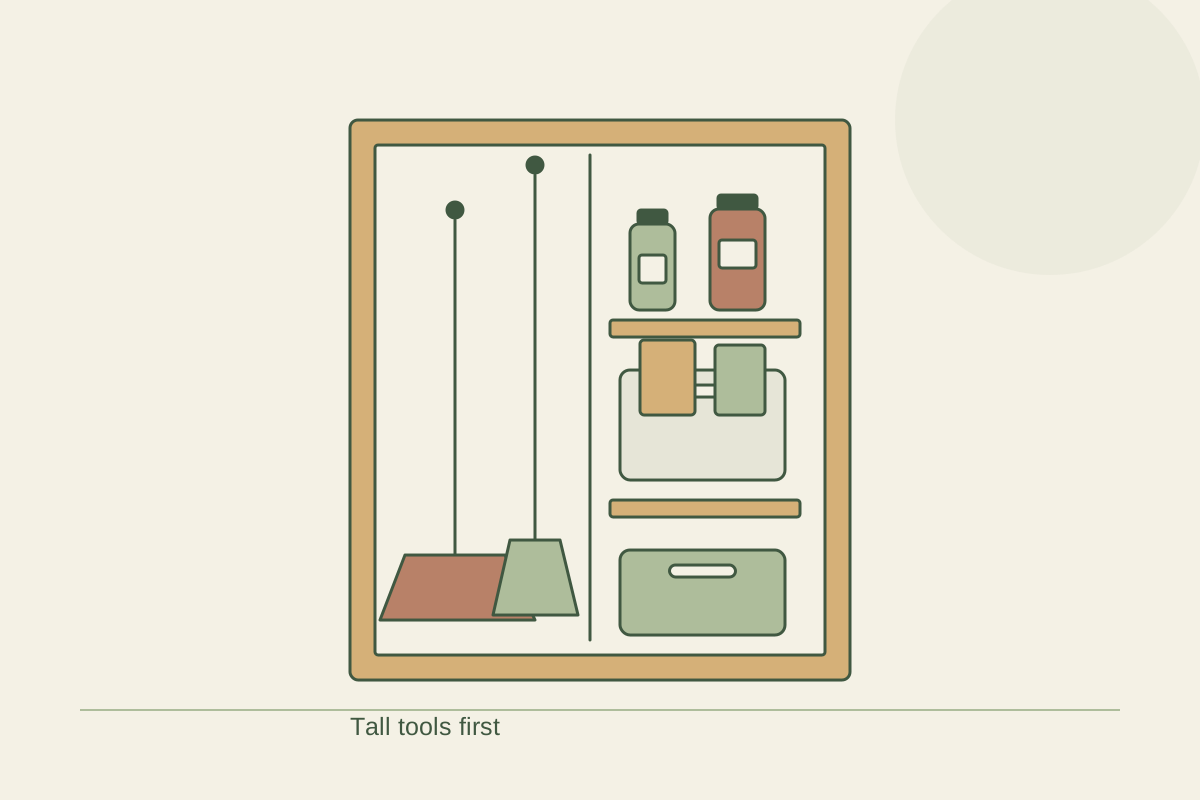
Put the tallest things in first
Empty the cabinet and stand the broom, mop or folding equipment inside before adding boxes. Check that handles clear the shelf above and do not catch the door. Keep the floor area accessible enough to remove the longest object without unloading a stack. Follow equipment instructions for storage, especially when an item must dry before being enclosed. A narrow cabinet becomes frustrating when its only open strip is filled last with unrelated overflow.
Use depth in removable groups
Put small compatible supplies in shallow handled containers, with frequently used pieces toward the front. Keep labels visible and preserve original product packaging and storage directions. A back row works for identifiable duplicates, not miscellaneous loose objects. If you add a door organizer, check its installed depth with the cabinet closed and confirm its weight limit. A centimeter of extra storage is not useful if it prevents the door closing or blocks a long handle.
Protect the return movement
Take each daily item out and put it back while the cabinet is fully stocked. You should not need to angle three other things aside. Move low-frequency objects higher only where you can retrieve them appropriately; a top shelf is not a place to hide everything awkward. Leave a modest empty section for the item currently in use. Review the cabinet after laundry or cleaning day, when all the equipment has returned and its true capacity is visible.