Set the table before inviting extra chairs
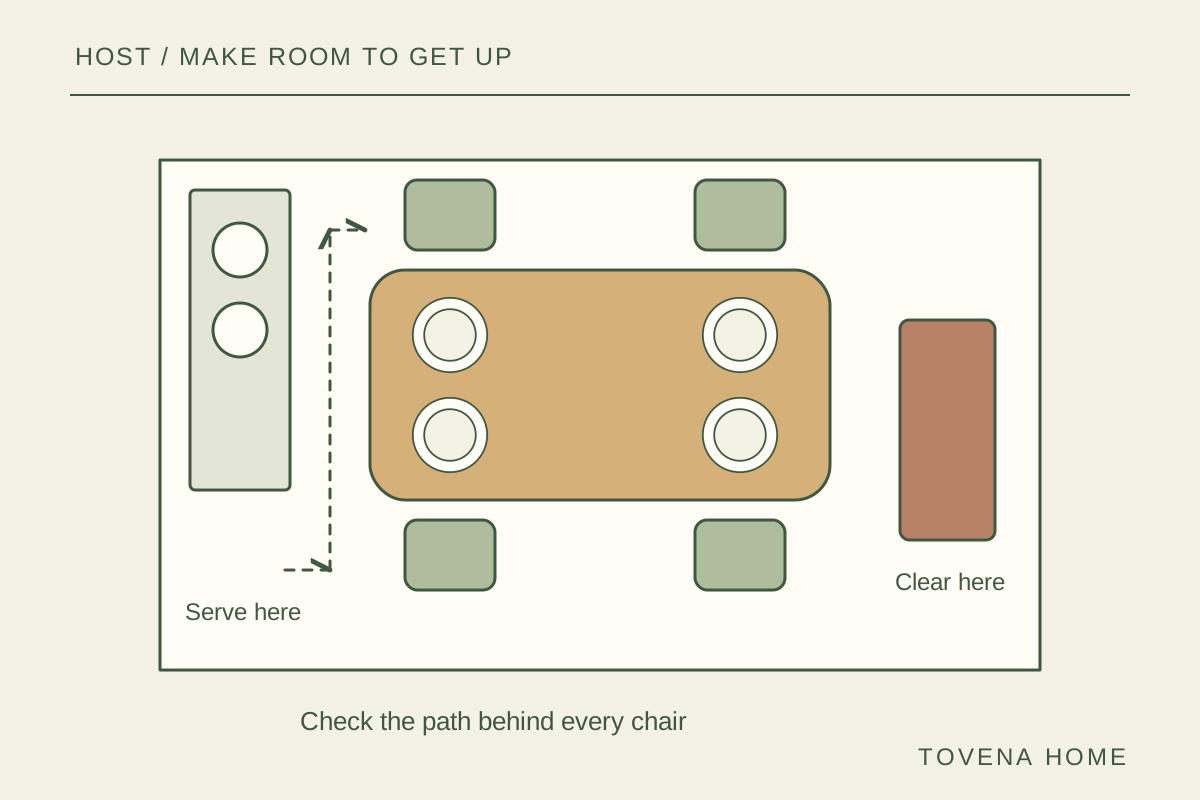
Lay out the plates and glasses for the number of people you hope to host. Add the chairs and sit in each position, including the corners. Check that everyone has a usable place for their plate and legs. Narrow chairs do not solve a table that lacks elbow room. If the arrangement is uncomfortable, reduce the seated group or choose a different style of meal rather than making the room work beyond what it can reasonably hold.
Leave one clear serving route
Walk from the kitchen to the table carrying an empty tray. Notice the chair backs, open drawers and tight turns along the way. Place any self-serve dishes where guests can reach them without squeezing behind someone who is eating. Move a small side table out for the evening if it interrupts the route, but keep somewhere reliable for drinks. Do not use unstable furniture or stack objects to create extra seats; choose proper seating suitable for its intended use.
Simplify the meal around the layout
Choose dishes that do not all need individual last-minute plating in the same small kitchen. Keep spare napkins and cutlery accessible before anyone sits down. A counter-service meal can work well when the table needs its middle kept free, provided the counter route remains easy. Set aside a place for used dishes rather than letting them take over the only preparation surface. The room will feel more generous when movement is straightforward, even if the table and chairs are all ordinary everyday pieces.