Lay out one outing, not every possible outing
Put the empty tote beside the things you expect to use on this particular trip. For a short park visit, that might mean a folded blanket, a book, a bottle and a small pouch. Leave the extra layers nearby until you know how much space the essentials take. Packing every spare item first makes it harder to judge the bag.
Group the items by when you will need them: on the way, when you arrive and when you leave. A bus pass belongs with the things you can reach without unpacking. A blanket can wait until you reach the park. This sorting step is useful even if you keep using a tote you already own.
Contain small items before filling the main space
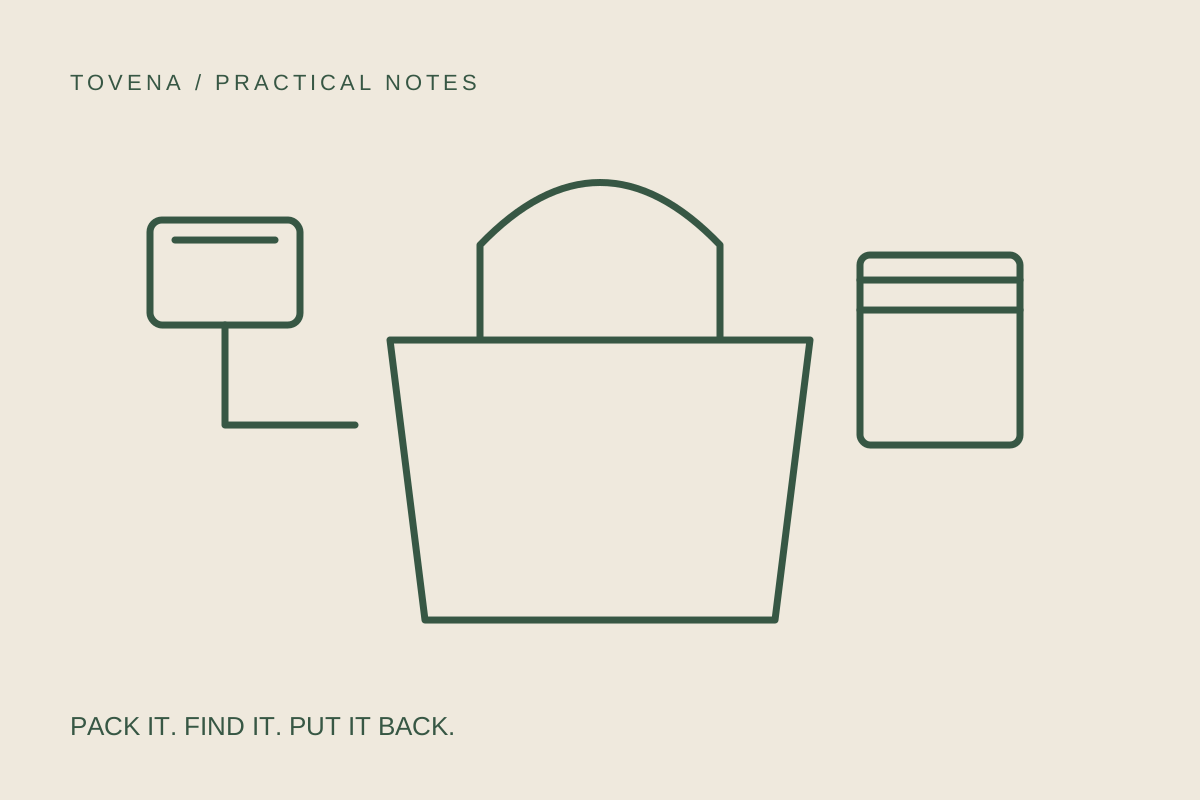
Use a pouch you already have for keys, earbuds and other small belongings. Choose one you can recognize by touch or color, and decide where it will sit inside the tote. An open pocket may be convenient, but check its closure before trusting it with something you cannot afford to lose.
Keep the items you reach for together without putting everything into one bulky bundle. A thin pouch can sit near the top while the book stays upright beside it. Check that the pouch can be lifted out without catching the handles. If it disappears under the blanket during the first trial, change its position now.
Pack around shape and access
Place the larger, less frequently used items first, then fit smaller pieces around them. Keep rigid corners from pressing against a delicate item or the side of the bag. Use the actual bottle or container you intend to carry for the trial; a smaller substitute will give you a misleading impression of the available space.
Close or gather the bag in the way intended by its maker. Do not force a drawstring around an overfilled opening. Lift the tote a short distance from a clear surface and check whether the contents shift into an awkward lump. A load that technically fits can still be inconvenient to carry or unpack.
Check how a convertible tote opens
For a tote that opens into a mat, plan where the contents will go while you unfold it. Do not assume the bag can become a clear surface while everything remains inside. At home, try the full sequence: set down the bag, remove the contents, open the mat and put the belongings where you can reach them.
The picnic-tote listings in our catalog describe an opened mat measurement separately from the shipping package. Ask for the closed tote dimensions when they are not provided. Also confirm the selected shape and model. The size of the opened surface does not tell you whether a particular book, box or bottle will fit inside.
Plan for the trip home
Bring a separate container appropriate to anything that may come home dirty or damp. Do not assume the tote itself can be machine washed or that its lining is waterproof. Check the care information before choosing what to put directly against it, particularly when returning from grass, sand or a wet bench.
Leave a little room for the things that rarely pack as neatly on the way back: an unfolded layer, an opened pouch or a receipt. If the bag closes only when every item is arranged perfectly, remove something or choose a different bag. The return journey should not require rebuilding the original packing arrangement on the ground.
Make the last check a retrieval test
With the bag packed, retrieve the keys and the first item you will need on arrival. Put both back and close the bag again. Carry it around the room briefly without exceeding the maker's instructions. Check handle comfort, balance and whether you can set it down without the contents spilling out.
After the outing, empty the tote instead of leaving yesterday's small items hidden inside. Follow its care instructions and put it away only when it is ready for storage. Note what you actually used and what you carried unnecessarily. On the next similar trip, start from that useful list rather than refilling every empty corner.
Compare the options
| Situation | Try this | Check first |
|---|---|---|
| Small items get lost | Use an identifiable pouch | Reach it without unpacking |
| The tote opens into a mat | Practice the change at home | Where the contents go |
| The bag stays by the door | Give it an unloading spot | Care and drying instructions |
Your checklist
0 / 5 completed
Common questions
Does a mat size describe the closed tote?
No. Confirm the usable closed-bag dimensions separately, including the opening and any narrow sections.
Should I fill every available space?
Only if the contents remain within the maker's instructions and you can carry and retrieve them comfortably. Empty space is useful when repacking.
Can I wash it after a picnic?
Use the care instructions for the selected model. Appearance alone does not confirm machine washing or waterproofing.