Notice the small pile before buying storage
Look at the things that collect beside the bed or on the dresser over an ordinary day. Separate what you use in that room from things that merely passed through it. A charging cable, reading glasses case and hair accessories may need homes here. A receipt to file or a mug to return probably needs a different destination.
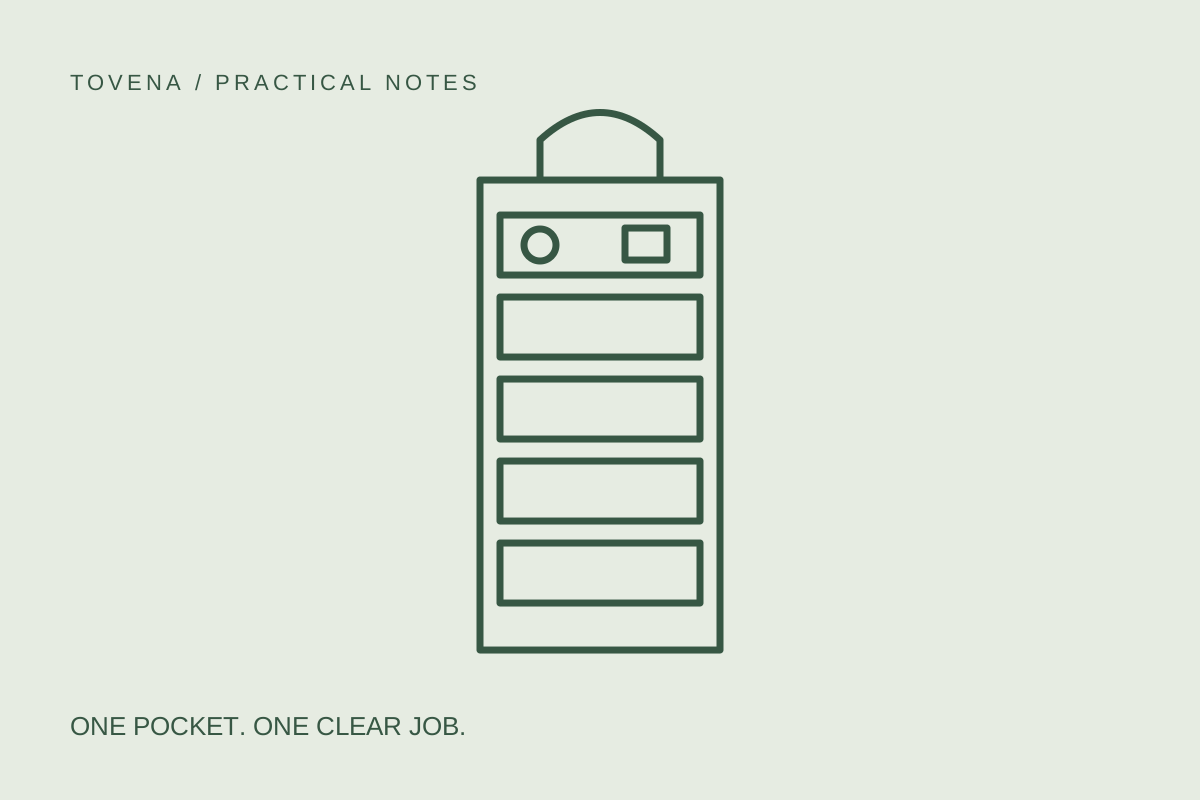
Try grouping the remaining items on a towel or tray before assigning pockets. You may find three useful groups rather than five. That is fine: an empty pocket is easier to use later than one filled just to complete the arrangement. The aim is to make putting things away obvious to the person who uses the room.
Measure the installed bag, not its parcel
Measure the intended hanging area from the mounting point downward. Include any baseboard, bedside table, cabinet handle or door swing that could interfere. Then consider the depth of a filled pocket. A flat empty bag in a photograph can occupy more room once it holds cases, folded cloths or other bulky items.
Compare those measurements with the installed dimensions for the exact model. A folded package measurement will not answer the question. If you cannot find the pocket opening size or usable depth, ask for it with a photo of your largest intended item. Do not order several organizers on the assumption that they will fit side by side.
Choose a mounting method before loading
Read the instructions for the selected hooks and the surface where they will attach. Adhesive hooks, wall fixings and over-door supports have different requirements. Do not substitute one method for another because it looks similar in a product photo. Confirm the included parts and any preparation or waiting instructions before putting items into the pockets.
Keep the arrangement away from a route where someone will brush against it or pull it while passing. An organizer is not a handle or a support for getting out of bed. If the surface, mounting method or permitted load is unclear, ask first. We do not have a verified load rating for the hanging organizers in the current catalog.
Assign pockets in the order you reach for them
Put the item you use most often in the easiest pocket for the intended user to reach. Try the position while standing or sitting where you normally use it. Avoid a plan that requires reaching across the bed or moving a chair every morning. You can rearrange the groups before adding labels.
For example, one pocket might hold a glasses case, another a small reading notebook, and another light fabric accessories. Keep cables unplugged and stored according to their instructions; a fabric pocket is not a charging station. Do not place hot tools, liquids or items with special storage requirements into a pocket because it happens to be empty.
Decide whether seeing the contents helps
A clear-window pocket may make a small item easier to identify, while an opaque pocket gives a quieter view. Compare the opening and construction rather than choosing only by the photograph. Ask whether support boards are included, how they fit and whether they need removing for care. Similar product names can describe different details.
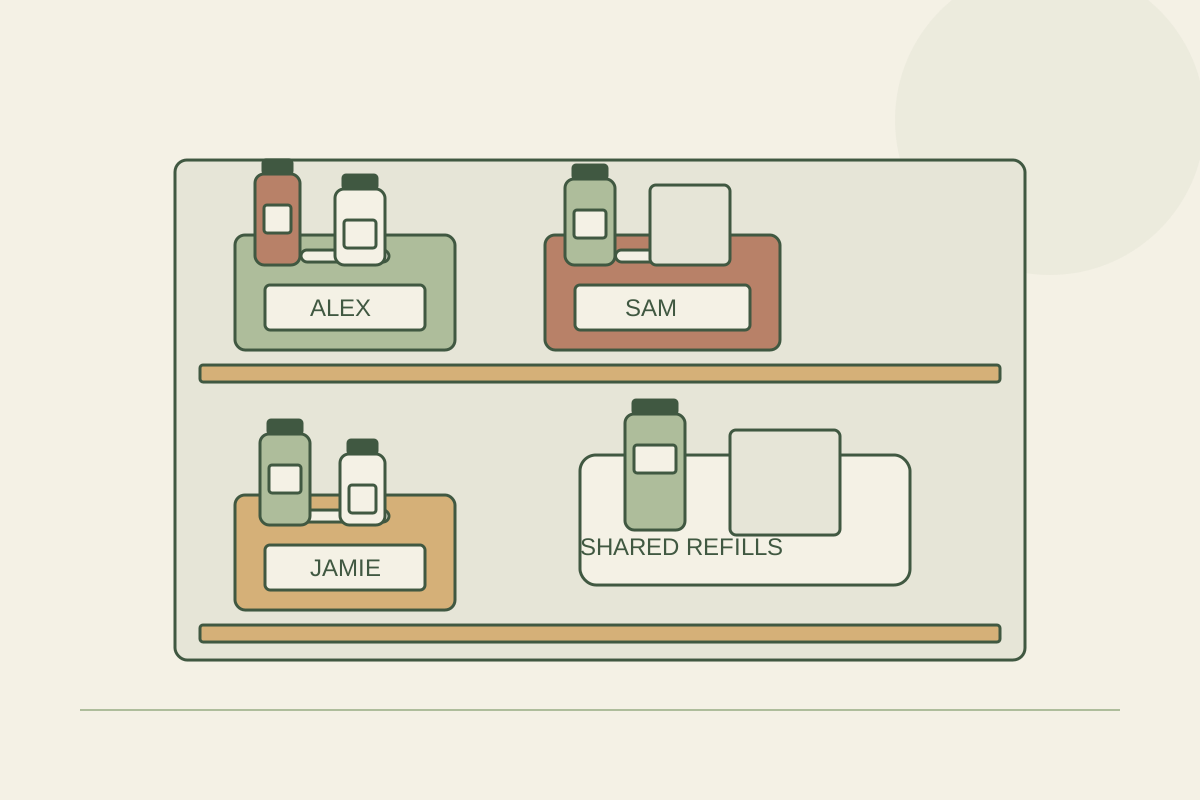
Use plain labels only where they solve a real question. A label such as hair ties is more useful than miscellaneous. If two people share the organizer, decide whether pockets belong to a person or an activity. Mixing both systems can make returning an item harder because there are two possible places for it.
Leave a little room and review what stays
Try the arrangement for several normal mornings before buying more storage. Notice the item that still lands on the dresser, the pocket that catches unrelated objects and anything difficult to remove with one hand. Change one assignment at a time so you can see whether the change helps.
During a quick room reset, remove things that belong elsewhere and check the mounting and fabric as directed by the manufacturer. Do not keep adding weight to a sagging pocket. A useful organizer has room for the next item to go back easily. If every pocket is tightly packed, reduce the contents before looking for another place to hang a second bag.
Compare the options
| Situation | Try this | Check first |
|---|---|---|
| Items disappear | Separate visible categories | Pocket opening and reach |
| Little spare floor space | A suitable hanging position | Surface, clearance and load |
| Pockets overflow | Reduce the daily contents | What belongs here |
Your checklist
0 / 5 completed
Common questions
Do all five pockets need a category?
No. Leave a pocket empty until there is a clear use for it.
Will adhesive hooks suit my wall?
Confirm suitability, preparation and load instructions for the actual hook and surface. Do not assume a painted wall will be damage-free.
Is the clear-window version the same size?
Do not assume so. Compare the selected listing's installed measurements, openings and included supports.