Observe the first minute after coming home
Walk in carrying your usual bag and shoes. Notice where your hand wants to put keys, where the bag lands and which direction you move next. Build around that sequence rather than copying a full entryway furniture set. If the door opens directly into a living room, a small surface beside an existing cabinet may be enough. A console behind the door is not convenient if you must close yourself in before reaching it. Keep the arrangement outside the normal door movement.
Reserve the route before adding storage
Open the front door fully and test the path into the room with an ordinary shopping load. Repeat with cabinet doors and any nearby seating in use. Do not treat a decorating suggestion as a required building clearance; follow applicable property requirements and keep the exit usable. Mark a proposed furniture footprint with removable tape before buying. A slim-looking cabinet still projects into the room, and a bag hanging from its side can extend farther than the furniture itself.
Limit the daily shoe collection
Keep the pairs currently worn near the entrance and store occasional footwear elsewhere. Place the actual shoes on a temporary mat or shelf to see how much room they need, including taller and larger pairs. Test whether you can lift them without moving the neighboring pair. Avoid deep piles inside a bench: they hide what is available and make putting shoes away more complicated. If the storage only works when everybody owns one identical pair, it is not sized for the household.
Choose coat storage by the full hanging shape
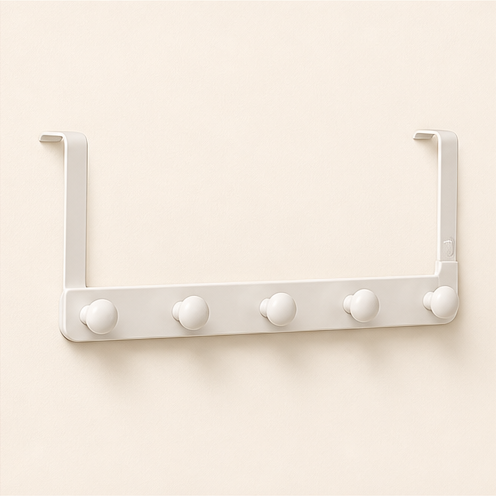
Hold a bulky coat at the proposed hook position and check its hem, sleeves and effect on nearby seats. A free-standing rack can work where it remains stable and does not interrupt the route; follow its instructions. Wall hardware needs a suitable surface and mounting method. Command's hook instructions, for example, distinguish products and installation steps: use the directions for the exact model, including its weight limit and waiting period. In a rental, confirm permitted changes before choosing a fixed installation.
Try a minimal arrangement first
Illustrative example: a door opens into a living room with a short wall beside an existing bookcase. Instead of adding a bench and console, the household tries a small key dish on the bookcase, a shallow shoe tray below and space for two current bags inside a cabinet. Coats remain in a nearby closet. After a week, they can tell whether a hook would help. This staged approach tests the missing function before committing the room to more furniture.
Keep arrivals from becoming permanent storage
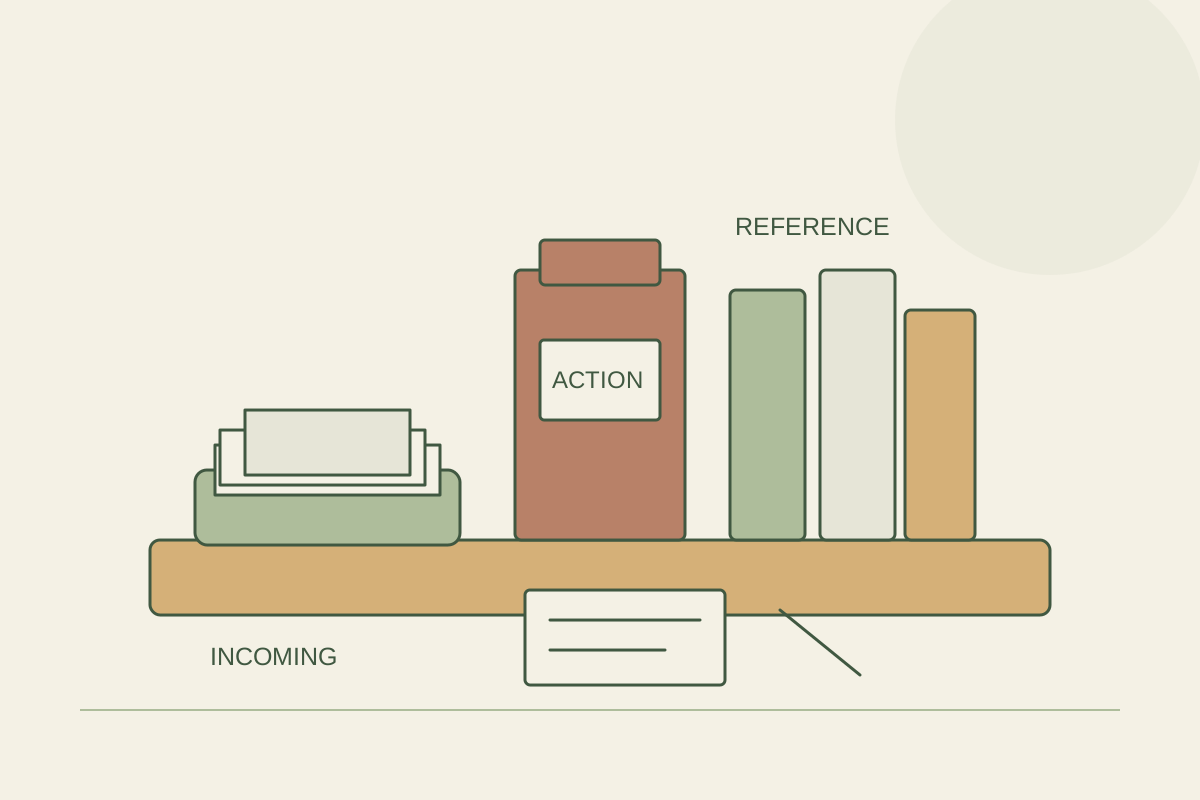
Give incoming mail a separate small tray and process it regularly. Return reusable shopping bags to the departure point after unpacking. Damp outerwear needs an appropriate drying arrangement before enclosed storage, following its care instructions. At the end of the week, move extra shoes and coats back to their regular places. If the landing zone keeps overflowing, reduce its scope or adjust an inconvenient location before expanding it into the seating area. An entry should make arriving and leaving simpler for everyone using the room.
Compare the options
| Setup | Works when | Watch for |
|---|---|---|
| Existing cabinet plus key dish | The surface is on your route | Mail spreading across the top |
| Shallow shoe tray | Only daily pairs stay here | A tray projecting into the path |
| Coat hooks | Wall and mounting are suitable | Full coat width and hardware limits |
| Nearby closet | It is convenient to reach | No room left for current coats |
Your checklist
0 / 6 completed
Common questions
Do I need a bench at the front door?
Only if sitting there is useful and the bench fits while occupied. Test the movement of sitting, reaching for shoes and standing again. An existing nearby chair may serve the same purpose without adding another piece, provided the walking route stays clear.
Can I use adhesive hooks in a rental?
Check your lease or ask the property manager, then follow the exact product's surface and installation directions. Adhesive does not mean suitable for every wall or load. Do not assume a general no-drill description removes the possibility of damage or the need for permission.
How do I keep shoes from taking over the living room?
Define the current daily selection and give those pairs an obvious place. Move occasional pairs elsewhere and review the selection as weather changes. A bigger rack helps only if capacity is the actual problem; an awkward location can keep producing a floor pile.