Put the station on the route from the door
Notice where mail lands during an ordinary arrival home. Choose a small nearby surface that can be reached without moving grocery bags or balancing envelopes over the sink. A standing file on a console or a tray near the desk may work better than a decorative sorter mounted far from that route.
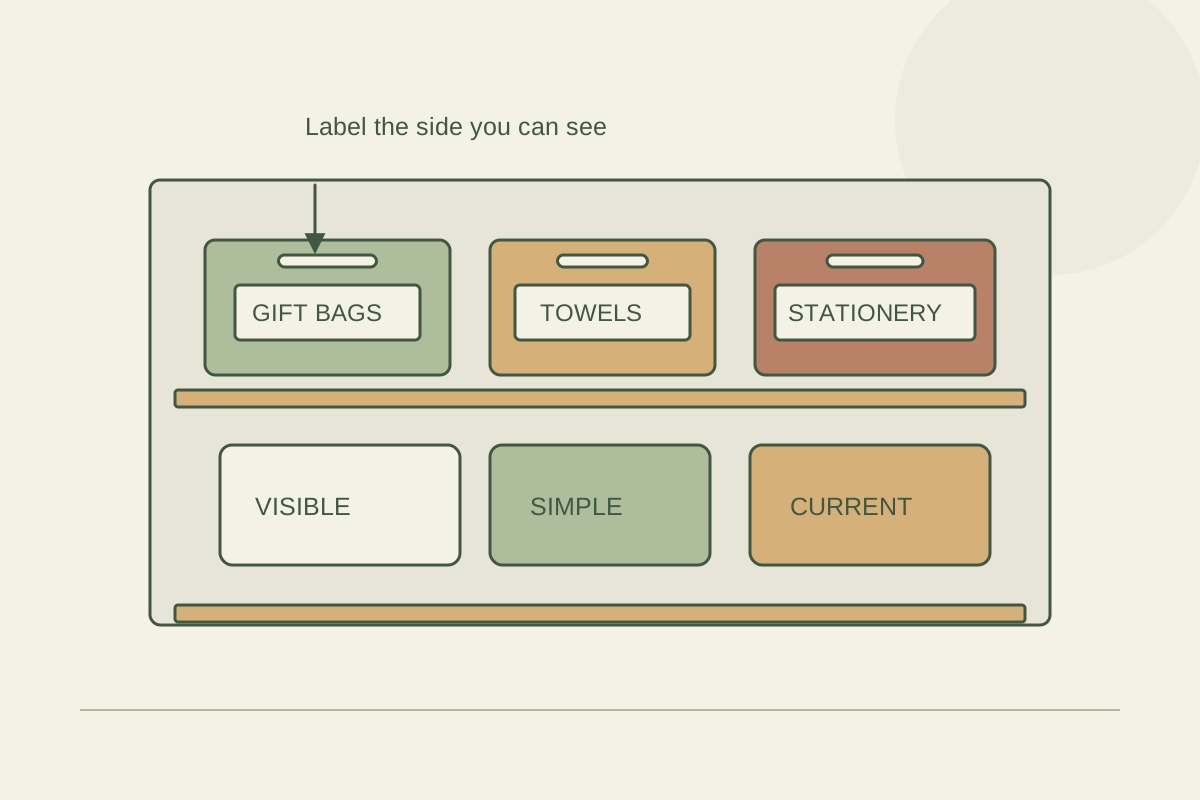
Start with a container you own. Test it for a week before buying a matching set of office supplies. The useful size is one that holds normal incoming mail while making a backlog obvious. A deep basket often hides the oldest envelope at the bottom, which is exactly the piece that may still need attention.
Give each piece a next step
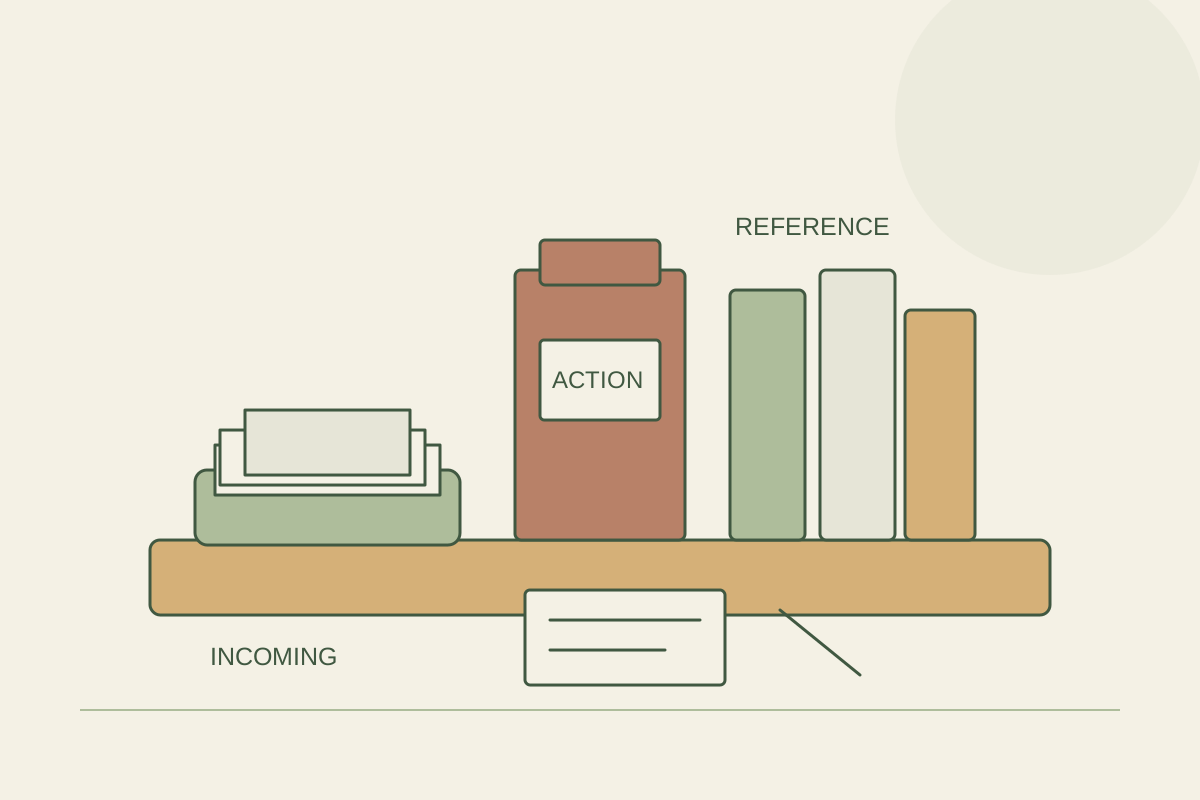
Open the mail when you can make a small decision, not while halfway through another task. Separate items needing action, records needing filing, and material you no longer need. Keep envelopes with documents only when the envelope contains useful information, such as a return address you have not recorded elsewhere.
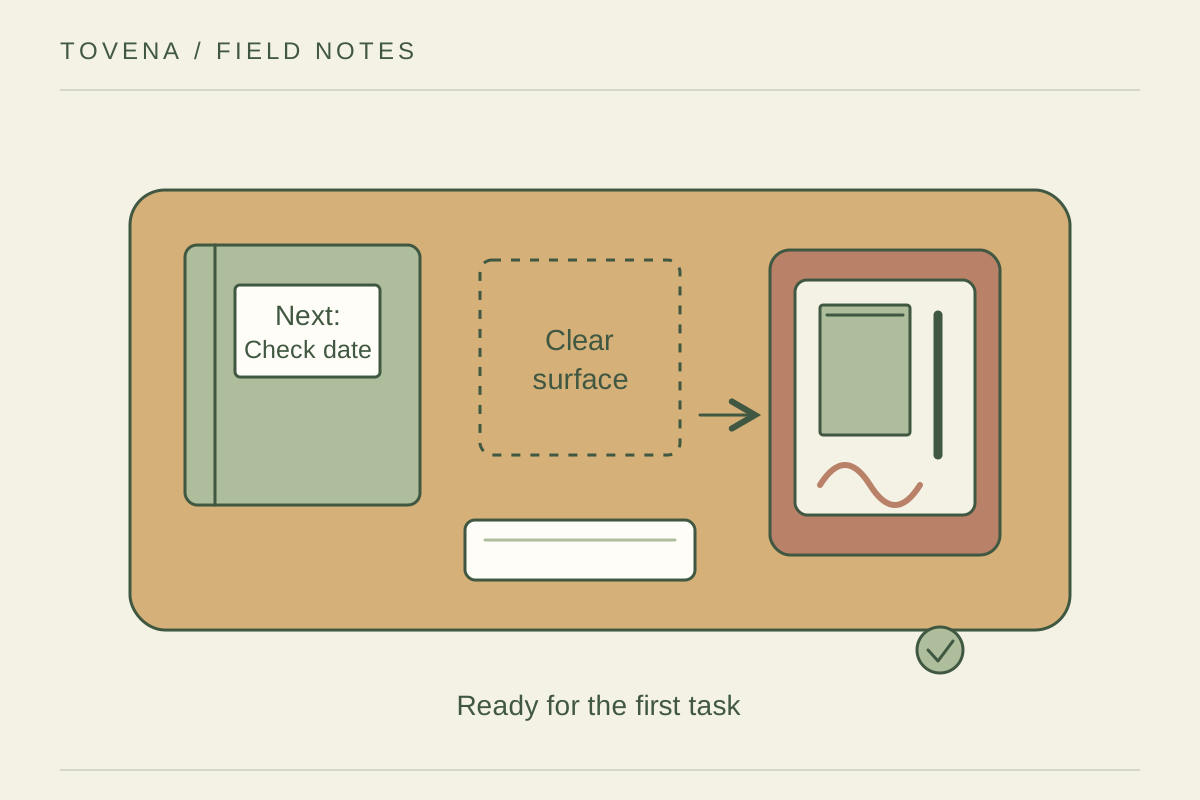
Write the next action on a removable note: call about a charge, return a form, or check an appointment. Add a due date to your calendar when needed. “Important” is not a usable next step, and a pile of unopened important mail is still a pile. Put the action folder where you normally deal with these tasks.
Separate current tasks from long-term records
The mail station is a short stop, not the home for passports, tax files, medical history, or every appliance manual. Move records worth keeping to your established filing location after the immediate task is finished. Keep private papers away from guests and other people who do not need access.
Do not adopt one blanket retention period from an organizing checklist. Requirements depend on the document and your circumstances. Check the issuer, relevant agency, or a qualified adviser when a record may have tax, legal, insurance, or other consequences. This guide describes a household sorting routine rather than a rule for deciding how long every document must be kept.
Make disposal part of the route
Keep ordinary recycling separate from a closed collection for sensitive papers awaiting shredding. The FTC advises shredding documents with personal or financial information when it is time to dispose of them. If you use a community shred event, confirm what it accepts and keep the waiting papers in a secure place until then.
Do not leave the sensitive-paper collection beside an open trash bin where someone may empty both together. Label the container plainly. Follow the shredder manufacturer’s instructions for accepted materials and operation. Avoid accumulating a huge batch by giving disposal its own regular place in the routine.
Clear the action folder during a short appointment
Choose a repeatable time when the relevant services are available if calls are likely. Take each item out, carry out the task, and then file or dispose of the paper appropriately. If a task is waiting on someone else, write what you are waiting for and a sensible follow-up date before returning it.
End by checking the incoming spot, not by rearranging the unfinished folder. If the same papers return every week, the missing ingredient may be a phone number, account access, or a decision from another household member. Identify that obstacle. A smaller tray helps expose delay, but it cannot complete the task on its own.
Compare the options
| Option | Useful for | Check before choosing |
|---|---|---|
| Single open tray | New mail awaiting sorting | Oldest envelope stays visible |
| Action folder | Tasks with a next step | Deadlines recorded elsewhere too |
| Secure records storage | Documents worth retaining | Privacy and document requirements |
Your checklist
0 / 5 completed
Common questions
Can I scan everything and discard originals?
Check the document’s requirements first. A scan can be convenient, but it does not automatically replace every original. Store digital copies securely and verify the file is complete and readable before making a disposal decision.
What if several people receive mail?
Use a clearly named slot for each person and agree on when they collect it. Keep private correspondence private. Shared household tasks can move to the action folder only when the person responsible understands the next step.
How do I stop catalogs filling the tray?
Remove unwanted catalogs during the first sort and use the sender’s preference options to request fewer copies where available. Keep only those you intend to use, with a specific place and a date to revisit them.