Set the places before the centre
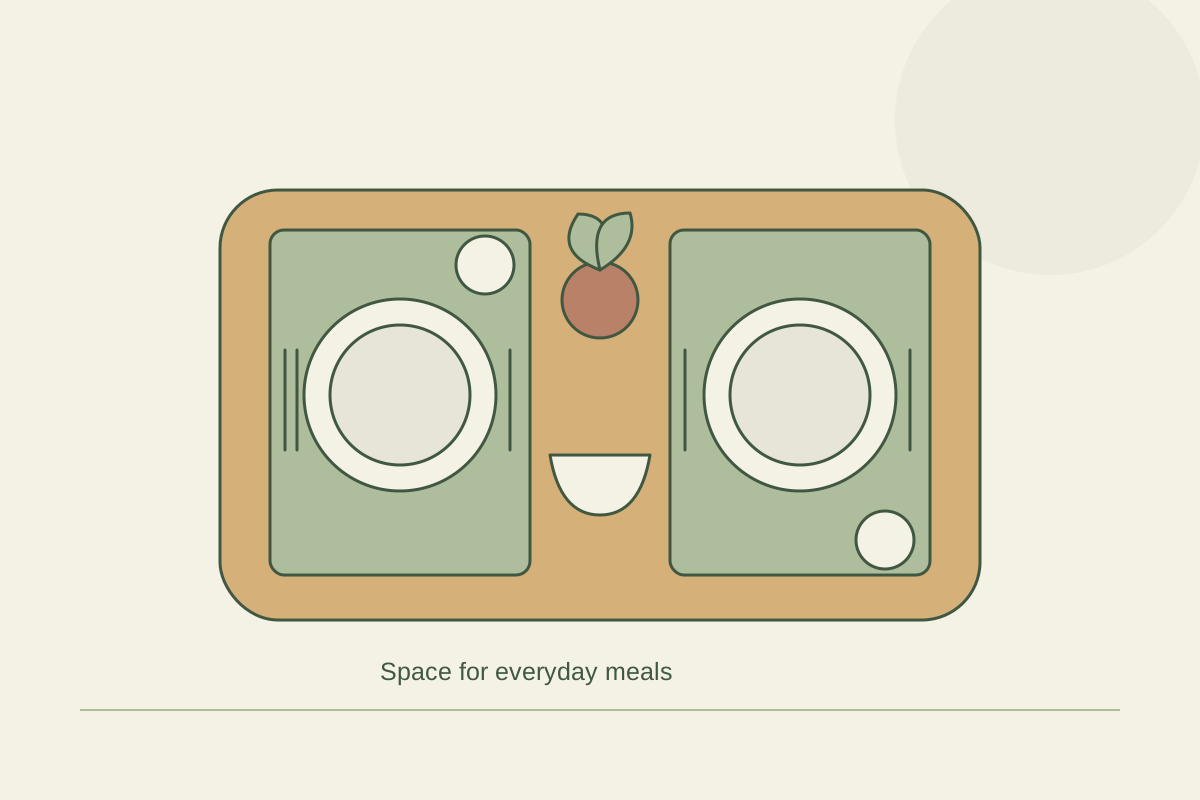
Place the plates, glasses and cutlery you use for an ordinary meal. Sit down and check where your elbows land, then add the shared serving dishes. Only afterward decide whether the middle has room for flowers or a bowl. On a compact table, one low object is often enough. A centrepiece that must be removed before every dinner is asking the room to do extra work, however attractive it looks between meals.
Use textiles selectively
Choose either easy-to-remove placemats or a tablecloth that suits your washing routine. Layering a runner, cloth and oversized mats can make a small surface feel more crowded. Measure a placemat with a full place setting on it: a glass perched on the edge defeats its purpose. If the table doubles as a desk, store dining textiles in one nearby drawer so switching uses does not require a trip across the house.
Give paperwork a different address
A table near the entrance will collect mail and bags unless they have another landing place. Put a shallow movable tray nearby for items that need attention, and clear it before it grows into a pile. Keep the table's daily reset modest: remove work, wipe the surface and return one useful object. You do not need to stage a formal dinner each morning. The most inviting table is one you can sit at without relocating yesterday's tasks.