Start with the door and building rules
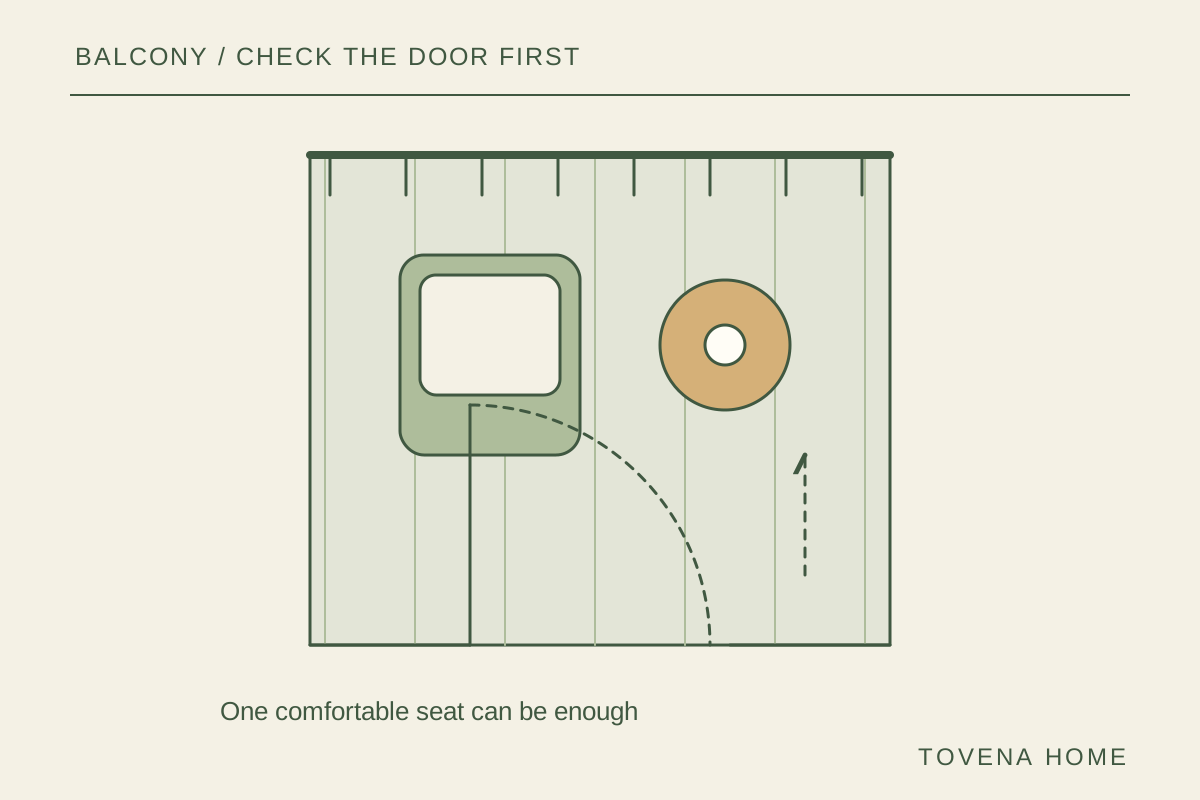
Check the balcony's permitted use and any building rules before adding furniture or attachments. Open the door fully and identify the space that must remain clear for access. Do not infer load capacity from how solid the balcony looks, and do not alter railings or use them as furniture supports. Draw a simple plan showing the door movement and fixed features. That outline often reveals that one comfortable chair will work better than a cramped two-seat arrangement.
Test the chair while someone is sitting
Place a chair-sized outline on the floor, then test with a suitable existing chair if practical. Leave space for knees and for getting up without leaning against the railing. Check where a small table could stand without becoming an obstacle. Choose furniture intended for the setting and follow its instructions for use, weather exposure and storage. A folding piece is helpful only if you have somewhere suitable to put it when folded, not just somewhere to lean it temporarily.
Keep the setup easy to bring indoors
Decide how loose cushions and small objects will be brought inside according to conditions and product guidance. Avoid arrangements that leave light objects unattended where wind can carry them away. Keep access to drainage and routine maintenance points unobstructed. Add decoration only after you have used the seat for a while; a plant or accessory should not take the place where your feet need to go. The best small balcony corner is one you can set up, use and put away without a complicated sequence.