Choose a changeover day, not a perfect season
A closet rotation works best when it makes tomorrow morning easier. Begin with the clothes you wore during the last ordinary week, then add pieces needed for work, exercise, and a likely change in weather. A calendar date cannot tell you whether your home still needs a rain jacket or a warm layer. Keep those exceptions with the current clothes.
Empty one section at a time onto a clean surface. Finish that section before starting another so the bed remains usable that night. Make separate groups for current wear, later wear, repairs, and items you have decided to let go. Do not use a storage container to postpone every undecided choice.
Store outfits you will recognize later
Group later-season clothes by the way you will look for them: cold-weather work tops, beach clothes, or heavier sleepwear. A single enormous winter category often means opening several containers to find one scarf. Keep accessories with the clothes they support when that saves a separate search.
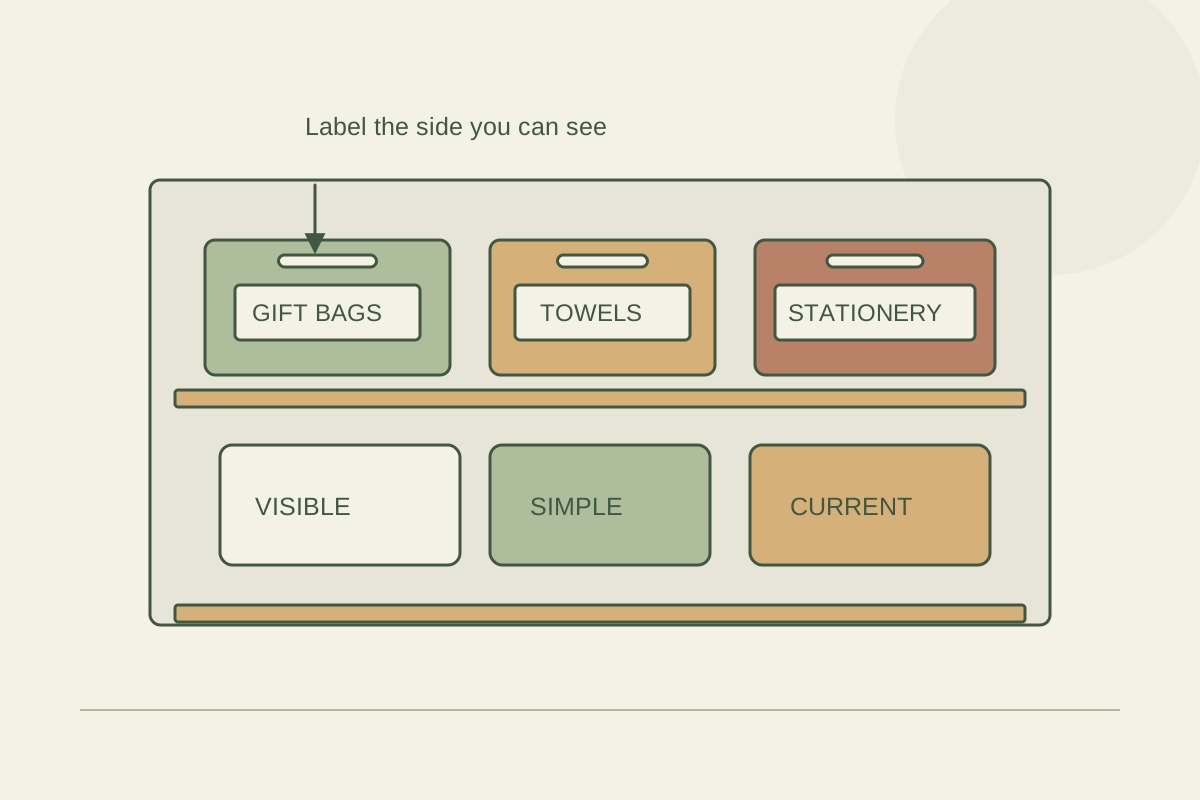
Write a short inventory before closing a container. A label such as “warm work tops, shelf above shoes” gives more information than “winter.” If several people share the closet, include a name. Keep the inventory on paper inside the lid or in a phone note; neither method needs a special organizing app.
Measure the filled group before buying a box
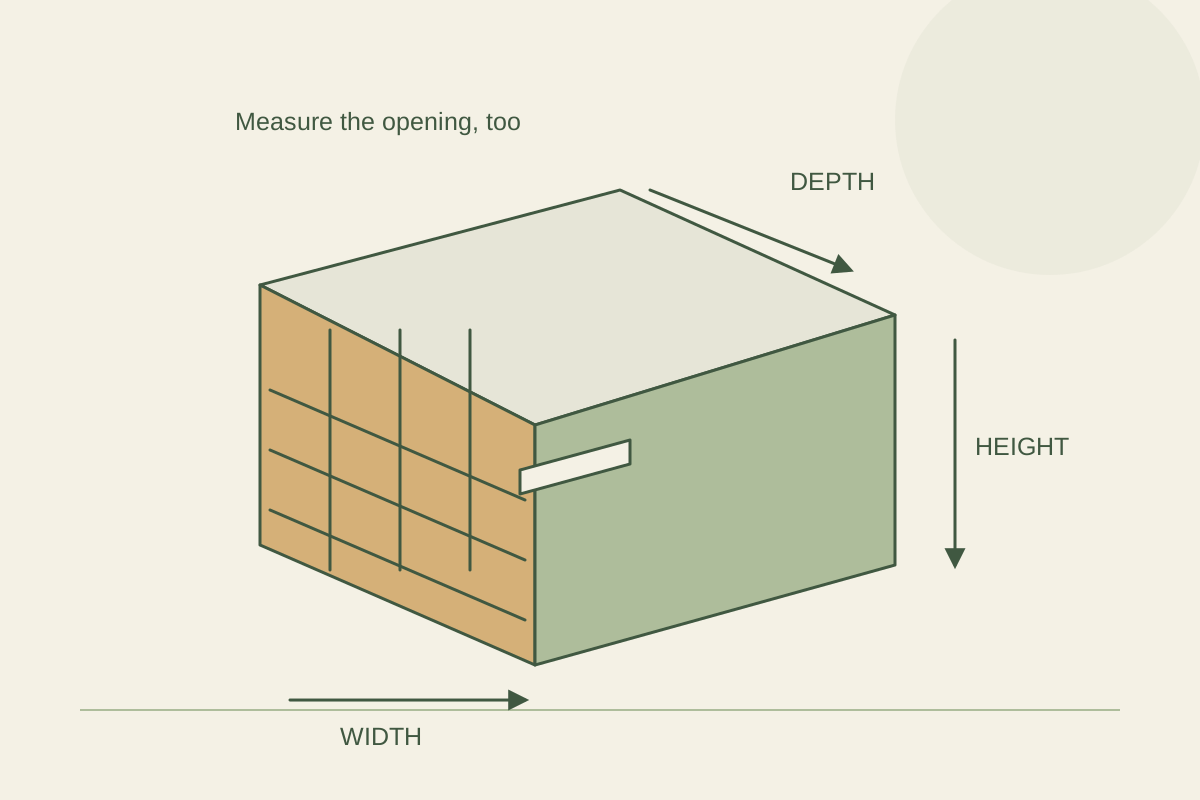
Fold the actual clothes and measure the resulting stack. Then measure the shelf opening, including the door frame, hinges, and any lip at the front. A box can fit the shelf on paper yet be impossible to lift out once its lid and handles are included. Test the movement with an empty carton first.
For example, a hypothetical 30-inch shelf opening might accommodate two 14-inch-wide containers, leaving 2 inches between them in total. That does not establish a recommended clearance: the handles, shelf depth, and your grip still decide whether the arrangement works. Smaller separate groups may be easier to retrieve than one heavy tub.
Pack clean clothes with their care needs in mind
Read each garment’s care instructions before cleaning or packing. The Canadian Conservation Institute advises putting textiles away clean and dry in a cool, dark, dry location with ventilation. That basic principle is useful here; this household routine is not a preservation plan for a fragile heirloom or historic garment.
Avoid crushing items simply to finish the job. Follow garment or storage-product instructions for any compression method. Give structured pieces enough support, and keep delicate or unusually valuable clothing separate for advice suited to the material. A cabinet that smells damp needs investigation before it becomes the seasonal clothing store.
Make the next swap shorter
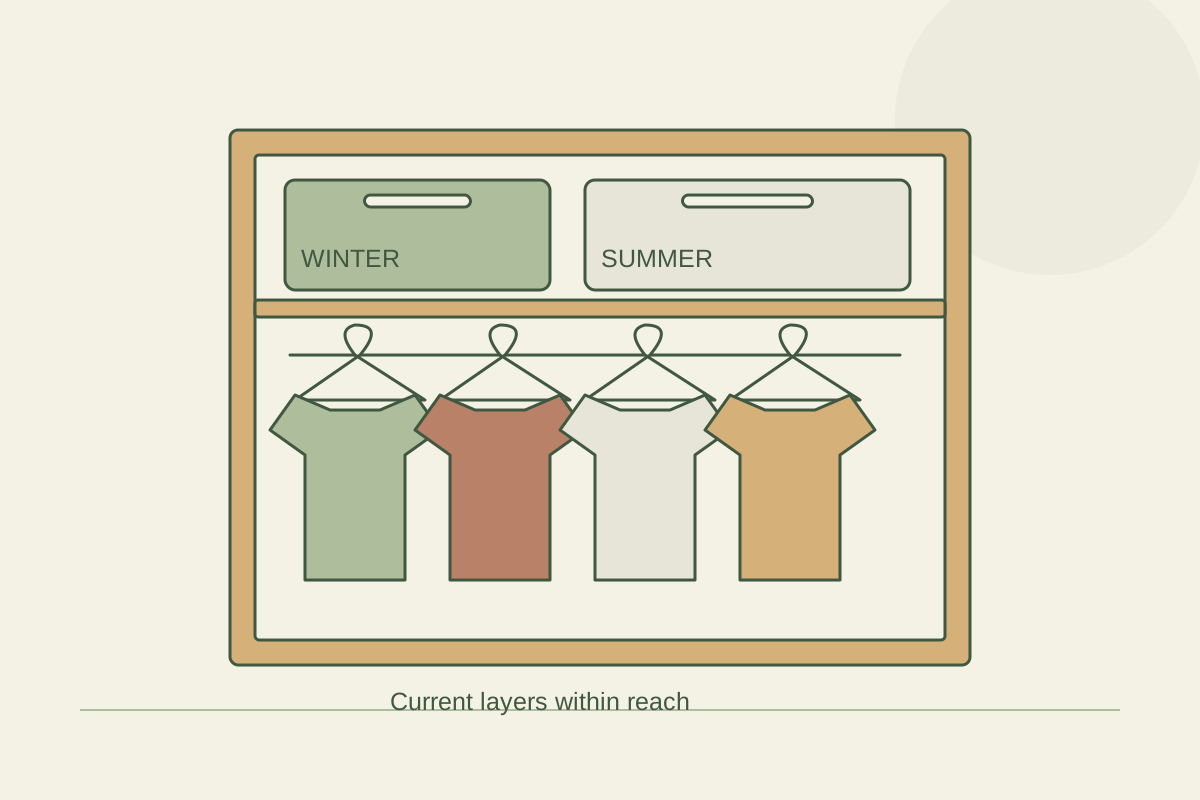
Leave a small accessible group for weather changes rather than mixing every exception into the packed clothes. Photograph the finished shelf and record which container holds each group. When something is removed midseason, update its inventory note so the system still describes what is there.
After a few weeks, look at the current closet rather than automatically buying another organizer. If clothes continually land on a chair, their assigned space may be awkward or too full. Move the most-used group into easier reach. At the next rotation, review what stayed untouched and decide whether it still earns its storage space.
Compare the options
| Option | Useful for | Check before choosing |
|---|---|---|
| Small labeled bins | Separate clothing groups | Handles and lifting space |
| Under-bed containers | Occasional bulky pieces | Frame clearance and retrieval route |
| Hanging garment cover | Suitable structured garments | Garment care and hanger support |
Your checklist
0 / 5 completed
Common questions
Should I rotate my entire closet?
Only if it improves access. A few rarely used bulky pieces may be all that needs moving. Keep year-round clothes where they are and avoid creating a second sorting job for things you wear regularly.
Can I use under-bed storage?
Yes, when the container clears the frame and can be pulled out without dismantling the room. Test it with the bed made, and keep the most frequently retrieved group nearest the accessible edge.
What if my seasons overlap?
Use a smaller rotation. Keep the usual basics in the closet and move only clear extremes, such as heavy coats or beachwear. Add one accessible layer for unusual days instead of reopening every box.