Measure a real stack
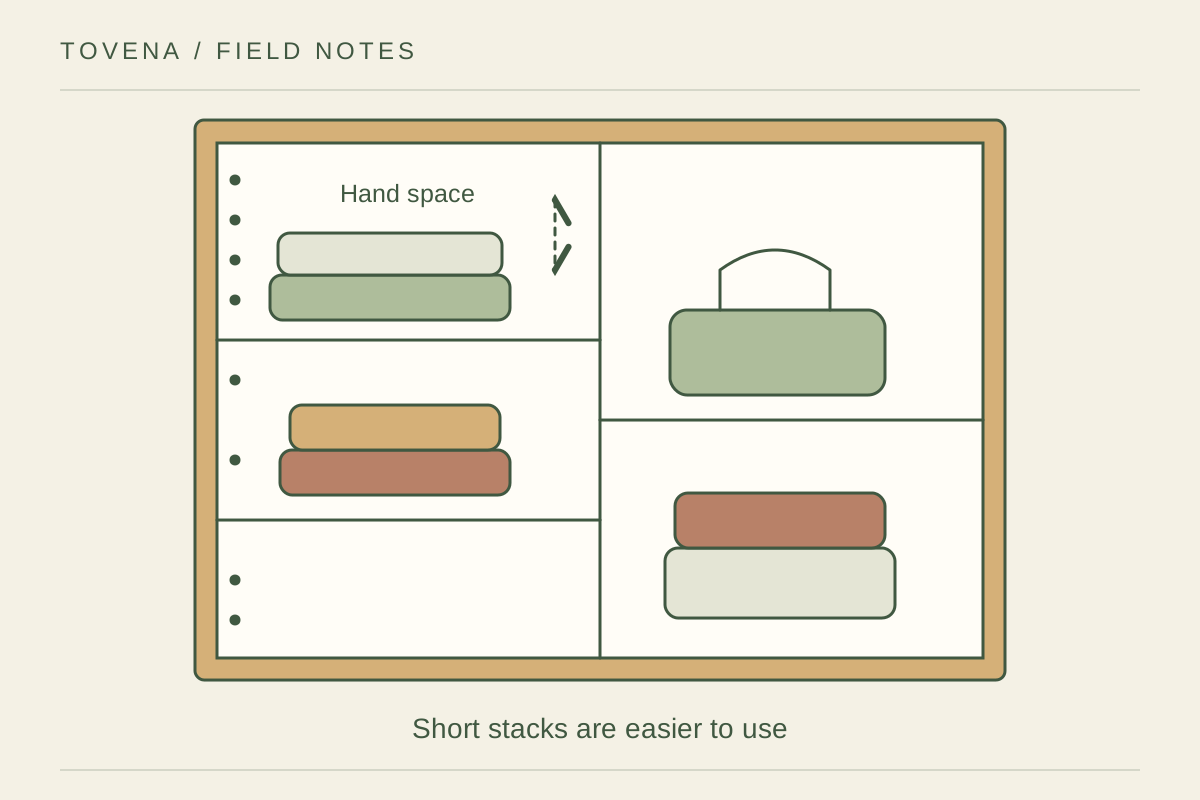
Fold the clothes the way you intend to keep folding them, then measure a typical stack of shirts, sweaters, or jeans. Do not design the cabinet around an unusually perfect shop fold that you will not repeat. Leave room above the stack for your hand to lift the top item. Check shelf depth too: a deep back row can disappear from memory, especially when the front row contains clothes you wear every week.
Separate unlike shapes
Bulky knitwear, small accessories, and handbags rarely benefit from the same shelf spacing. Group similar items before changing adjustable shelves. Shorter stacks are easier to remove without collapse; a divider may help if the shelf system supports one. Store occasional bags so they can be seen and lifted without pulling a chain through neighboring fabric. Follow the shelf maker's load rating and avoid improvising support hardware to gain an extra layer.
Test it with laundry day
The cabinet should work when clean laundry comes back, not only when part of the wardrobe is in the wash. Put all regular pieces away and see whether a stack immediately becomes too high. Keep the most used items at the easiest reach and use less accessible shelves for lighter, occasional things. Label a basket by its actual contents if one is needed. Revisit the spacing when clothing habits change rather than treating the first arrangement as permanent.