Watch the blank screen
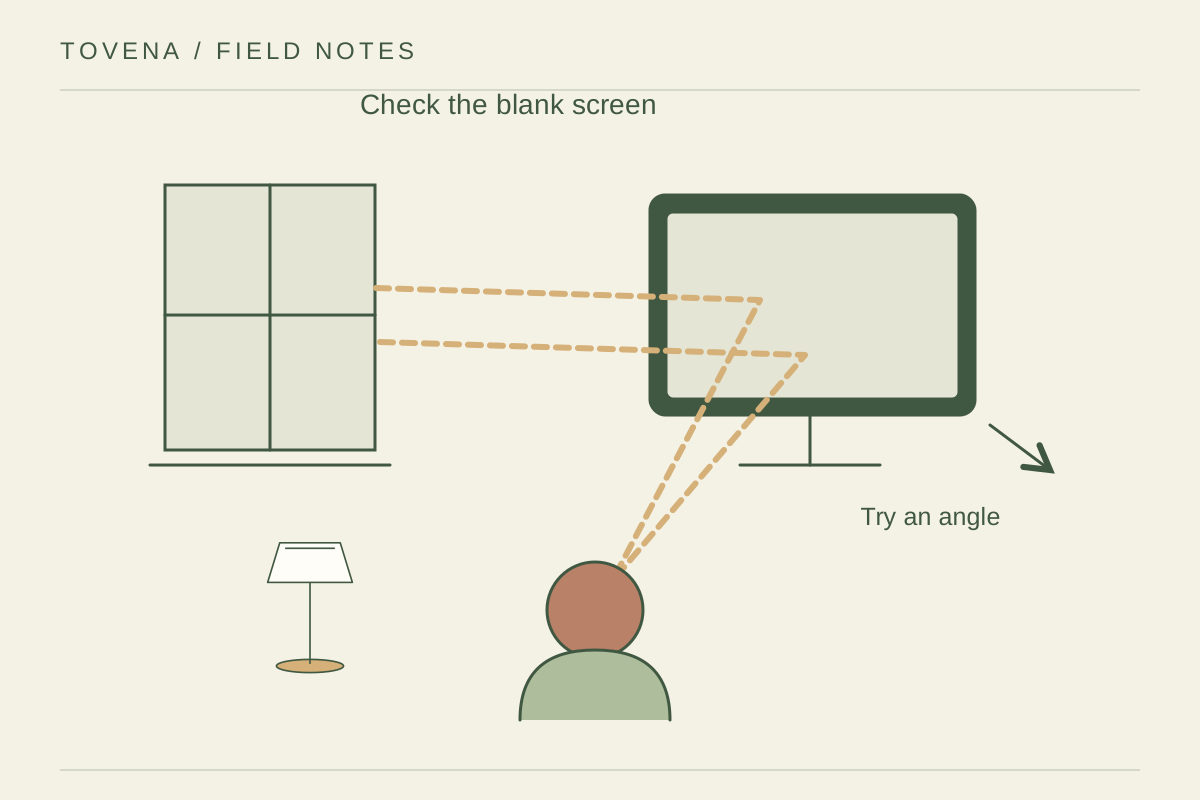
Turn the television off and sit where you usually watch. A dark screen makes reflected windows and lamps easy to see. Repeat this in the afternoon and after dark, because the problem may come from two different directions. Note which reflection falls across the middle of the screen. Buying a brighter television before checking these angles can leave the original layout problem in place, along with a more expensive screen.
Change one angle at a time
Try a slight turn of the seating or screen before moving every piece of furniture. Check all regular seats, not just the center one. If the window is the source, test an existing blind or a temporary fabric panel during the troublesome hour. A side window may be easier to manage than one reflected directly behind the viewer. Keep access to window handles and ventilation while testing any new curtain arrangement. Check the screen at the time you usually watch, rather than judging the change at noon.
Keep evening light out of the reflection
At night, move the most obvious reflected lamp to the side and check whether its shade hides the bulb from the viewing seat. A softer-looking shade does not guarantee a reflection-free screen. Try the actual arrangement before buying another lamp. Avoid placing a temporary light or cable in a walking route. Finish with an ordinary program rather than a bright showroom demonstration; darker scenes reveal whether your change has actually helped.