Mark the seating group
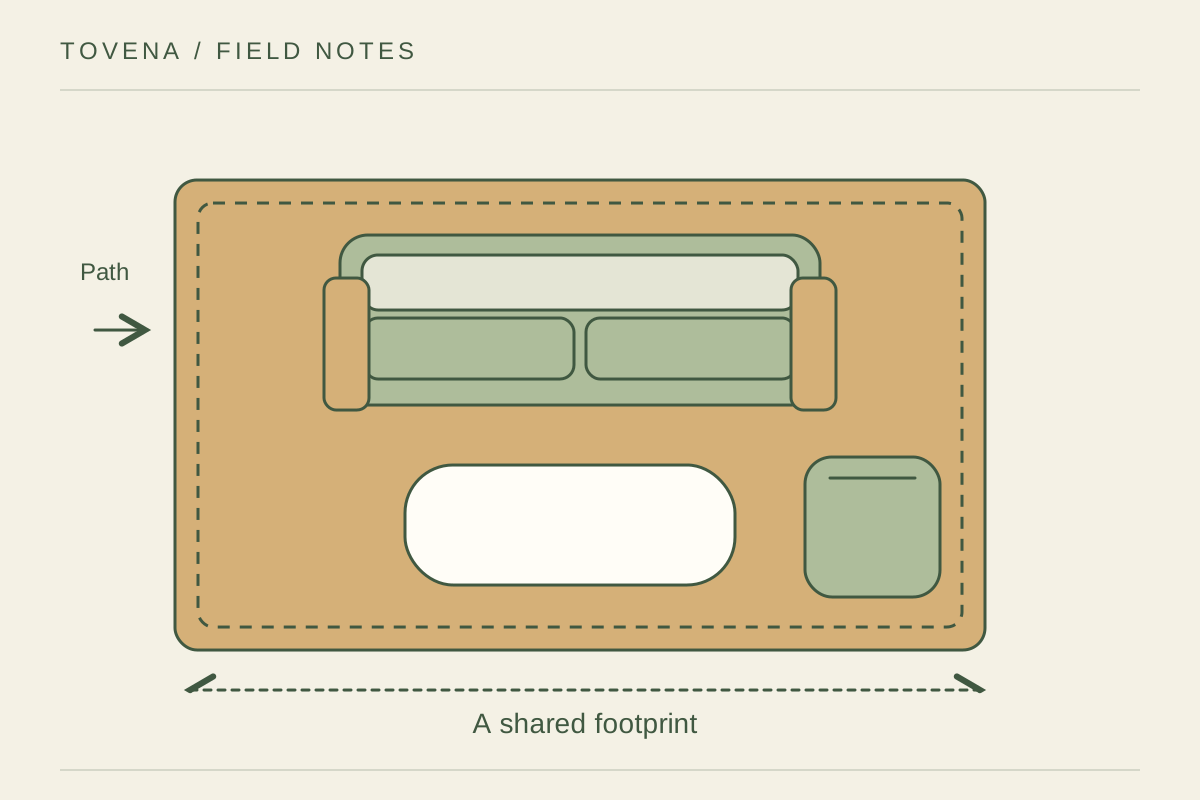
A rug should relate to the seats around it, rather than sit like a small island beneath the coffee table. Use painter's tape to mark two possible outlines on the floor. Include the sofa and any chair that belongs in the conversation area. A useful starting arrangement puts their front feet on the rug. Leave the tape overnight so you notice whether its edges cross a doorway or a route you use repeatedly.
Compare width before pattern
Stand at the room entrance and compare the marked rug width with the sofa width. A little visible rug beyond each sofa arm often makes the group feel settled; a rug narrower than the seat can look accidental. This is a visual test, not a universal measurement rule. If the larger size crowds a cabinet or fireplace surround, change the seating position before assuming an even bigger rug will solve the problem.
Check the edge in daily use
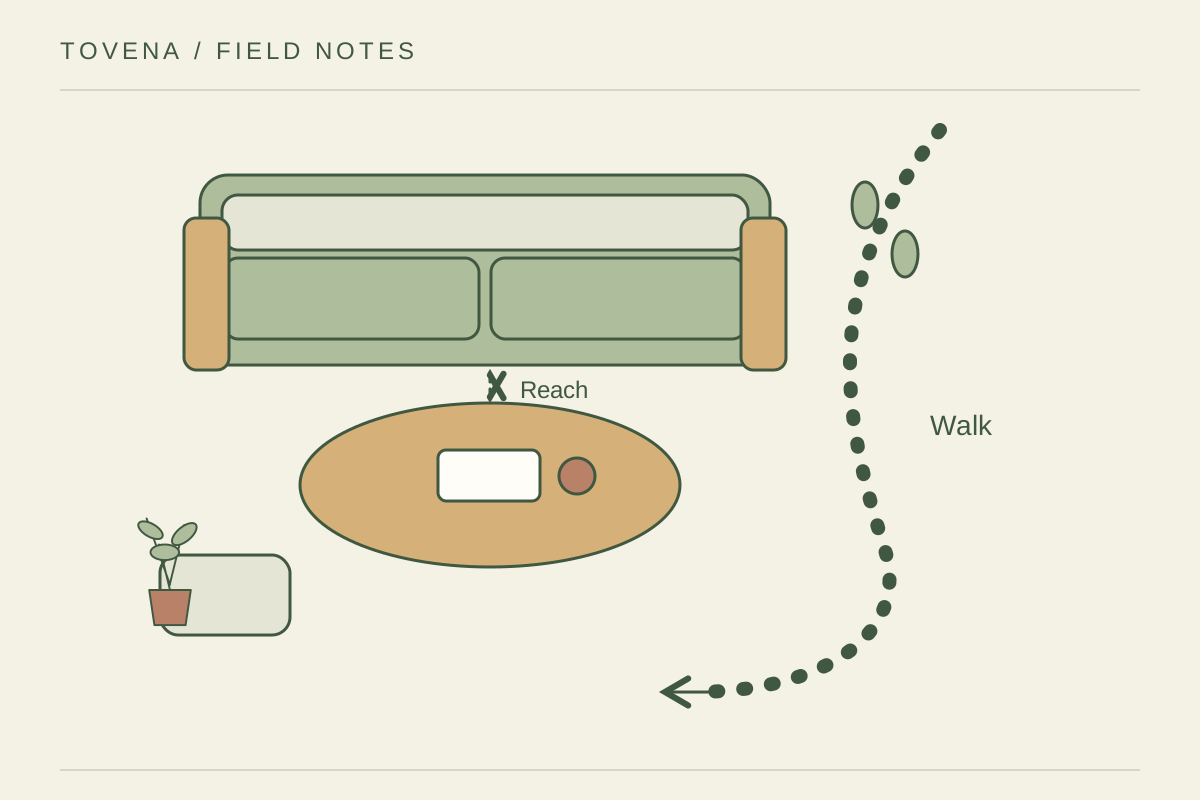
Walk through carrying a laundry basket, open nearby doors fully, and pull out any reclining footrest. These movements reveal conflicts that a photograph misses. Check the combined thickness of rug and underlay under low doors, using the product specifications before ordering. Choose a smaller arrangement only if the seats still read as one group. Photograph both taped options from the same spot; it is easier to compare their proportions side by side. Compare the options with the coffee table in place, because a bare floor can exaggerate the open space.