Start with the way you sit
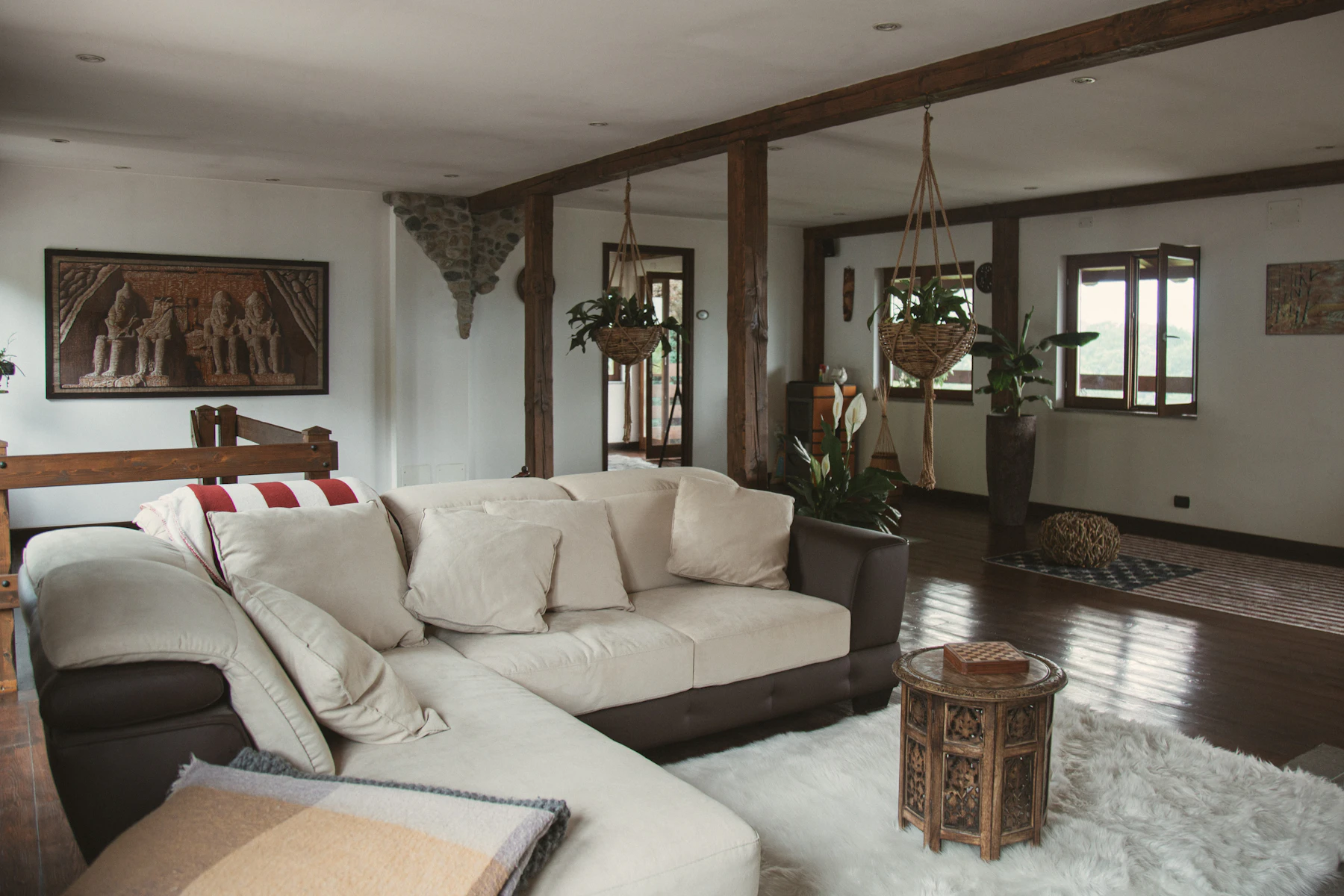
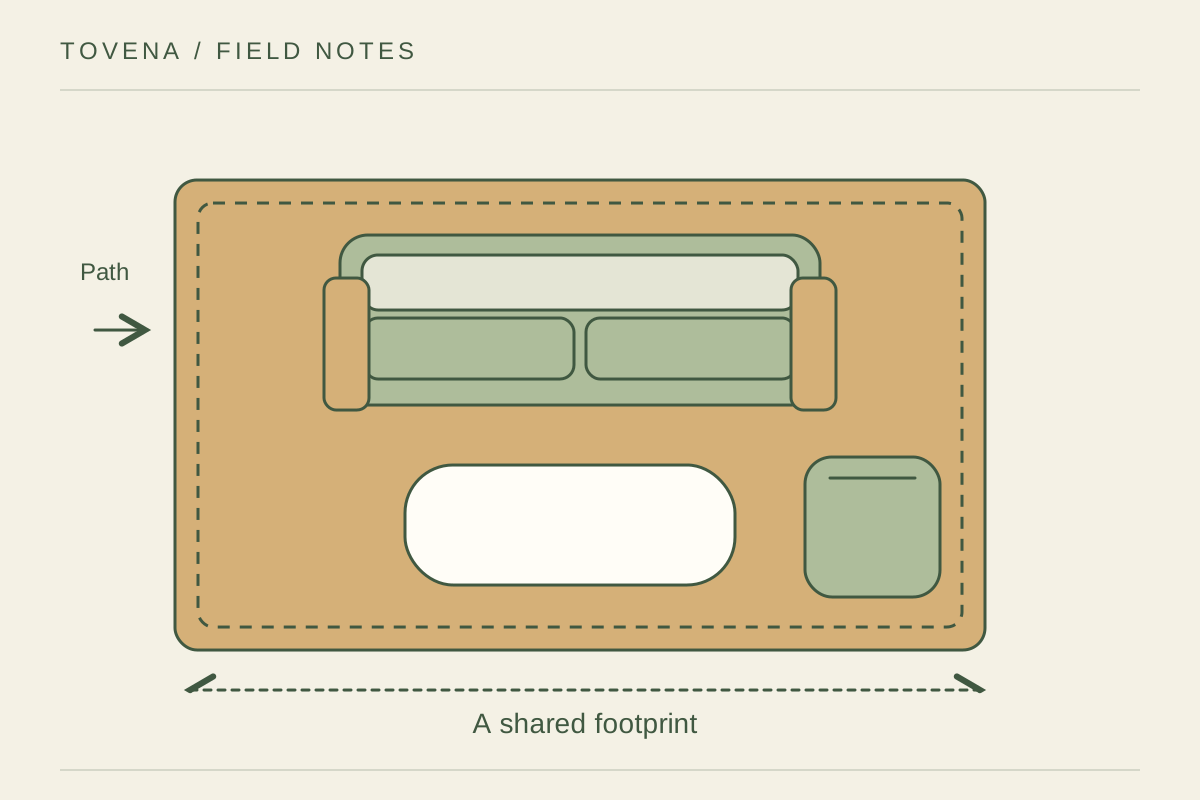
Before measuring a gap, sit on the sofa as you normally would. Can you set down a cup without leaning far forward, and stand without turning your knees sideways? Try a cardboard outline of the proposed table rather than judging an empty room. Include its legs and any shelf that extends beyond the top. A table can look compact in a product photograph while its base takes up the space your feet need.
Separate reaching from walking
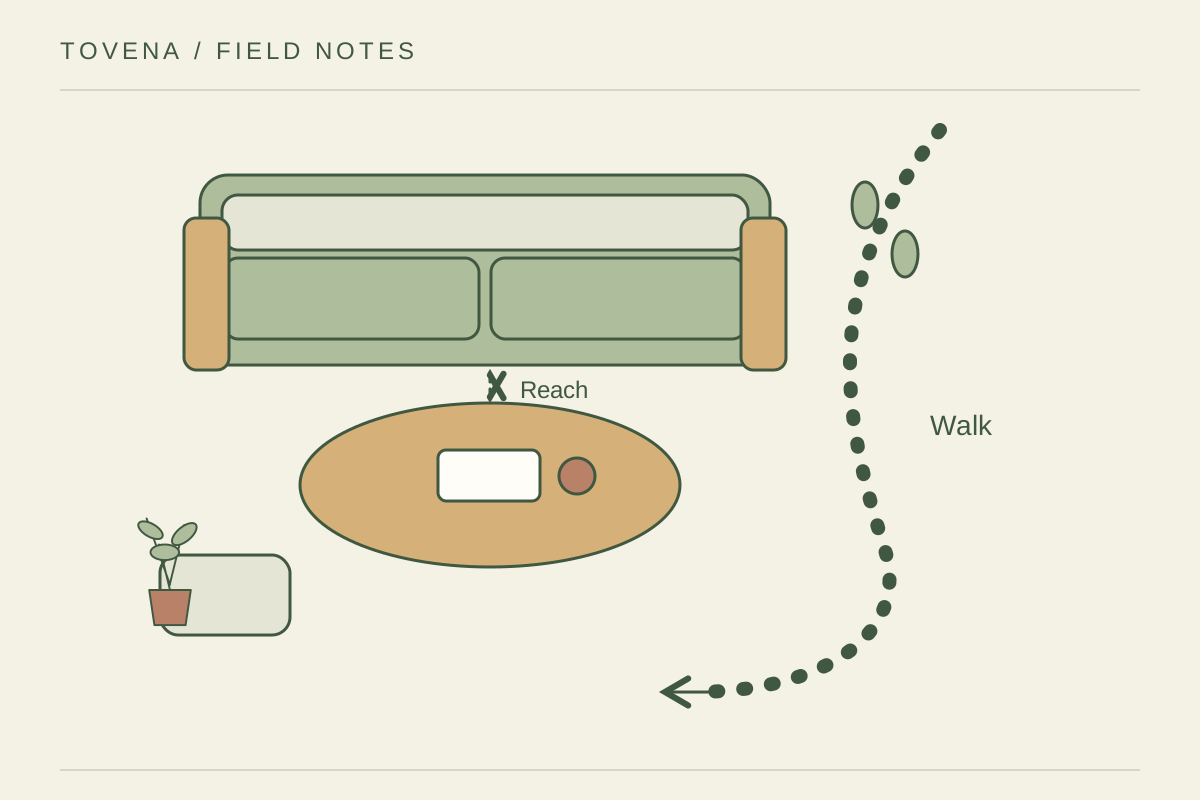
The gap facing a seat serves a different purpose from the route past that seat. Keep the cup within a comfortable reach, but give the main walking route more room. Test two people passing while someone remains seated. In a narrow room, an oval table or two movable side tables may make daily movement easier than one deep rectangle. Do not buy the largest top simply because its length looks proportional to the sofa.
Keep one honest surface
Style only part of the table. A tray can hold remotes and a small bowl, leaving a clear landing place for a mug or book. Check whether drawers and lifting tops can open without pushing the table into the route. If you often move it for exercise or guests, try the weight and grip points before committing. The useful clearance is the one that remains after the room is furnished and actually being used.