Decide what the shelf needs to share
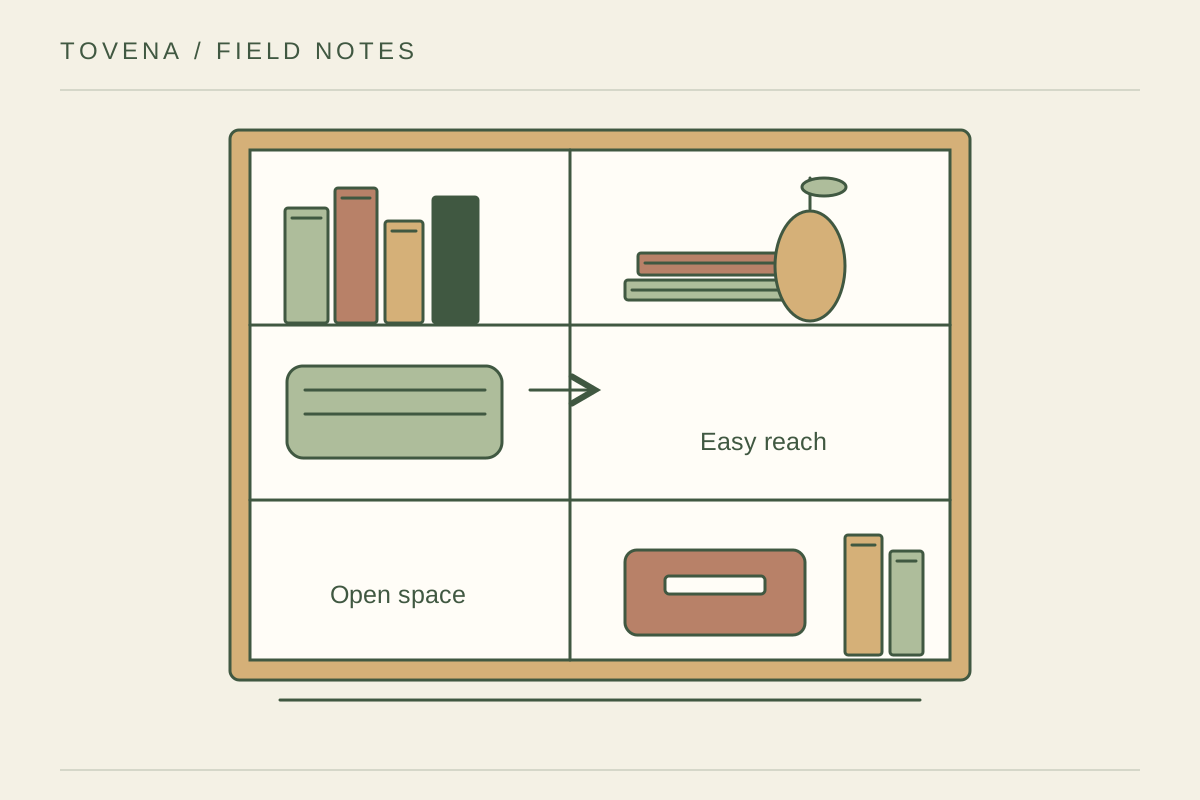
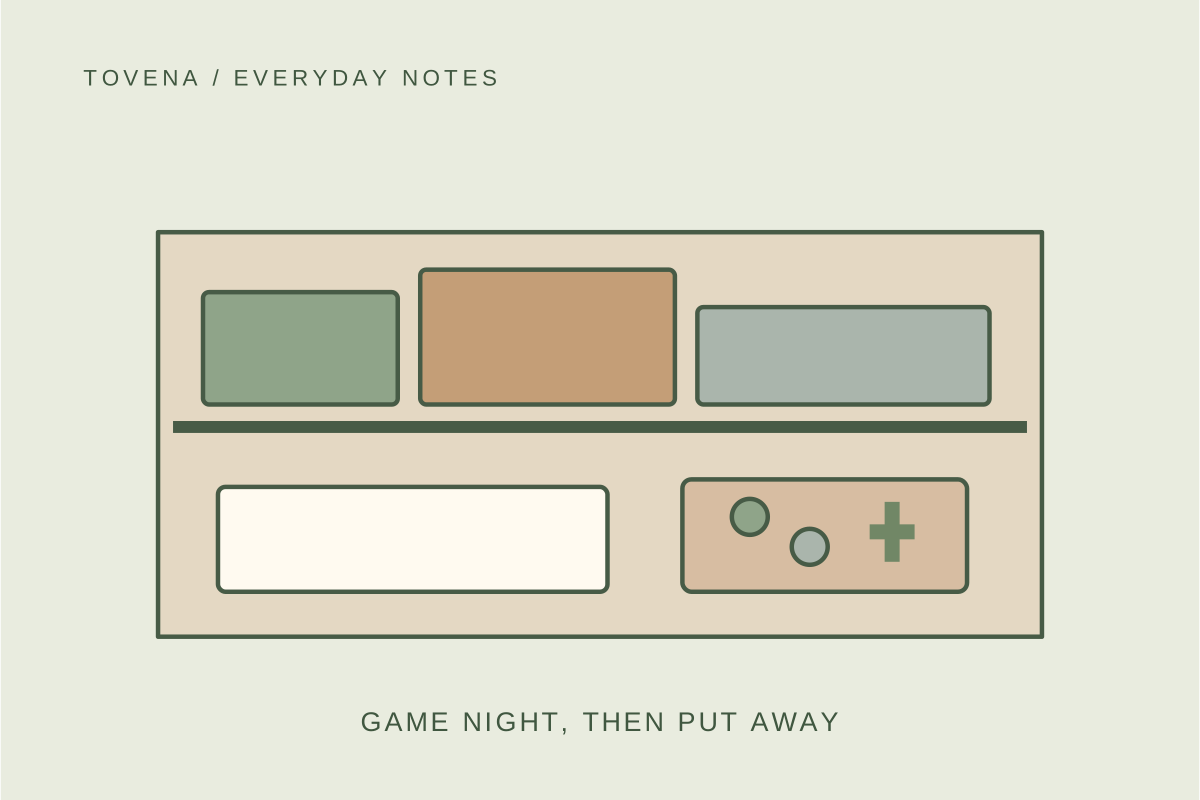
A living-room shelf may need to hold books, a speaker, family photos, and games in the same space. Name those jobs before rearranging it. Reserve a clear section for games instead of filling every gap between decorative objects. That boundary makes it possible to choose a game without dismantling the display or moving a speaker and its cables.
Choose the games people actually play in this room for the easiest position. A long campaign game used elsewhere can have a different home. Keep the favorites together even if their box colors clash. When the purpose is shared leisure, readable titles and simple access are more useful than a color arrangement that separates related games and makes them harder to find.
Measure boxes and the shelf opening
Measure the largest box in its likely storage orientation, then check the shelf’s internal depth, width, and height. Allow room for fingers to grip it. Also look at the front edge and any cabinet door. A box can fit on paper yet catch when pulled past a hinge or sit awkwardly beyond the front of a shallow bookcase.
Before buying inserts or baskets, trial the actual boxes on the shelf. Include any expansion boxes you intend to keep with the main game. Check the shelving manufacturer’s load limits and installation instructions, and secure furniture as directed. Keep heavier games in positions that can be reached comfortably rather than treating a high shelf as the automatic place for oversized boxes.
Choose orientation by the contents
Upright boxes can make titles easy to read, but first inspect the inserts and components. A tray designed for flat storage may spill pieces when turned on edge. Close one game properly and gently try the proposed orientation over a clear table. If pieces shift, change the storage method or contain the components in a way that suits that game.
Flat storage may be easier for a particular box, but tall piles create another problem: retrieving the bottom game. Keep stacks short enough that the household can use them comfortably. Put the game played most frequently near the top or give it its own position. There is no reason every box on a shared shelf must use the same orientation.
Keep each game complete inside its box
Check the component list or rulebook before reorganizing small pieces. Put related pieces together only where that does not interfere with the publisher’s storage instructions or damage components. Use suitable containers that fit inside the closed box without pressing on the lid. Keep small parts away from young children and follow the age and safety information supplied with the game.
Store the rules where they will be found during setup. If an expansion remains in a separate box, label that relationship clearly on a removable note or shelf tag. Avoid combining several games into an unlabeled bin just to make the shelf look calmer. Original boxes often carry information that helps people choose, set up, and later pass a game to someone else.
Give small games one visible neighborhood
Card games and tiny boxes can disappear behind larger ones. A shallow tray or open-front compartment can collect these while keeping titles visible. Test whether it lifts out easily and whether the smallest box falls through any opening. A deep decorative basket may hide the entire selection and invite people to dump everything onto the floor to find one deck.
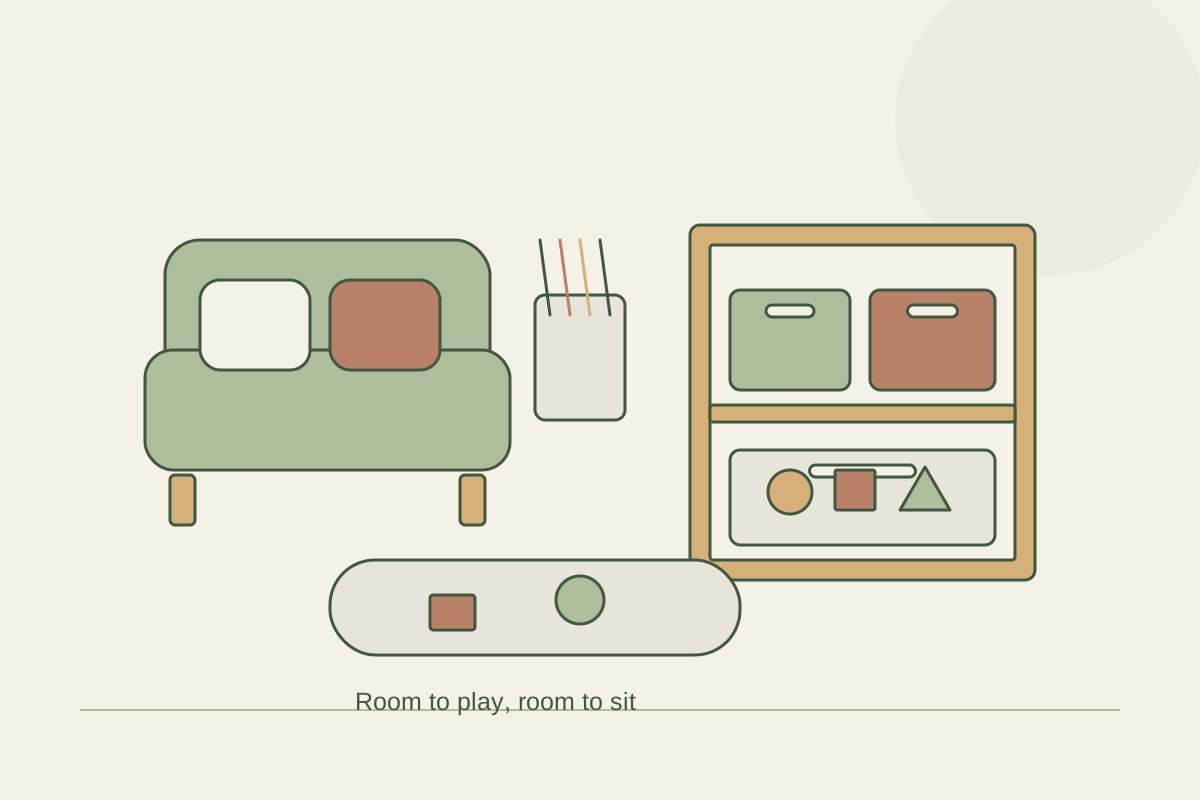
Leave some room to return a small box after play. A container packed tightly to the rim is difficult to maintain when hands are full and the room is being cleared for dinner. IKEA’s family-room ideas treat play as part of ordinary living. The practical implication here is a small, understandable game area that can coexist with the room’s other daily jobs.
Practice the end of game night
Choose one game, carry it to the usual table, and return it after a pretend pack-up. Notice every extra movement: shifting a vase, lifting another heavy box, finding room for a loose deck. Remove one unnecessary obstacle at a time. The shelf should work when people are tired and ready to finish, not only when someone is carefully arranging it.
Review the section after several game nights. Keep a note of a missing piece with the correct game so it does not become a mystery in a miscellaneous drawer. If new games no longer fit, discuss which ones deserve the accessible positions. Rotate occasional games or pass along complete unwanted sets rather than allowing an expanding collection to take over the entire shared shelf.
Compare the options
| Arrangement | Works well when | Check first |
|---|---|---|
| Upright boxes | Components stay contained | Internal trays and finger access |
| Short flat stacks | Inserts need flat storage | Bottom-box retrieval |
| Shallow tray for small games | Tiny boxes disappear on a large shelf | Visible titles and easy returns |
Your checklist
0 / 5 completed
Common questions
Is vertical board-game storage always better?
No. Choose the orientation that keeps that game’s components secure and makes the box easy to use.
Should I remove original boxes?
Keep them when they help identify and protect the game. Decanting is optional, not a requirement for a tidy shelf.
Can I put games beside books and decor?
Yes. Give games a clear reachable section so retrieving one does not require moving unrelated objects.