Sort by use before appearance
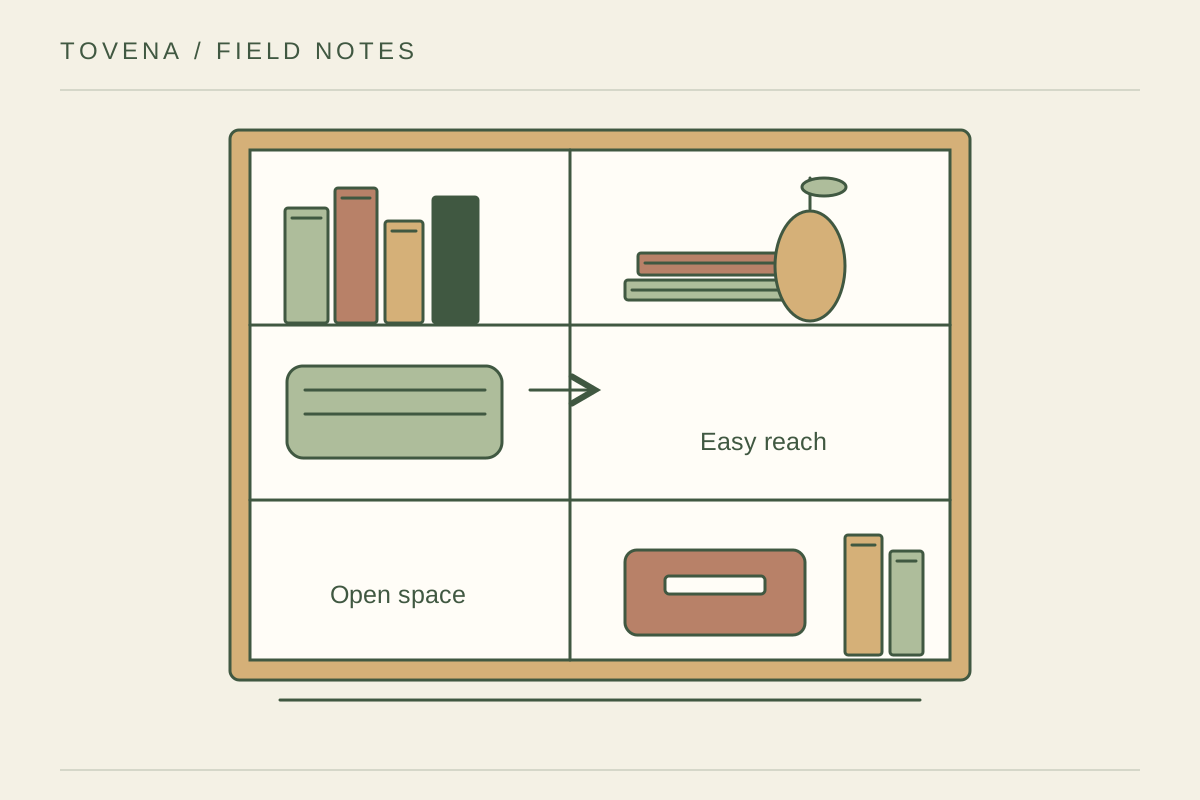
Take everything off one shelf, not the whole bookcase at once. Set aside books you reach for weekly, books you want to keep, and things that have simply drifted there. Put regular reading within easy reach and check the shelf's stated load limit before filling it. A display that requires shifting a vase to retrieve every book soon becomes frustrating. Keep the most useful row straightforward, even if another shelf is more decorative.
Make a few readable groups
Alternate upright books with a small horizontal stack only where it makes a useful landing place for a light object. Leave enough space to grip a spine without dragging its neighbors out. One object with a clear outline usually reads better than several tiny unrelated ornaments. Repeat a material or color elsewhere on the shelf, but let the books vary naturally. There is no need to turn every spine backward to achieve a quiet appearance.
Leave room for the next book
Reserve an empty section rather than filling every gap with accessories. This gives new books somewhere to go and makes dusting easier. Use a basket for loose papers only if its contents have a separate sorting routine; otherwise the basket merely hides an expanding pile. Step back from across the room, then test the shelf close up. It should look balanced from a distance and let you remove a book comfortably with one hand.