Choose a working collection
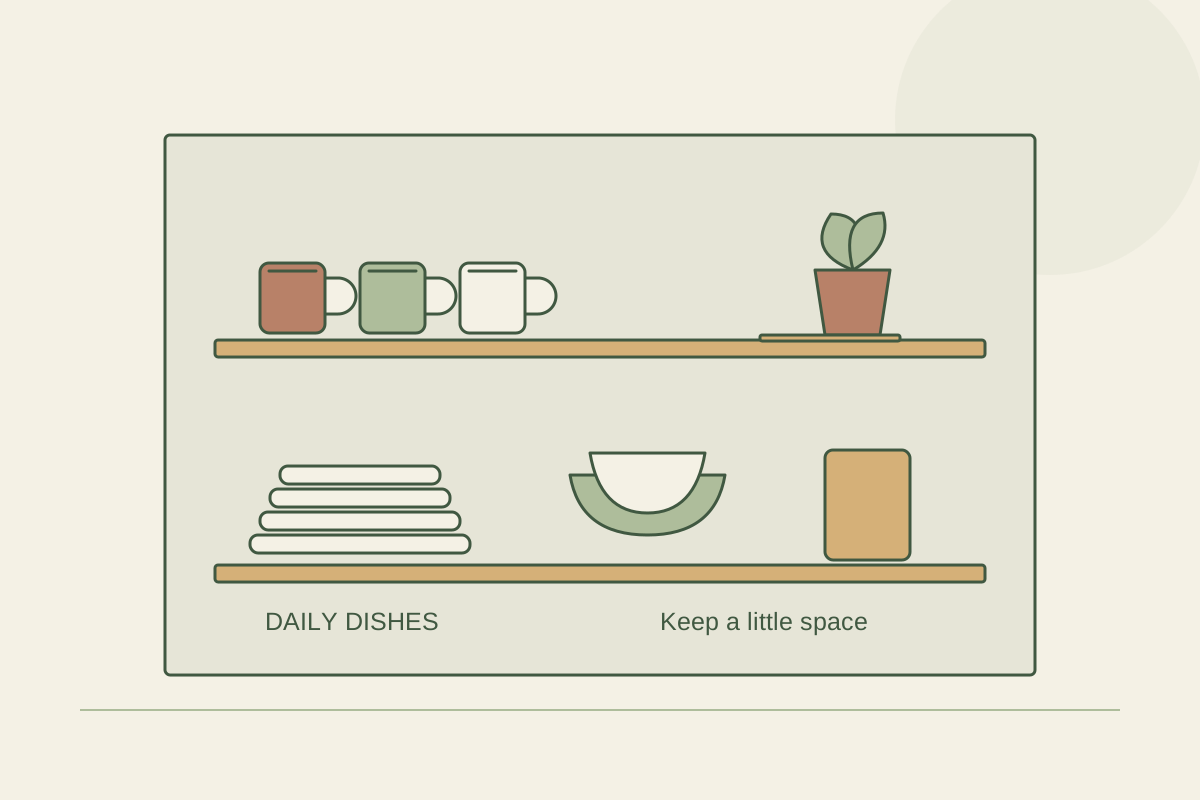
Open shelving is easiest to live with when the contents earn their place. Start with everyday plates or cups that you regularly wash and return, rather than a full collection of occasional serving ware. Group by use so the breakfast dishes can be reached together. Before adding anything, confirm the shelf installation and load limits with the manufacturer. An existing shelf is not automatically suitable for a heavy stack simply because the stack fits.
Balance access and appearance
Keep the most-used pieces on the easiest shelf to reach. Taller objects can sit toward the sides if they do not block a neighboring stack. Leave a visible strip of shelf between groups; it gives your hand somewhere to go and makes wiping simpler. You do not need to alternate a plant, bowl and jar at fixed intervals. Repeating two or three useful shapes usually looks calmer than a shelf filled with unrelated decorations.
Allow the arrangement to be incomplete
Look at the shelf while some dishes are in use. If the arrangement depends on every cup being present, it is probably a display rather than a convenient storage place. Keep refills and less attractive necessities in closed storage if available, without overcrowding those cabinets to improve one photograph. After a week, note where dust or cooking residue gathers. Reduce the displayed collection if cleaning requires a lengthy unpacking session each time.