Use the largest wood surface as a reference
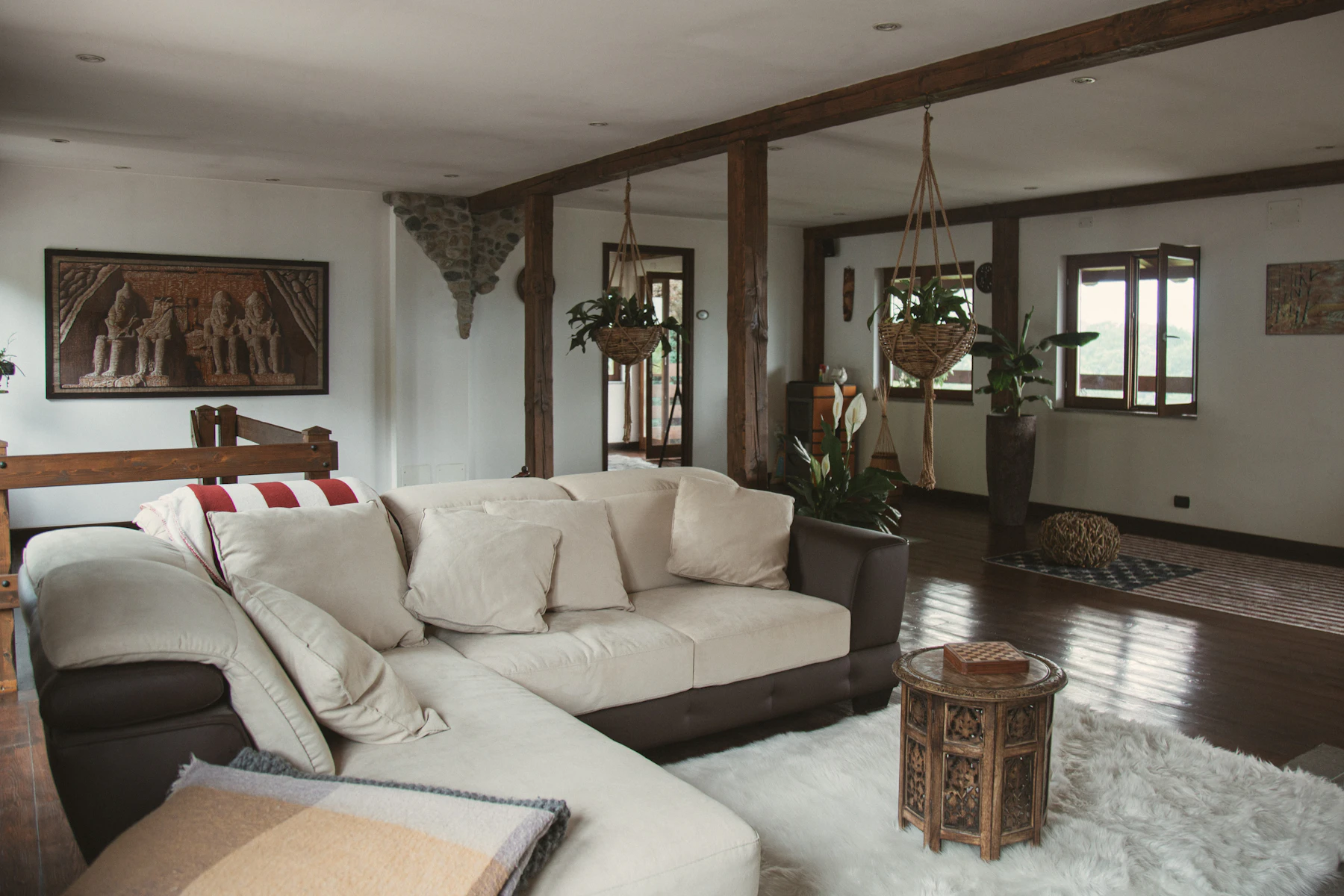
Look at the floor, dining table, or largest cabinet before choosing a small new piece. These surfaces already set much of the room's color. Compare wood samples beside them in daylight and under the evening lights. A honey-colored finish may look much more orange beside a cool gray floor than it did in the shop. Take several small samples home when possible rather than making the decision from a screen.
Repeat one tone in a small way
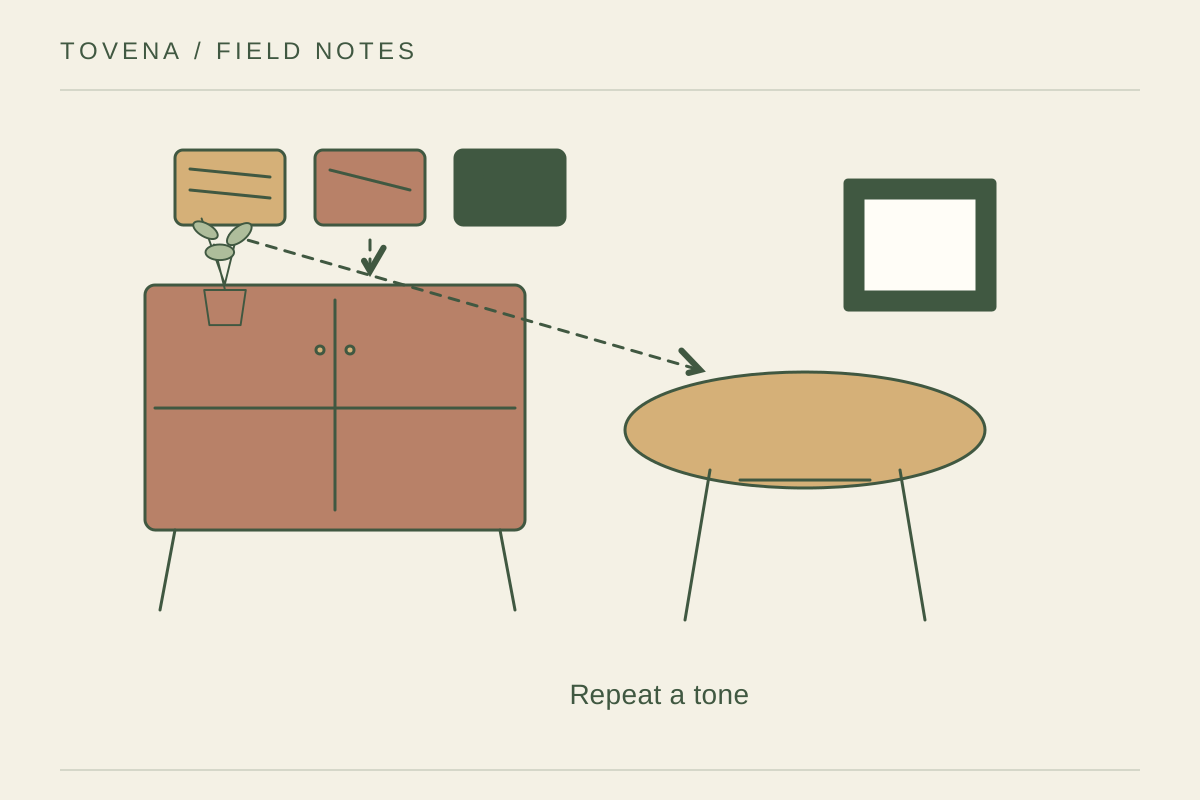
Different woods can sit comfortably together when one tone appears more than once. A dark side table might connect with a picture frame; a pale chair can echo a shelf. The repetition does not need equal size or identical grain. If every piece has a different dramatic finish, remove one accent before adding another. An upholstered chair or a plain rug can provide a pause between two strongly contrasting wooden surfaces.
Mix the shape as well as the color
Two nearly matching finishes with very different undertones can feel less deliberate than a clear contrast. Try a rounded light table with a darker straight-lined cabinet and judge the whole silhouette. Check sheen as well: a glossy finish attracts more attention than a quiet matte one. Before replacing useful furniture, test the grouping with nearby textiles changed. Often it is the surrounding color, rather than the wood itself, that makes the combination feel unsettled. Keep a photograph of the successful samples together for any later purchase.