Set a real place first
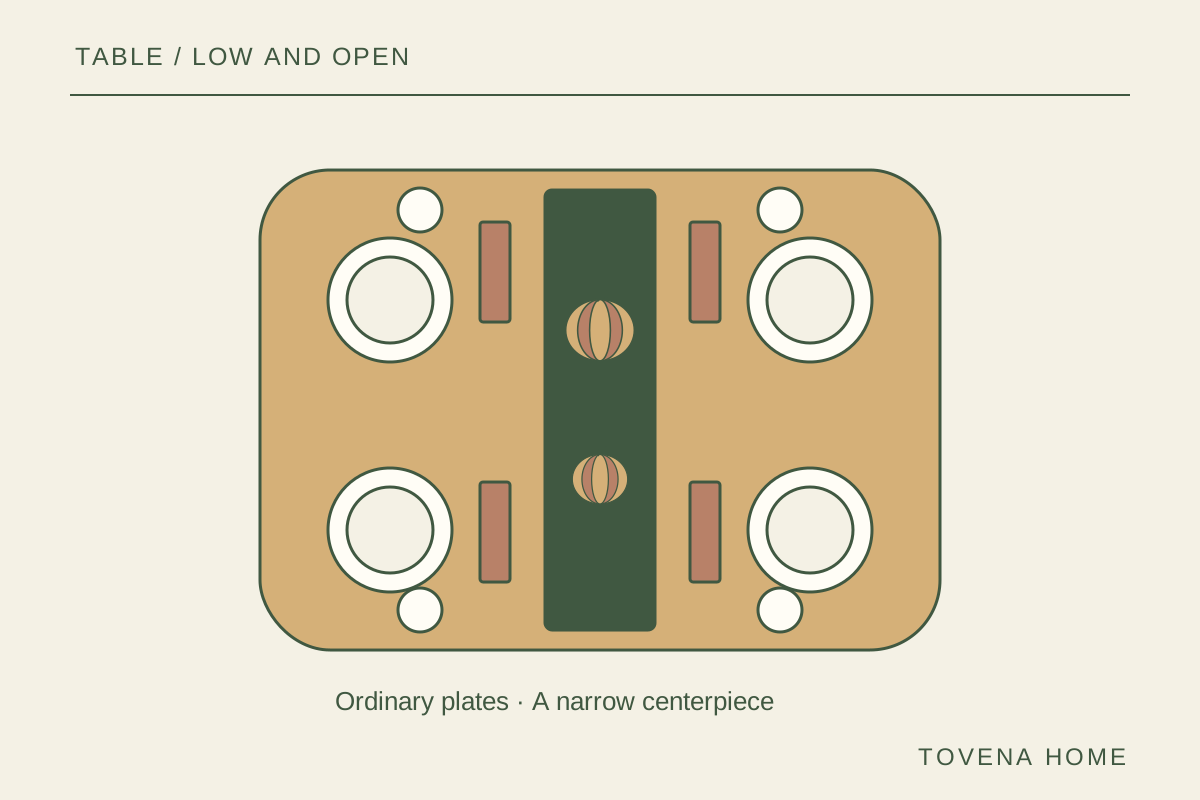
Put down a plate, glass, cutlery and folded napkin before adding anything decorative. Sit in the chair and reach for your glass. This small rehearsal shows how much of the table is actually available. If the table is compact, serve larger dishes from a nearby counter and keep just one or two shared bowls on the table. A beautiful centerpiece stops being useful when guests have to hold a platter in their laps.
Use a narrow strip of color
A charcoal runner, dark napkins or a few small pumpkins can carry the theme. You do not need all three. Keep any arrangement low enough that people opposite each other can talk comfortably. Try a mixture of ordinary clear glasses and simple white plates; the contrast with the dark detail is enough. Choose battery-operated decorative lights if you want a glow without an open flame near fabric, paper and a busy dinner table.
Make serving and clearing straightforward
Leave a clear route between the kitchen and the table, especially behind the chair nearest the doorway. Set out somewhere to put used plates before dinner starts. Do not scatter tiny props where they can be confused with food or disappear beneath dishes. At the end of the evening, the decorations should lift away in one tray. If the setup takes longer to dismantle than to enjoy, simplify the middle of the table next time.