Test the tree before moving the furniture
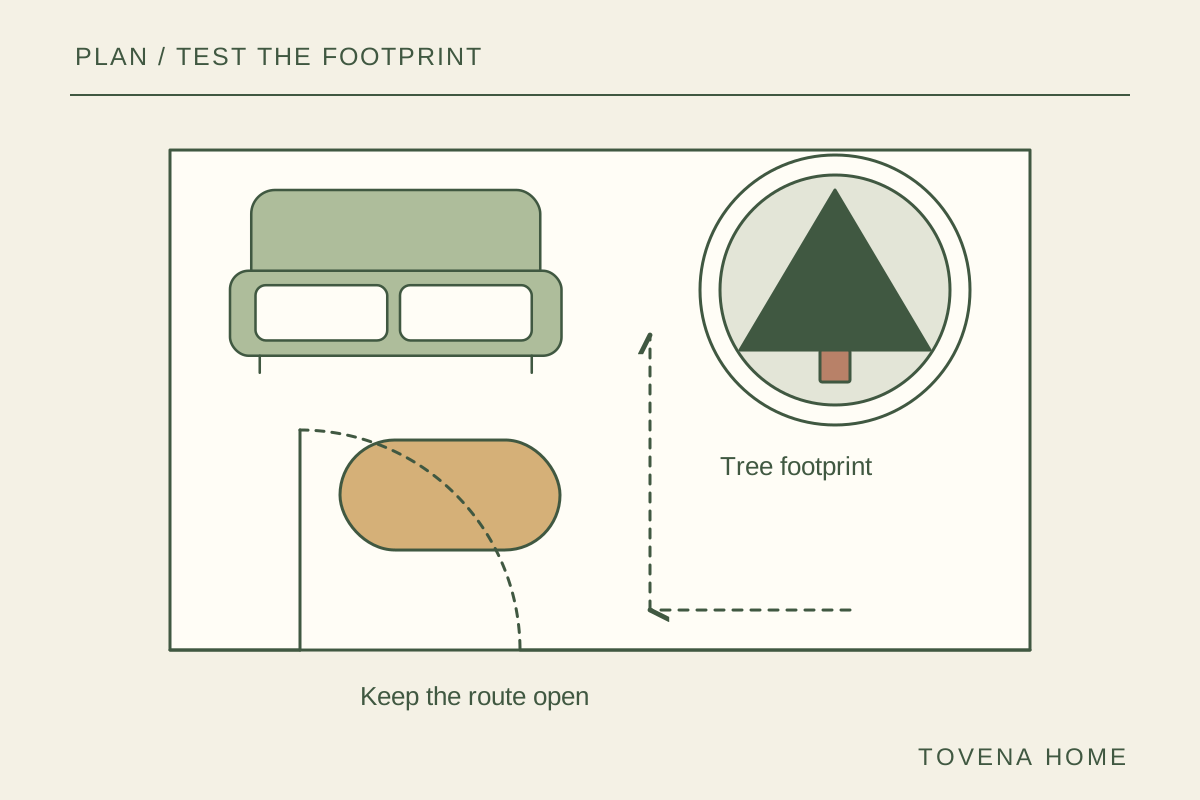
Check the tree's widest diameter and stand, not just its height. Mark the complete footprint on the floor with paper and leave it during an ordinary evening. Use the sofa, open the curtains and carry a tray through. If the shape blocks a drawer or a route, try another position or a smaller tree before rearranging every useful corner.
Include the things displaced by the tree in your plan. If the side table must move, provide another proper place for drinks. A tabletop tree is an honest solution for a compact room, not an unfinished version of a larger display. The right size leaves enough room to keep living normally.
Choose a palette before unpacking every ornament
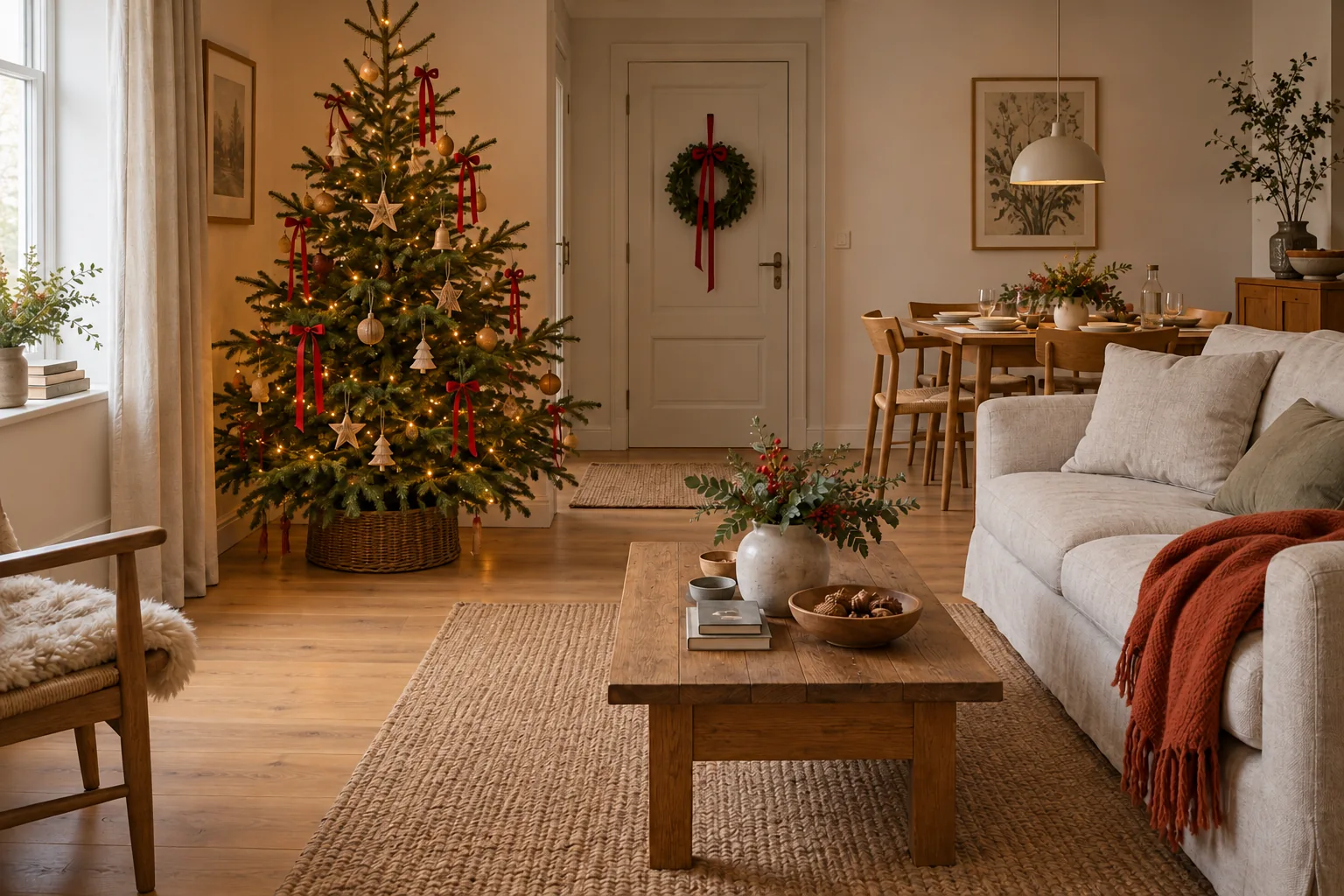
Look at the room's existing wood, upholstery and picture frames. Choose two colors that work with those elements, then use them repeatedly across the main display. Green and cream may sit comfortably with a timber room; warm metallic details may already appear in a lamp. These are starting points, not rules requiring new purchases.
Unpack a small selection first. Separate ornaments that are special to your household from pieces that only fill branches. Give sentimental items visible positions, even if they do not all match. A consistent background of ribbon or repeated plain ornaments can connect a mixed collection without turning the tree into a rigid color exercise.
Place lights and ornaments with access in mind
Follow the tree and lighting manufacturers' setup instructions before adding decorative layers. Inspect lights and use them only in their labeled setting. CPSC guidance says to keep trees away from heat sources, keep natural-tree stands supplied with water, and turn decorative lights off when leaving home or going to bed. Do not use a lit candle on a tree.
Keep access to the stand and controls available throughout decorating. Check the tree from the seats you actually use, not only from the front. Spread ornaments sensibly rather than overloading the most visible branches. Stop before the lower section becomes an obstacle to the nearby chair or a place where passing bags continually catch.
Give the shelf and window different jobs
Use the shelf for a small grounded scene: a few existing objects, one seasonal shape and some open surface. Keep everyday essentials where you can still reach them. If a shelf also holds books you use, do not build an arrangement that must be dismantled every time you take one out.
Let the window provide a lighter outline. Try one hanging shape or a short arrangement at one side, preserving most of the view. Test the blind, curtain and handle afterward. Check attachment instructions for painted frames or coated glass, and keep the sill accessible for wiping. Apartment residents should also check rules before attaching anything outside their own interior space.
Set the dinner places before the centerpiece
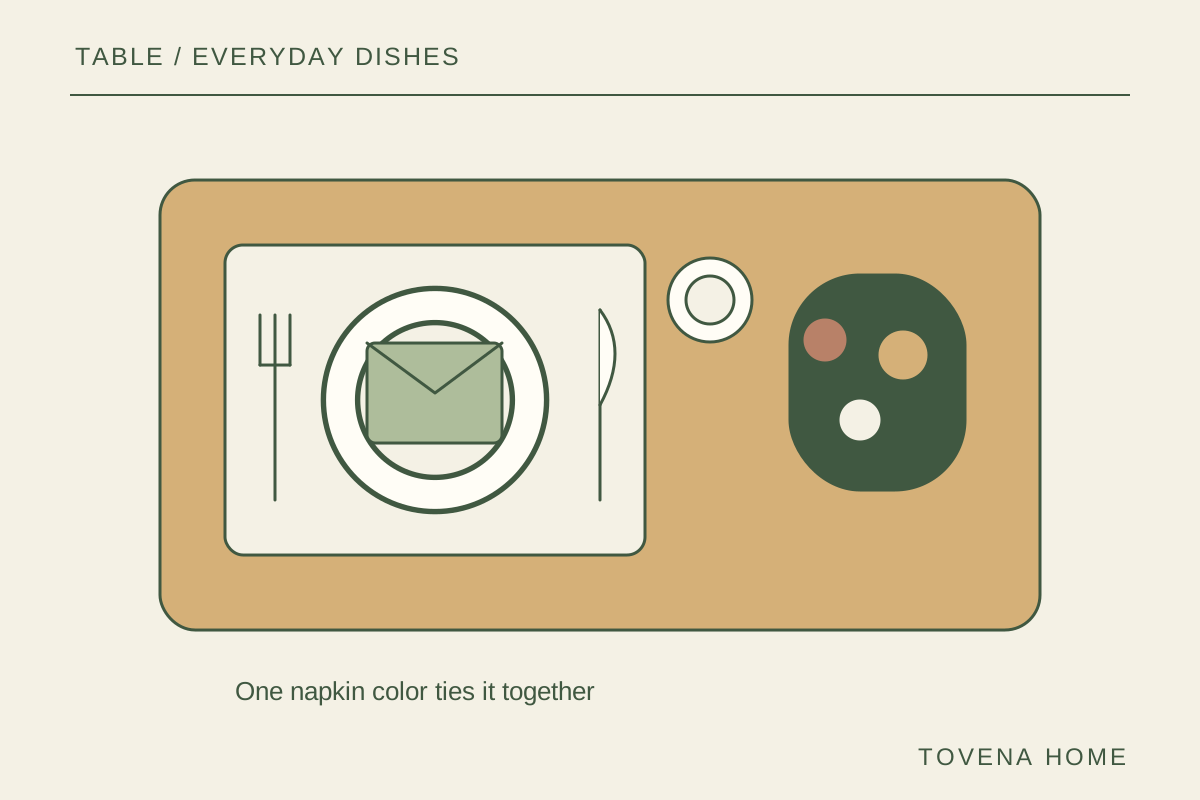
Bring out your ordinary plates and glasses, then count complete usable settings. Mixed white dishes can look intentional with one repeated napkin color. Sit at the table and check the view across it before placing decorations. A low bowl or a small repeated group is easier to talk over than a tall centerpiece.
Reserve space for the meal itself. Put large serving dishes on a nearby counter if that suits the room, and keep spare napkins within reach. Choose a clearing spot before guests arrive. The table should still work when every chair is occupied and someone needs to pass a dish, not only when photographed empty.
Plan the return to an ordinary room
Keep the everyday objects removed for Christmas together in a labeled box. That makes restoring the shelf easier than hunting for a lamp, bowl and stack of books scattered through several cupboards. Take a photo of the seasonal layout, including the furniture position, while it is complete.
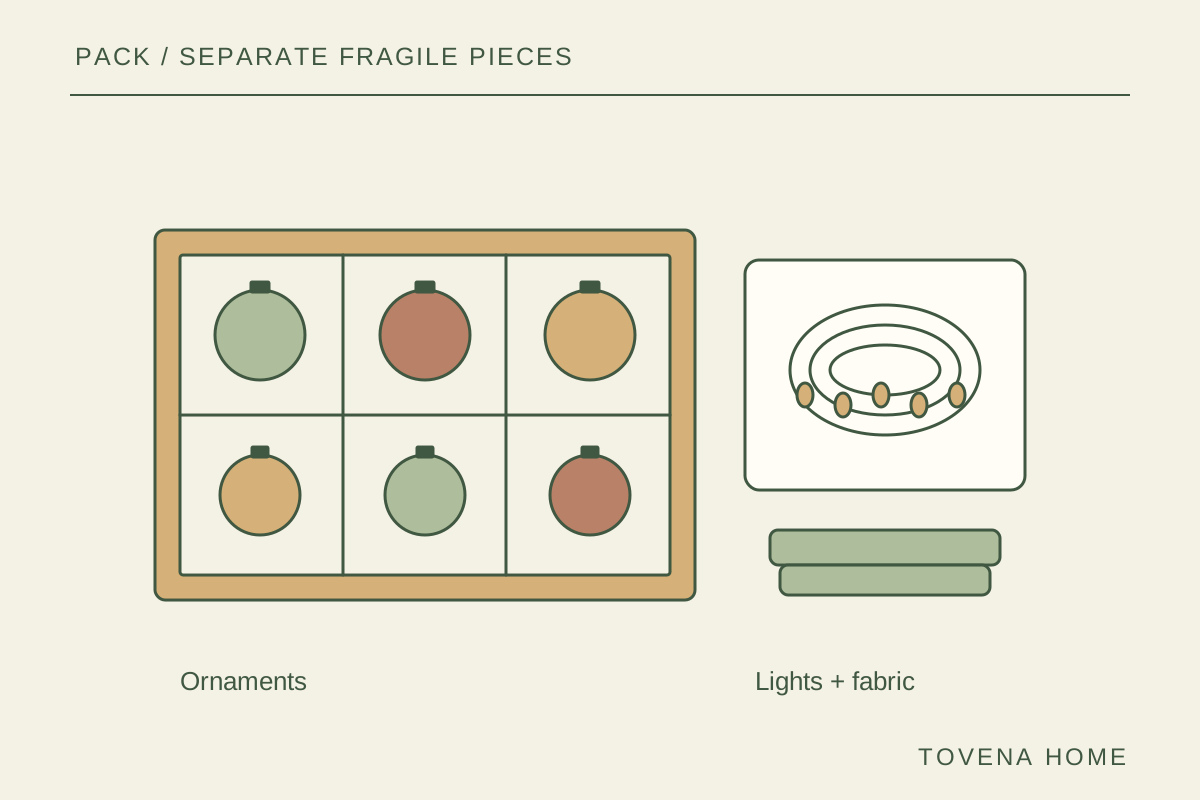
Pack fragile ornaments with individual support, keep lights separate and store fabric clean and fully dry according to its care guidance. Label by scene: tree, window or dining table. Put instructions and stand accessories where they will be found first. Review what stayed in the box all season before buying storage for an ever-expanding collection.
Compare the options
| Option | Best use | Tradeoff |
|---|---|---|
| Full-size tree | Room with a tested clear footprint | May displace useful furniture |
| Slim tree | Corner with limited width | Still needs stand and access space |
| Tabletop tree | Small home with a spare surface | Uses some daily landing space |
| Shelf and window | No suitable floor footprint | Keep the details limited and connected |
Your checklist
0 / 6 completed
Common questions
Can a room feel festive without a full-size tree?
Yes. A tabletop tree or one shelf arrangement can be the main scene, with a small window detail repeating its colors. Give that arrangement enough clear space to read as intentional instead of adding decorations to every surface.
How do I use sentimental ornaments that do not match?
Place them where you can see them, then connect the rest of the tree with a repeated plain color or ribbon. A personal collection does not need to resemble a matching retail set to look considered.
What if the tree replaces our only side table?
Solve the everyday need before decorating. Move a suitable table within reach of the seat, choose a different tree position or reduce the tree size. Balancing drinks on the sofa arm is not a useful seasonal arrangement.