Walk the room before opening the decoration box
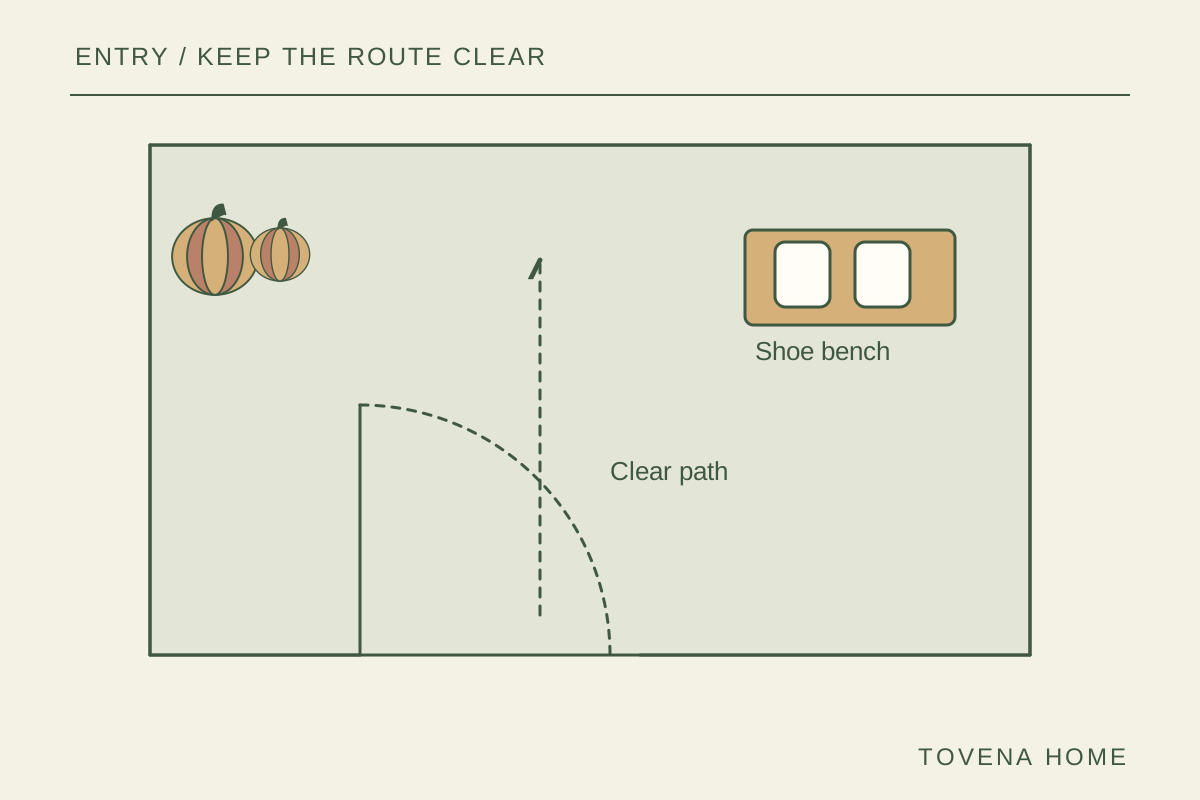
Carry a shopping bag through the entry, sit on the sofa and pull out a dining chair. Those ordinary movements identify the spaces that need to remain useful. A pumpkin beside the shoe rack may occupy the exact spot where you turn; a floor lantern may interrupt the only easy route to the couch. Make a short list of places available for decoration, rather than treating every empty patch as permission.
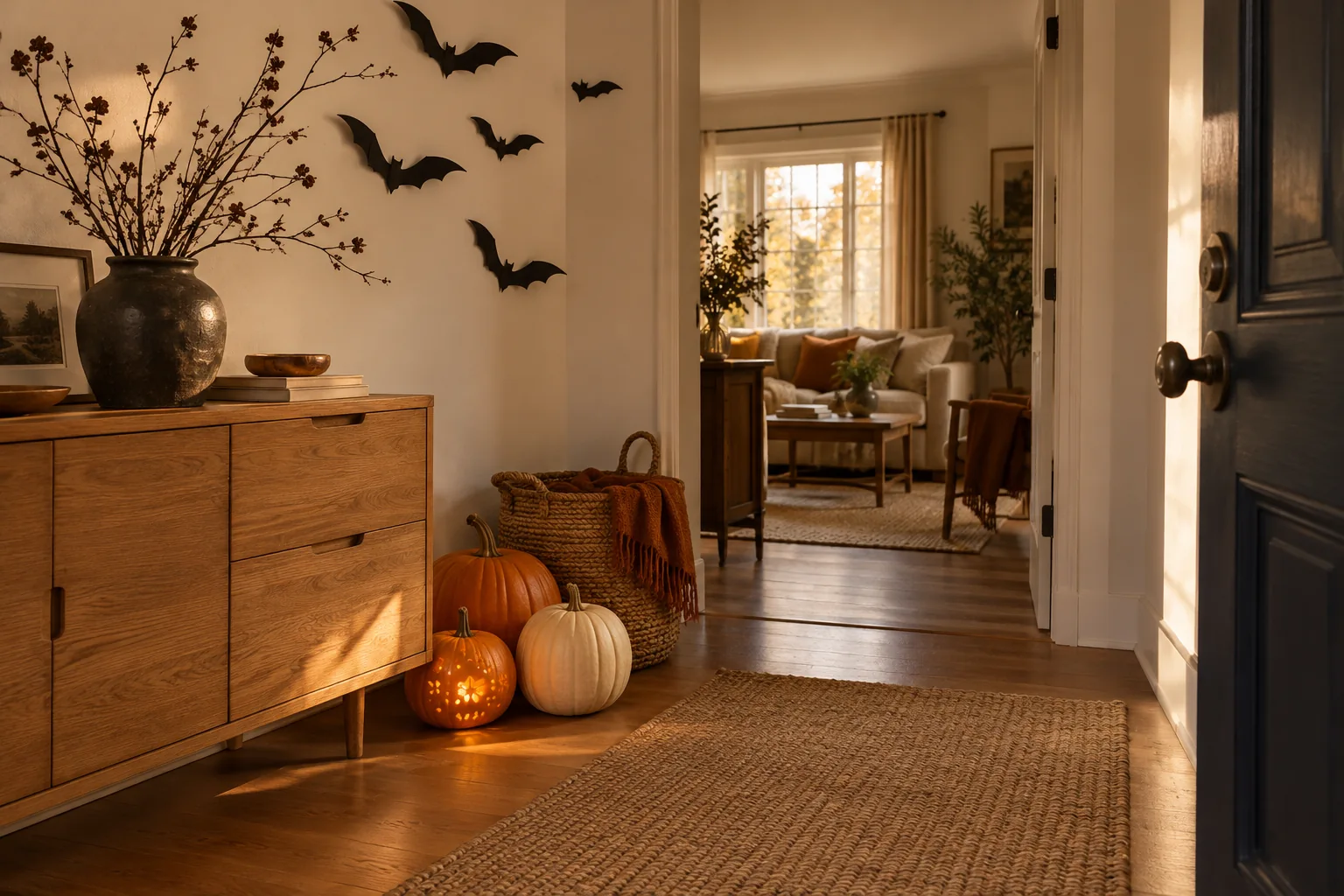
Choose the main scene from the doorway view: an entry shelf, one end of a console or a window seen from the sofa. Then choose just one smaller place to repeat it. In a studio, these may be on opposite sides of the same room. You do not need a separate theme in each area.
Build a palette from something you already own
Start with a dark basket, a brown timber surface or the black outline of an existing frame. Add one seasonal accent, such as pumpkin orange or muted cream. Keep the rest of the collection in its box while you work. Limiting what is on the floor makes it easier to judge the arrangement without feeling obliged to use everything.
Lay the candidates together on a table. Check whether their materials belong together: matte paper and woven texture can feel quieter than a mixture of glitter, shiny plastic and metallic ribbon. If a treasured decoration does not match, let it stand alone somewhere meaningful instead of buying several new items to justify it.
Arrange the shelf first, with an empty edge
Clear one section of the shelf and protect delicate surfaces appropriately. Put the largest piece slightly off-center, then add a smaller shape nearby. Turn both toward the room and step back. Leave visible space around the group; a decoration does not become more interesting because another object fills every gap.
Return the everyday things that genuinely need that shelf, including keys or a charging tray. If they no longer fit, reduce the display. Keep fragile and small loose pieces away from places children can reach. The CPSC's holiday guidance advises particular care with breakable decorations and small removable parts around young children.
Make the table work for an actual meal
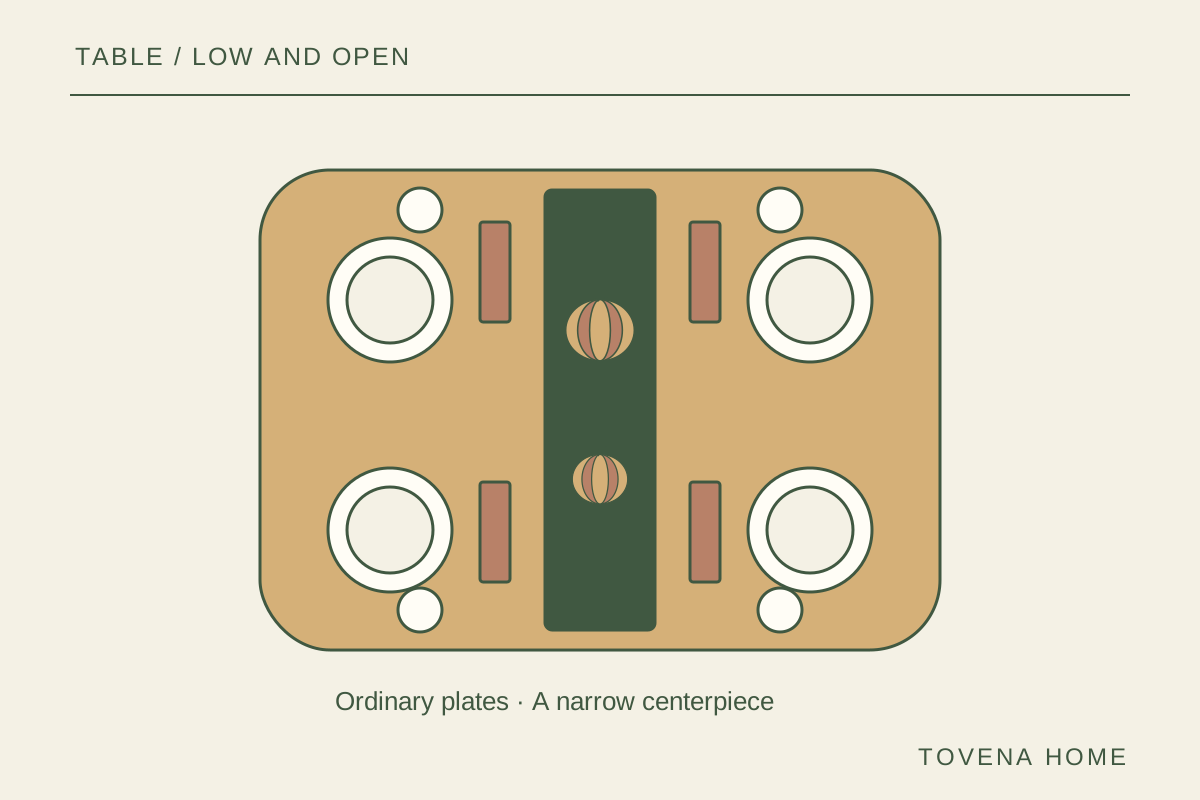
Set one complete place before adding a centerpiece. Put down the plate, glass and utensils, sit in the chair and reach across naturally. A narrow row of small pumpkins or one shallow bowl can provide the theme without taking the entire middle. Ordinary white dishes often make a dark napkin or runner look more deliberate.
Decide which dishes will arrive on the table and which can stay on a nearby counter. Leave those serving positions empty during decorating. Skip scattered confetti and tiny props beside food. When dinner ends, the decorative group should be removable on one tray, leaving the table ready for its next ordinary use.
Use the window lightly and respect shared spaces
Try one paper silhouette or a short repeated shape rather than covering the whole pane. Open the window and operate the curtain after positioning it. Check the view from your normal seat; a window can look cheerful from the sidewalk yet make the room feel closed in. Use attachment products only on suitable surfaces and follow their removal directions.
For apartments, check building rules before decorating a shared corridor, entry door exterior or balcony. Keep the whole display indoors if permission is uncertain. Avoid running decorations across handles, vents or access points. Do not introduce a new lighting setup simply to finish the picture; use products intended for the location and follow their instructions.
Pack the display as a small repeatable scene
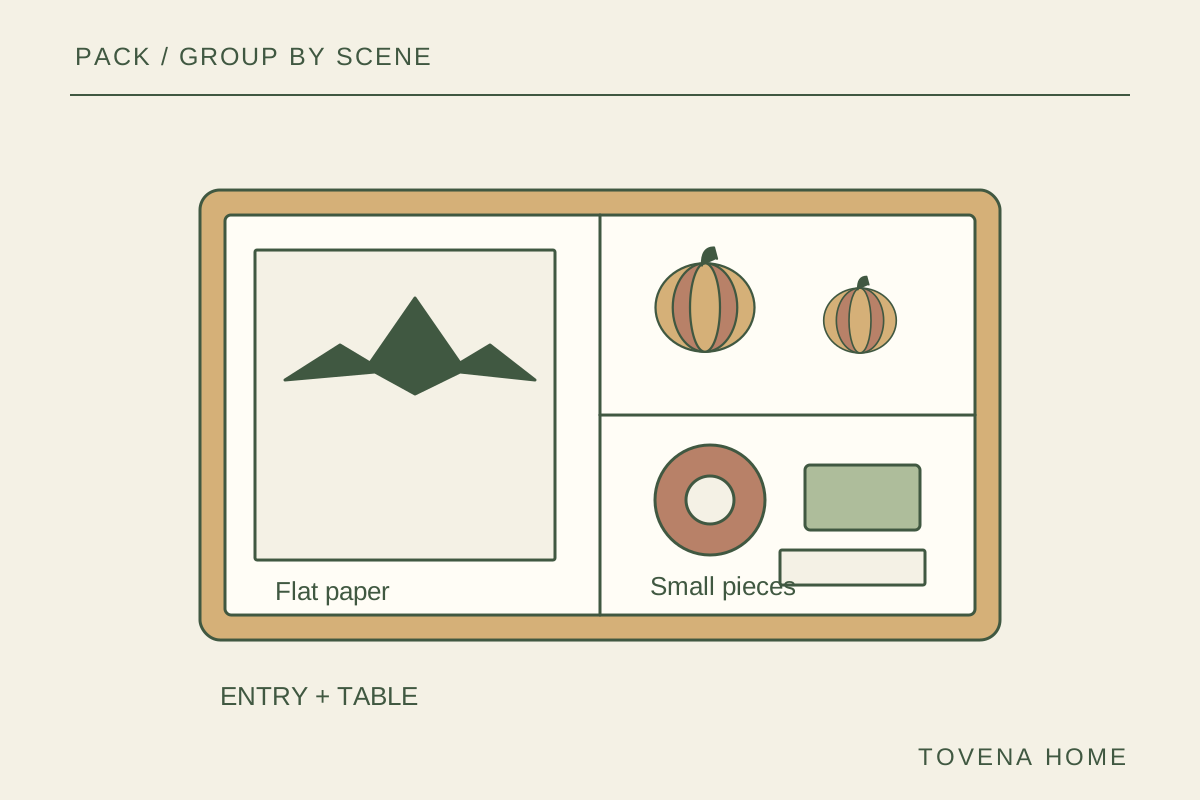
Photograph the two finished areas before taking them apart. Store paper pieces flat, support projecting stems and keep ribbons together. Put each scene's components in its own labeled group so next year's entry can be unpacked without searching through the dining decorations.
Remove fresh pumpkins when they deteriorate rather than storing them with reusable pieces. Clean and dry the reusable materials as appropriate before packing. Keep a short note of anything that failed to fit. Next October, the best improvement may be leaving that awkward object out, not adding another container to the collection.
Compare the options
| Location | Good choice | Check first |
|---|---|---|
| Narrow entry | One shelf arrangement | Door swing and key landing spot |
| Dinner table | Low group on one tray | Place settings and serving dishes |
| Small window | One silhouette or short repeat | Handle, curtain and attachment guidance |
| Shared apartment corridor | Indoor alternative | Building rules and access |
Your checklist
0 / 5 completed
Common questions
How do I decorate if I have no spare floor space?
Use a shallow existing shelf or a small window detail. Keep the floor for walking and changing shoes. A limited arrangement at eye level can carry the theme without adding a new stand or moving useful furniture.
Do all my Halloween decorations need to match?
No. Choose a coherent group for the main display, then give an unrelated favorite its own small spot. Trying to connect every item usually makes the display larger and more expensive than it needs to be.
What should I buy first?
Nothing until you have tested the available space with your existing pieces. If something essential is missing, name its job precisely, such as a suitable protective tray. That is more useful than buying another general box of decorations.