Notice what already happens there
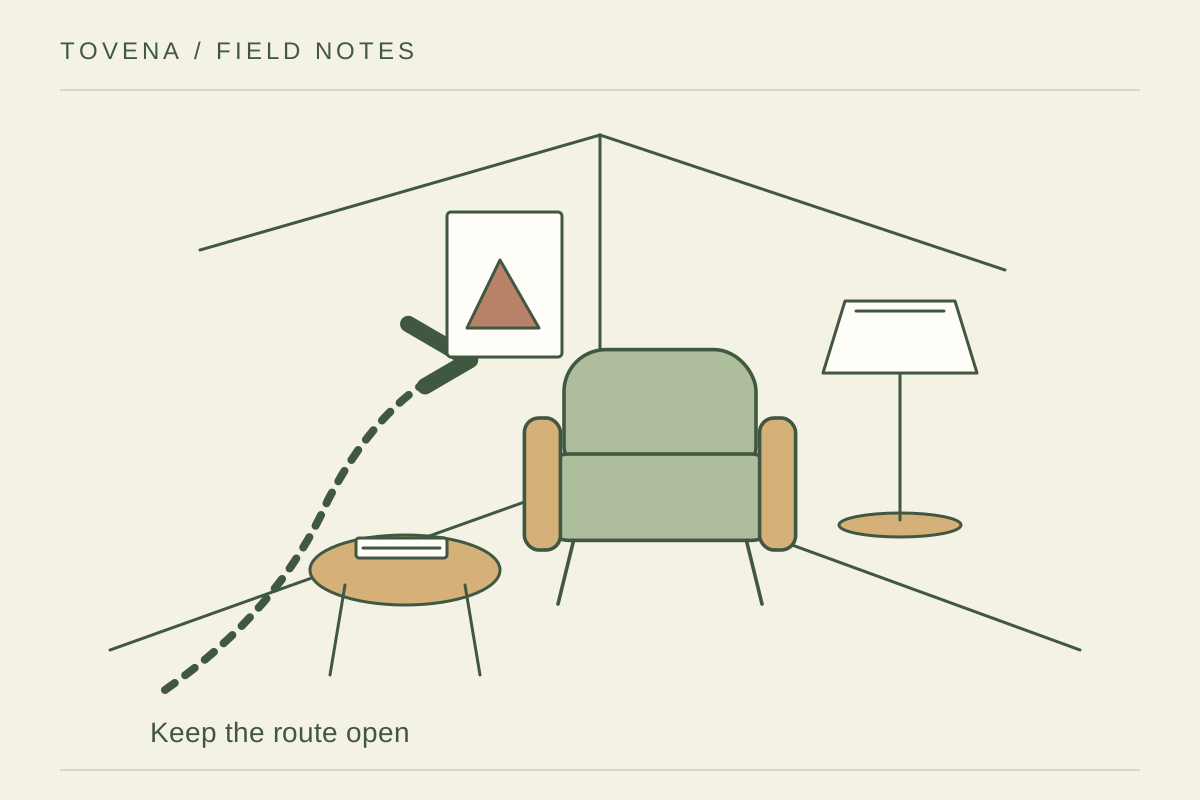
An empty corner does not automatically need a chair. Watch how people move around it for a few days: it might be part of the route to the balcony, the place a door swings into, or the only clear approach to a cabinet. Mark these movements on a simple sketch. If the space is genuinely spare, choose one purpose you already need, such as putting down a bag or keeping a current book nearby.
Mock up the footprint
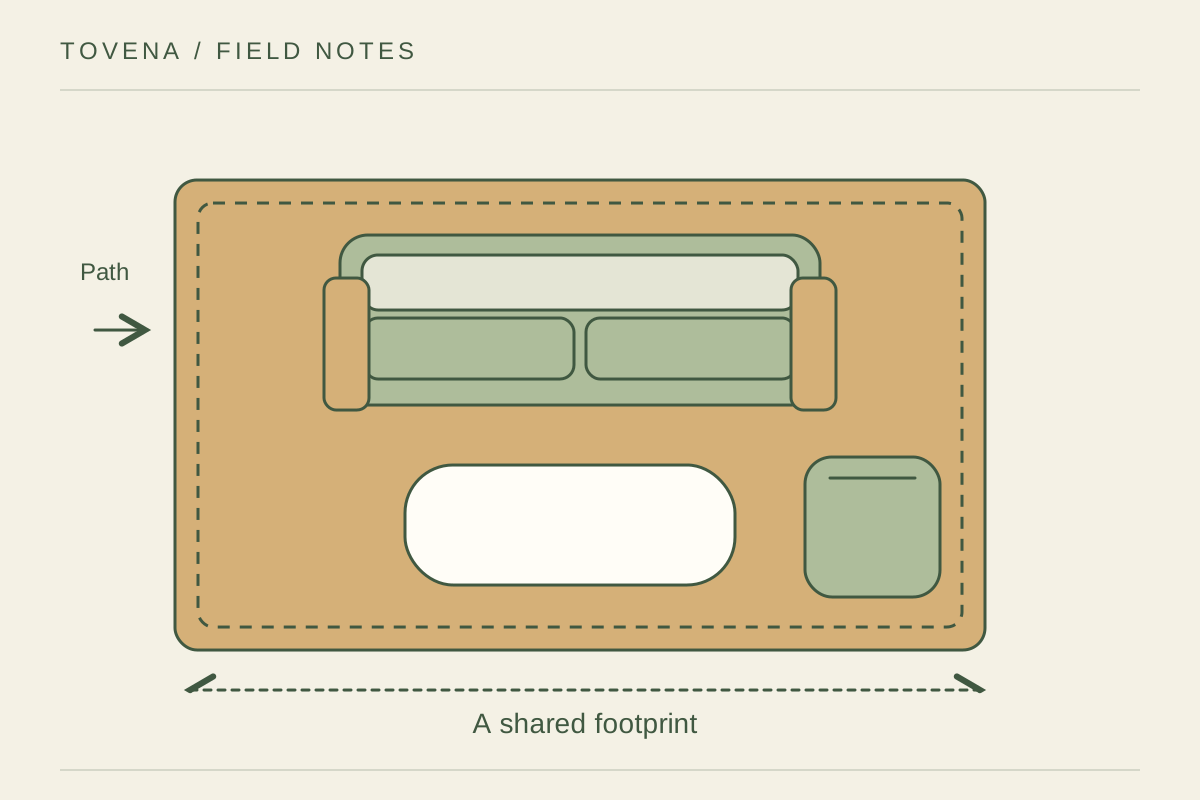
Use a box or folded blanket to represent a proposed side table, basket, or chair. Leave it there through an ordinary evening. Can you open the window, reach the outlet, and clean behind it? A chair also needs space for feet and for the person getting in and out; the upholstery dimensions alone do not describe the space it uses. A narrow wall shelf may suit a landing place better than another piece on the floor.
Stop when the corner works
Once the purpose is clear, add only what supports it. A reading corner may need a chair and a light, but not a second basket, a stool, and several plants. A bag station needs a stable landing surface and a place for small essentials. Look at the corner from the doorway: a little exposed floor is useful breathing room. If the new arrangement makes the room harder to cross, return it to open space.