Follow one towel through an ordinary meal
Before installing a hook, watch where a towel goes while you prepare dinner. It may start in a drawer, move beside the sink, become a folded pad on the counter, and finish over a cabinet pull. Identify the point where it loses its place. That movement gives you a better starting point than copying the towel arrangement in a styled kitchen photograph.
Give different jobs an understandable distinction. A towel for drying clean dishes should not be confused with one used for a messy cleanup. Color, a different hanging position, or a simple household agreement can help. Replace a towel when its use calls for laundering; hanging it neatly does not make a soiled towel ready for another task.
Reserve dry storage for clean replacements
Choose a drawer or shelf that stays dry and can be reached during normal kitchen use. Fold a few clean towels so you can see and remove one without pulling out the whole stack. You do not need identical towels or a perfect row. The useful detail is being able to get a clean replacement with one straightforward movement.
Keep an occasional entertaining towel separate only if it repeatedly gets in the way of everyday ones. Otherwise, adding categories can make a small drawer harder to use. Empty a crowded towel drawer before buying dividers; extra bags, appliance leaflets, and unused accessories may be responsible for the lack of room rather than the towels themselves.
Choose an open place for the towel in use
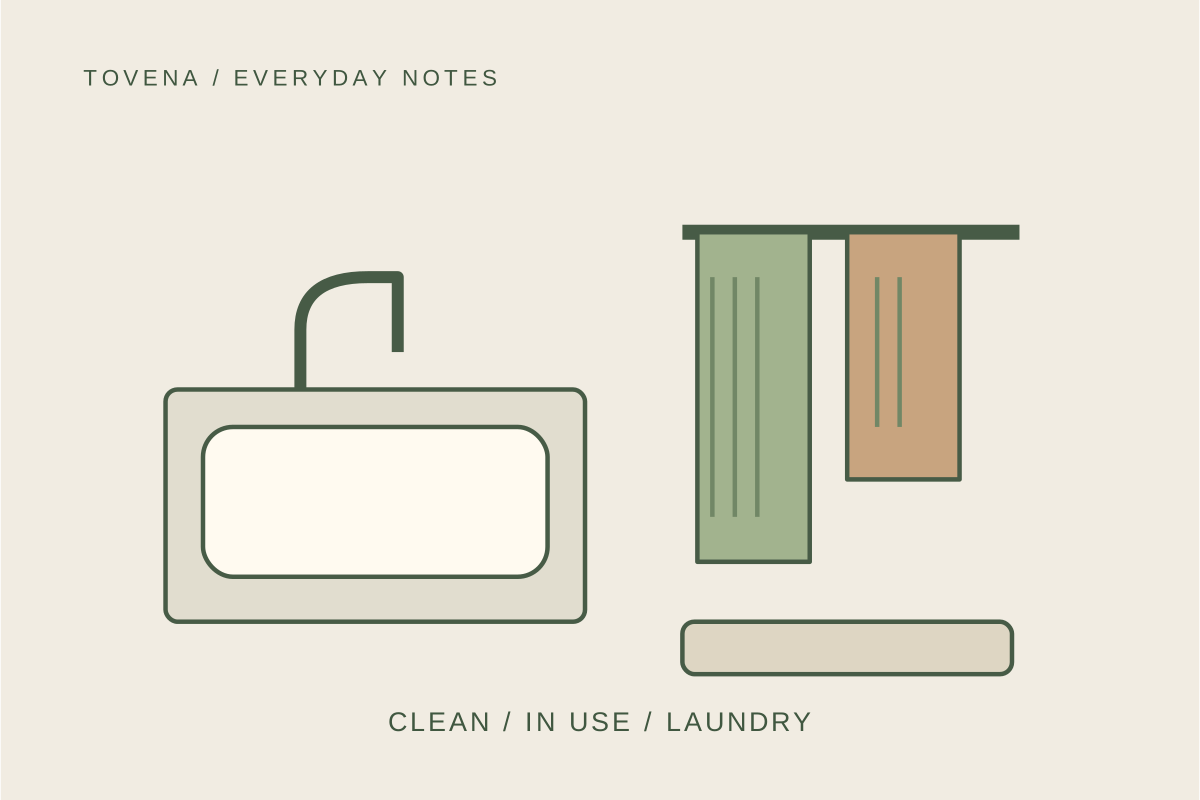
Give a damp towel room to hang rather than leaving it balled up on the counter or putting it back with clean ones. A suitable rail can spread the fabric; a loop and hook may fit a smaller spot. Use the arrangement that the towel and the available surface can support, and check whether the fabric remains bunched together after hanging.
IKEA’s kitchen wall organizer range illustrates how rails and hooks can move storage away from the worktop. That is a useful starting idea, but the exact placement still needs a kitchen-specific check. Avoid a position where fabric hangs near cooking heat, touches food-preparation surfaces, or prevents you from opening a dishwasher or other appliance according to its instructions.
Check the cabinet and the hanging hardware
If you are considering an over-cabinet rail, open and close the door with it in position before committing to the arrangement. Look for contact with the countertop, adjacent doors, and the towel below. Confirm the rail fits the door and follow its installation and load guidance. Do not force the door shut against hardware that is too thick.
Adhesive and suction fittings have surface requirements that vary by product. Read those instructions rather than assuming any smooth-looking cabinet finish is suitable. Renters should check what changes are allowed. A temporary trial using an existing permitted fitting can reveal a bad location before you add hardware or leave a mark on a finish.
Make the laundry destination a separate step
Decide what happens when a towel is no longer suitable for its current job. It needs a clear route to laundering, rather than a second unidentified pile on the sink edge. Keep that route distinct from your clean towel drawer. Handle wet or soiled textiles according to their care instructions and household laundry practice, rather than sealing them away and forgetting them.
For example, after washing dishes you might put the used towel at the household’s agreed laundry collection point and hang a clean one. Another household may do this at the next meal because it uses its kitchen differently. The important distinction is the towel’s status; an attractive fold cannot substitute for knowing whether it is clean or waiting for laundry.
Try the arrangement during the busy part of dinner
Run through the movements that caused the original pile: wash your hands, open the trash cabinet, unload the dishwasher, and move to the cutting board. If the towel falls, brushes something unsuitable, or has to be moved repeatedly, change the position. A practical towel station should free the counter while leaving ordinary kitchen movements uncomplicated.
Check again after the next laundry cycle. If fresh towels are still being abandoned on the worktop, their drawer may be too far away or crowded. If damp ones keep landing there, the hanging space may be too small or awkward. Change that one weak point before adding another basket, rack, or decorative accessory to the kitchen.
Compare the options
| Option | Useful when | Watch for |
|---|---|---|
| Suitable rail | Fabric can spread out | Check clearance and installation |
| Hook with towel loop | Wall space is limited | Fabric may bunch together |
| Dry drawer | Clean replacement storage | Do not return damp towels here |
Your checklist
0 / 5 completed
Common questions
Can I put damp towels back in the drawer?
Keep the clean dry supply separate from a towel that is still damp or in use.
Is an appliance handle always a good towel rail?
No. Check the appliance instructions and avoid heat, obstructed operation, or other unsuitable contact.
Do all kitchen towels need separate drawers?
No. A clear distinction between tasks and clean versus laundry-bound towels matters more than extra furniture.