Start with the shelf that causes the most rummaging
Empty one shelf onto a clear table rather than dismantling the entire pantry. Group the contents by how you cook: breakfast, baking, rice and grains, or quick dinners. Put ingredients for your usual meals together when that makes them easier to find. Similar packaging is not always a useful category.
Look for several open versions of one ingredient and small packets hidden behind boxes. Check package storage instructions before putting anything back. FDA guidance advises keeping food away from household cleaning products and chemicals; an empty corner in a pantry is not a good reason to mix those supplies with groceries.
Measure the opening and the journey to the counter
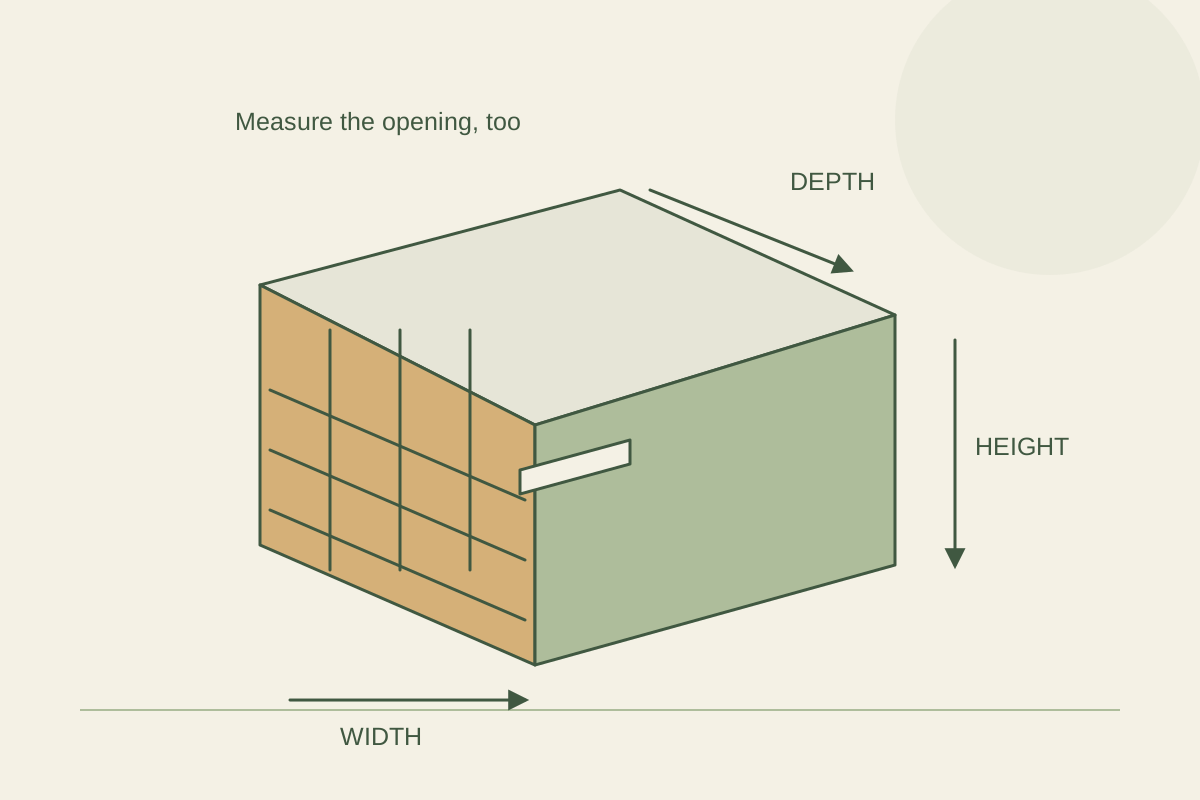
Record shelf width, depth, and height, including hinges and the shelf above. The storage cavity can be wider than the opening in front of it. Try a cardboard box with a similar footprint before ordering matching bins. Bring it forward, lift it clear, turn, and put it on the nearest working surface.
For a hypothetical shelf with a 20-inch-wide opening, two bins each 9 inches wide occupy 18 inches across. The remaining 2 inches must accommodate any handles, uneven walls, and useful movement. This is an illustrative layout, not a product specification. Check outside dimensions and try the motion with actual items inside.
Choose a retrieval method for each group
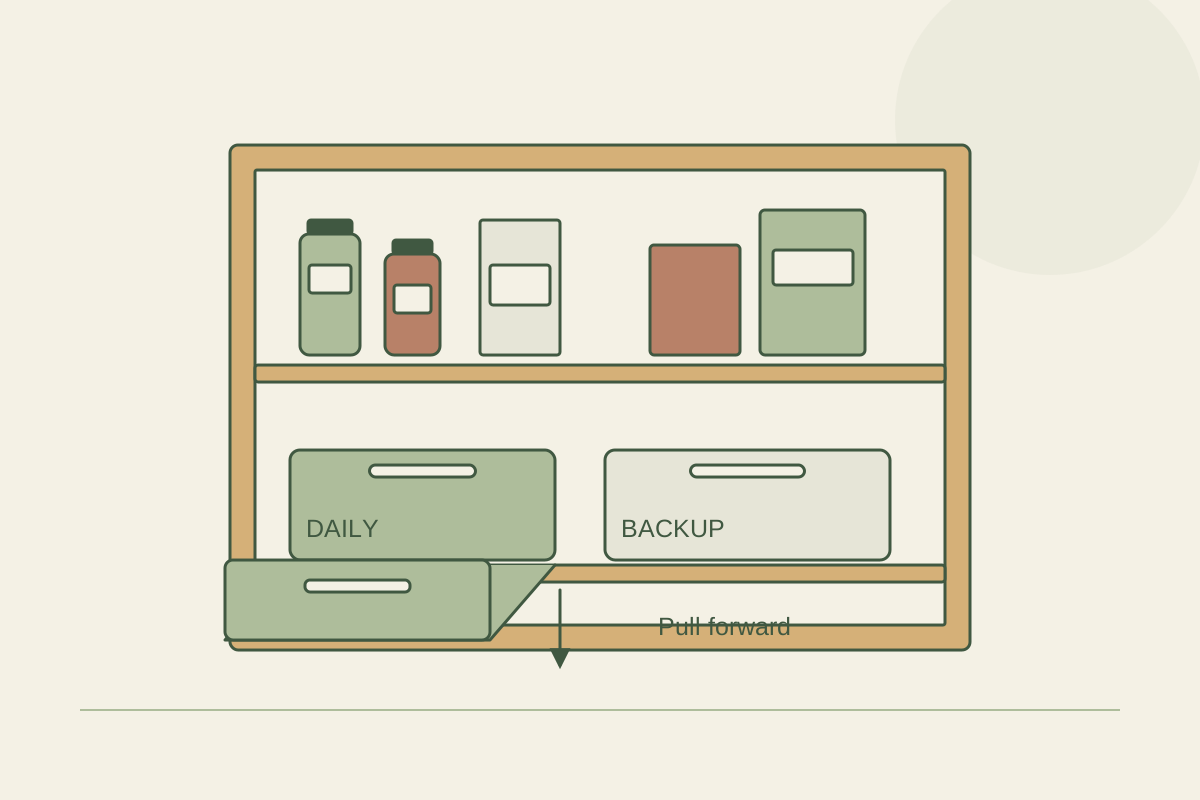
Small packets suit a pull-forward bin because the entire group comes within reach. Large cereal boxes may work better standing directly on the shelf with their labels visible. A turntable can help with short jars in a corner, but tall bottles can hide the middle and a large circle leaves unused corners.
Keep loaded bins manageable and follow the organizer’s stated capacity. Avoid a deep basket so heavy that you hesitate to remove it. Two lighter groups may be easier to use than one large category. If several people put groceries away, broad names such as Breakfast often work better than many narrowly defined sections.
Separate the open package from the next package
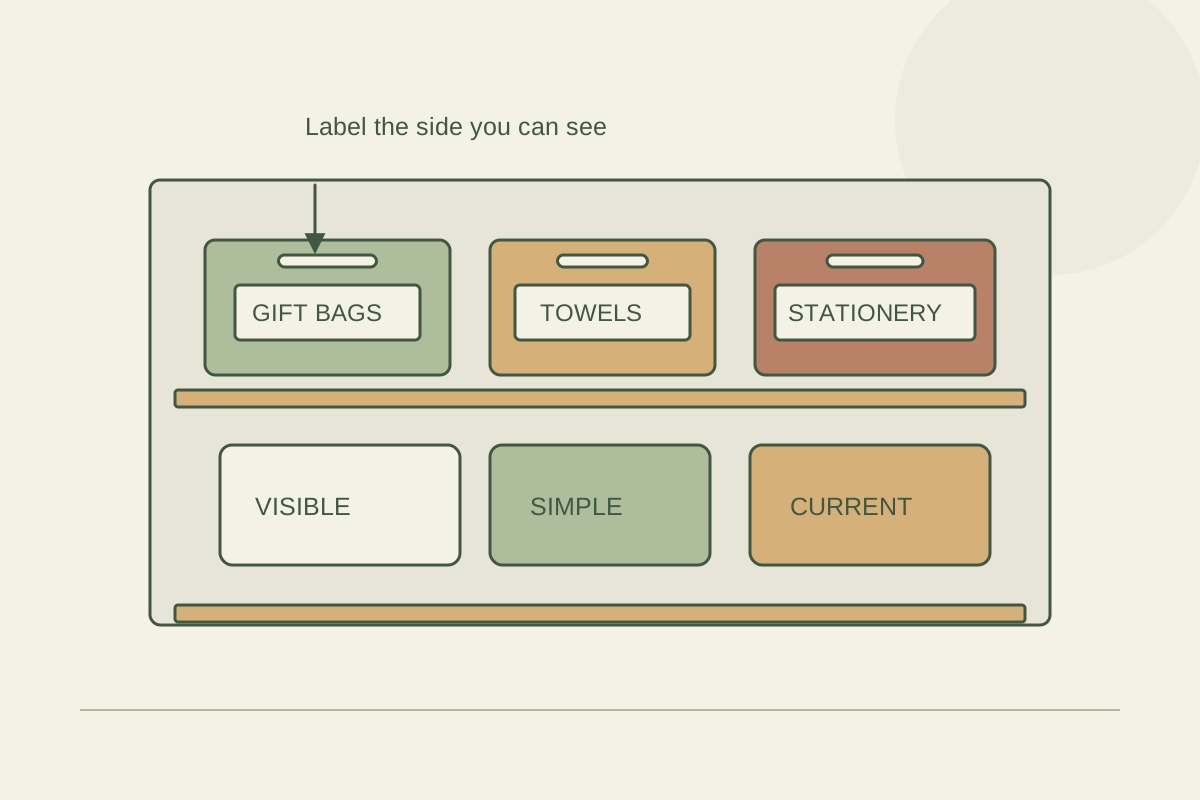
Keep open products in the working area and unopened duplicates together in a clearly marked reserve area. Check that area before shopping. When reserve stock sits behind other items, a short list on the front of the shelf can be more useful than a clear bin filled with overlapping labels.
Decant only where a container solves a real problem, such as a bag that will not stand or close. Retain useful product information, including ingredients, allergen details, preparation directions, and identifying codes. A jar that looks tidy but loses those details can make cooking harder. Avoid topping up an unidentified remainder just to fill the container.
Make space for a normal grocery trip
An arrangement that works only when supplies are nearly gone will collapse after shopping. Leave some room in the categories you replenish most often. Put newer duplicates behind the same older product while following label instructions. Organization does not establish whether a food is safe or suitable to eat.
After a week, notice what has migrated to the counter. A bin may be too full, a label unclear, or a shelf too awkward to reach. Fix that one point before adding organizers. Review the reserve area while writing the next shopping list, when the information can actually change what you buy.
Compare the options
| Arrangement | Useful for | Check first |
|---|---|---|
| Pull-forward bin | Small packets | Loaded weight and handles |
| Open front row | Large readable boxes | Room to remove one package |
| Small turntable | Short jars in corners | Diameter and tall bottles |
Your checklist
0 / 5 completed
Common questions
Should every item go in a matching container?
No. Keep packaging that stacks, pours, and closes well. Decant troublesome bags first. Buy containers around ingredients you actually use rather than choosing a large matching set and finding food to fill it.
What belongs at the back?
Reserve stock can work there if you can identify and retrieve it without emptying the shelf. A labeled pull-forward bin is one option. Avoid hiding daily ingredients behind unrelated bulky packages.
Will risers solve a deep shelf?
Sometimes, especially for short jars. Check the tallest jar against the shelf above. If reaching the back still knocks over the front row, use a pull-forward group or a shallower arrangement instead.