Choose where the fabric ends
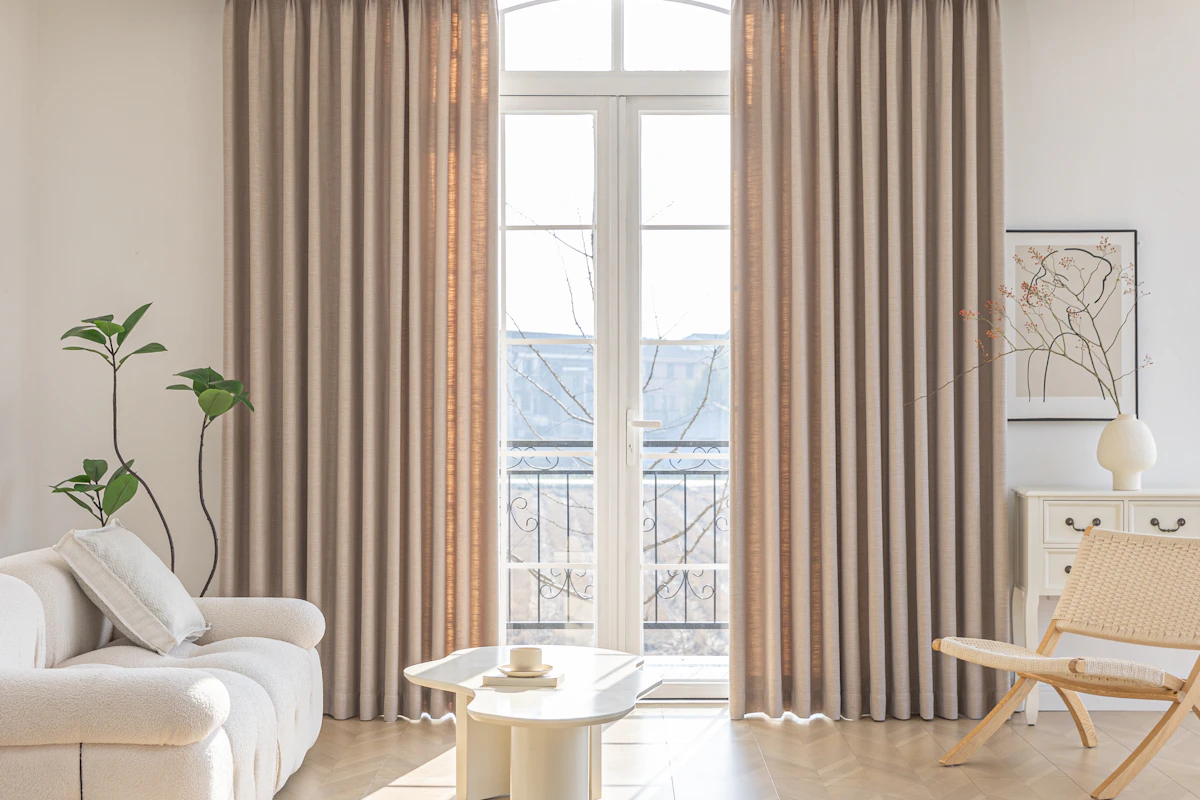
Curtain length begins with a decision about the floor. A hem just clear of it is easier to vacuum around; fabric resting on it gives a softer look but collects more dust and needs rearranging. In a busy family room, start with the practical option. Tape a strip of spare fabric at the intended finishing point and view it with both the curtains open and the furniture in its usual place.
Measure from the actual attachment
Measure from the point where the fabric will hang, not automatically from the top of the pole. Rings, hooks, eyelets, and tracks all change that starting point. Measure at the left, center, and right because floors are not always level. Before ordering ready-made panels, check whether the listed length includes the heading. Leave a little time for the fabric to hang before deciding that it needs a permanent alteration. If hemming is planned, confirm the alteration allowance and return policy before washing or cutting the panels.
Check what sits underneath
A long curtain must work around vents, heaters, furniture, and the opening window. Follow appliance clearance instructions rather than letting a decorative hem cover a heat source. If a desk or radiator makes floor length awkward, a shorter treatment may suit the room better. Test the curtain's stacked width too: the open fabric should not block the part of the window you rely on for daylight or ventilation.