Separate counter corners from cabinet corners
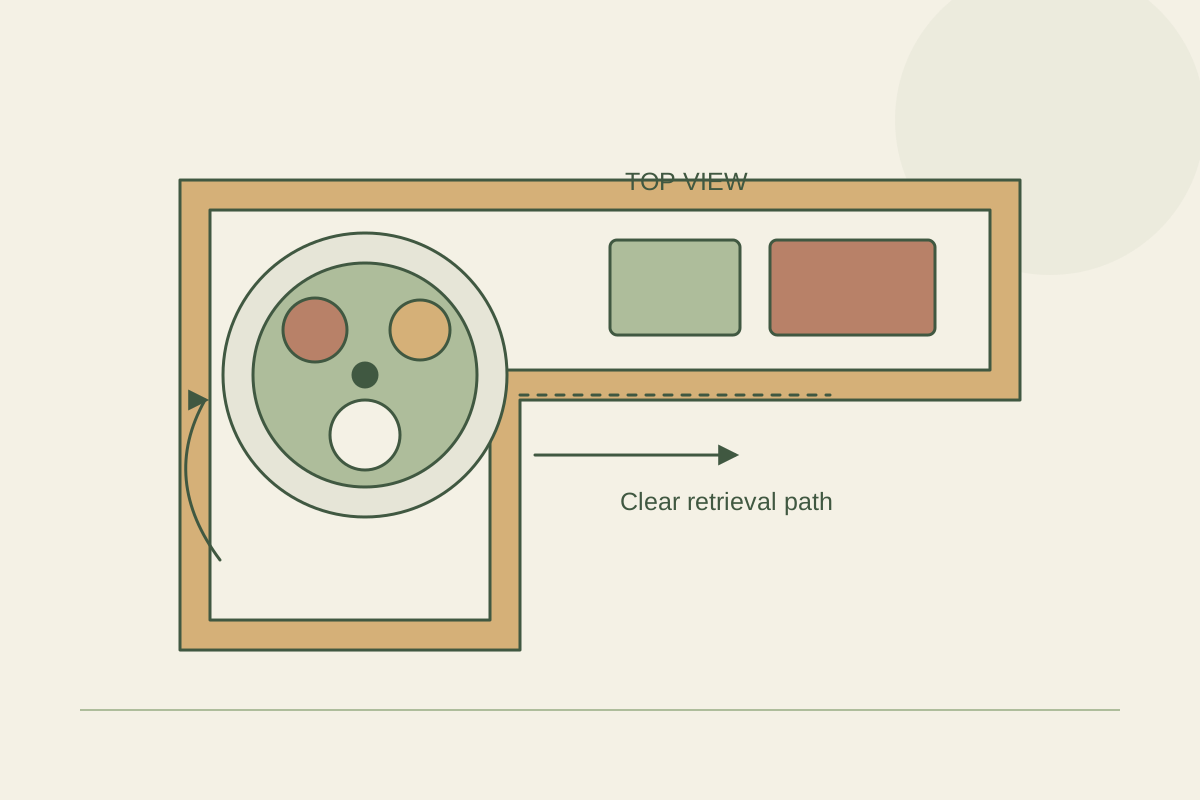
A counter corner is visible but can be awkward to reach across. A blind cabinet corner hides things even when its door is open. Treat them differently. On the counter, try a compact group that comes forward together, such as a tray holding a teapot and two cups. Inside a cabinet, choose a few large, recognizable objects instead of loose small utensils. The goal is to reduce searching, not to occupy every available recess.
Try the movement before the organizer
Place the actual objects in the corner and rehearse taking out the one at the back. Notice whether a drawer handle, door hinge or neighboring pan blocks your hand. A turntable helps only when it can rotate with the tallest item in place and the door shut afterward. A rectangular bin may waste less room, but it needs enough clear space to slide forward. Compare those movements before choosing the more elaborate fitting.
Leave a deliberate spare space
Keep everyday cookware near the place where you use it, even if a corner technically has room. The corner can hold an occasional serving bowl or an empty picnic container that is easy to identify. Avoid storing unrelated items in front just because there is a gap. Review the area after a month: if you have moved three things to reach one, reduce the contents. Empty space can be the simplest retrieval system.