Write down the work you actually see
Walk through each room and list its recurring tasks in plain language: wipe the dining table, vacuum the rug, clean the bathroom sink. Keep occasional projects such as sorting the loft on a different list. Note which tasks take equipment, drying time or moving furniture. A weekly plan becomes unrealistic when every item is treated as equally quick. Use the surfaces' and products' care guidance to decide the method rather than fitting every room to one cleaning product.
Put the heavier jobs on possible days
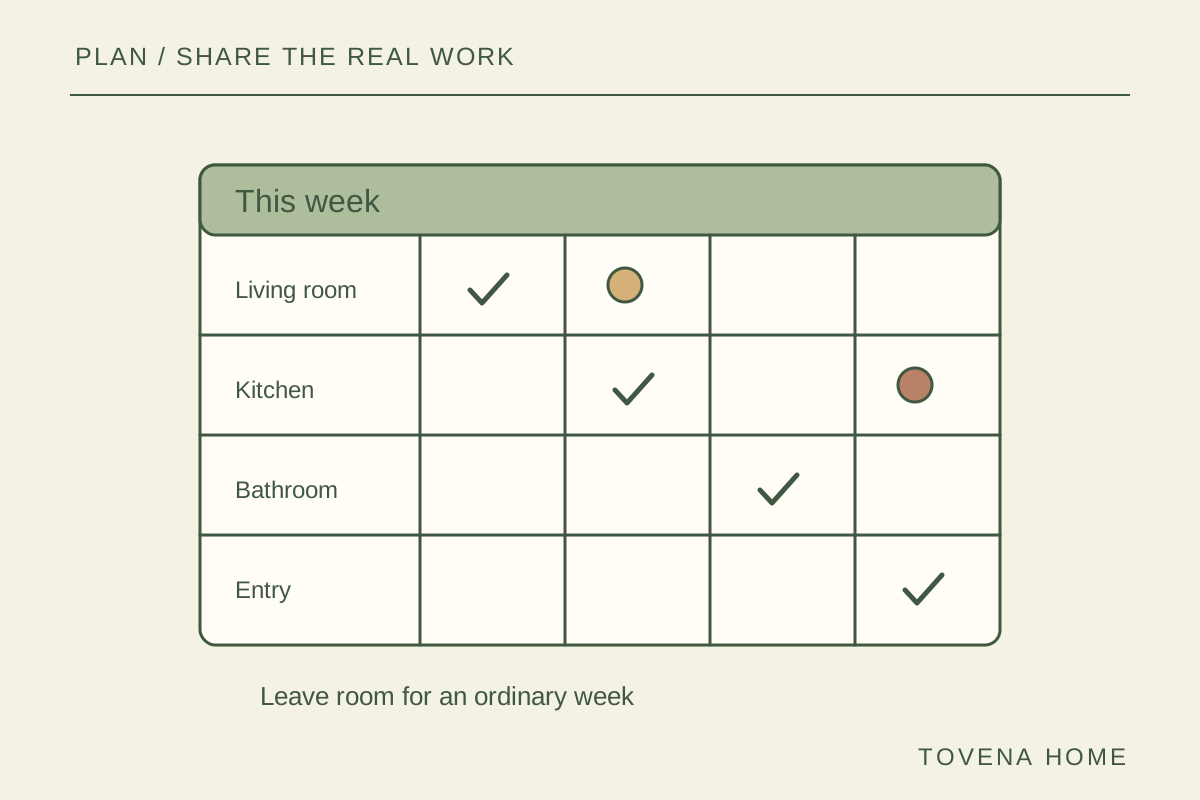
Choose one or two longer sessions where your week allows them, then give shorter jobs to busier days. Group tasks that use the same equipment when that saves effort, but keep dirty tools and cloth categories appropriately separated. Leave some unassigned time for the room that needs extra attention. If several people share the home, agree who owns each task and what finished means. 'Bathroom' is vague; 'sink and counter cleared and cleaned' is easier to share.
Review after a normal week
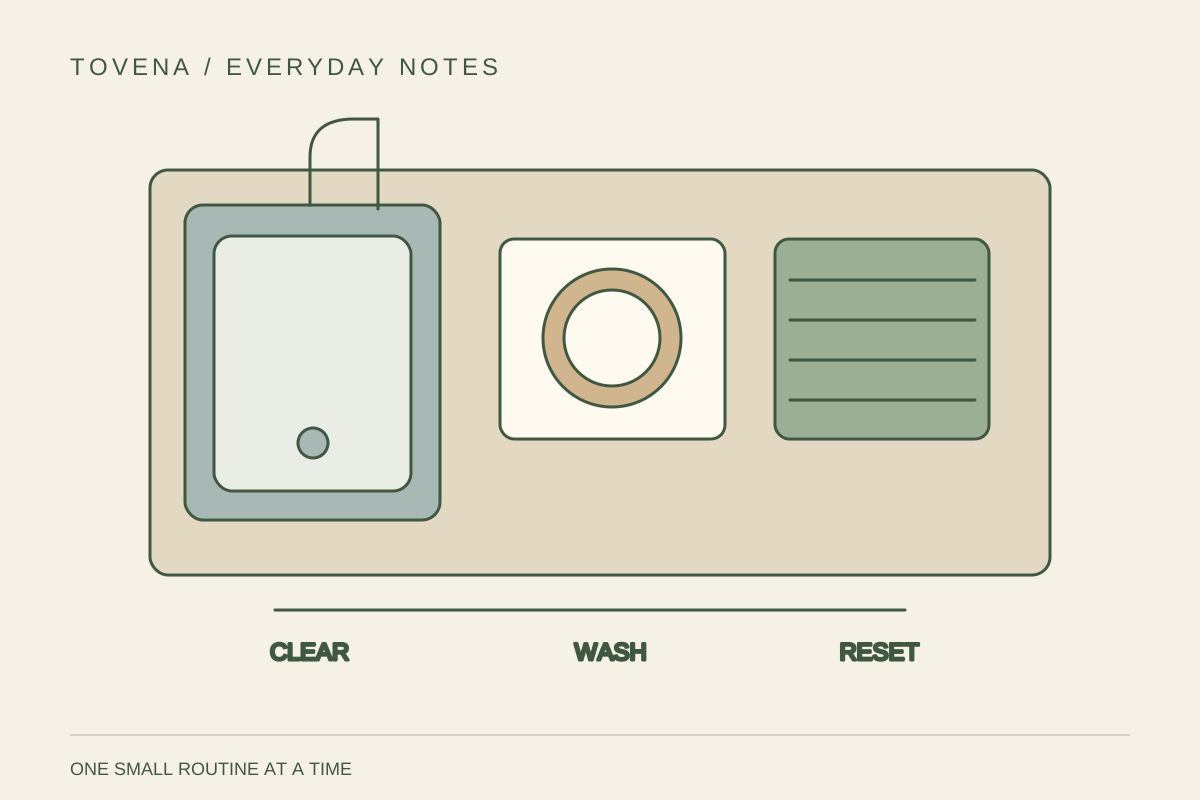
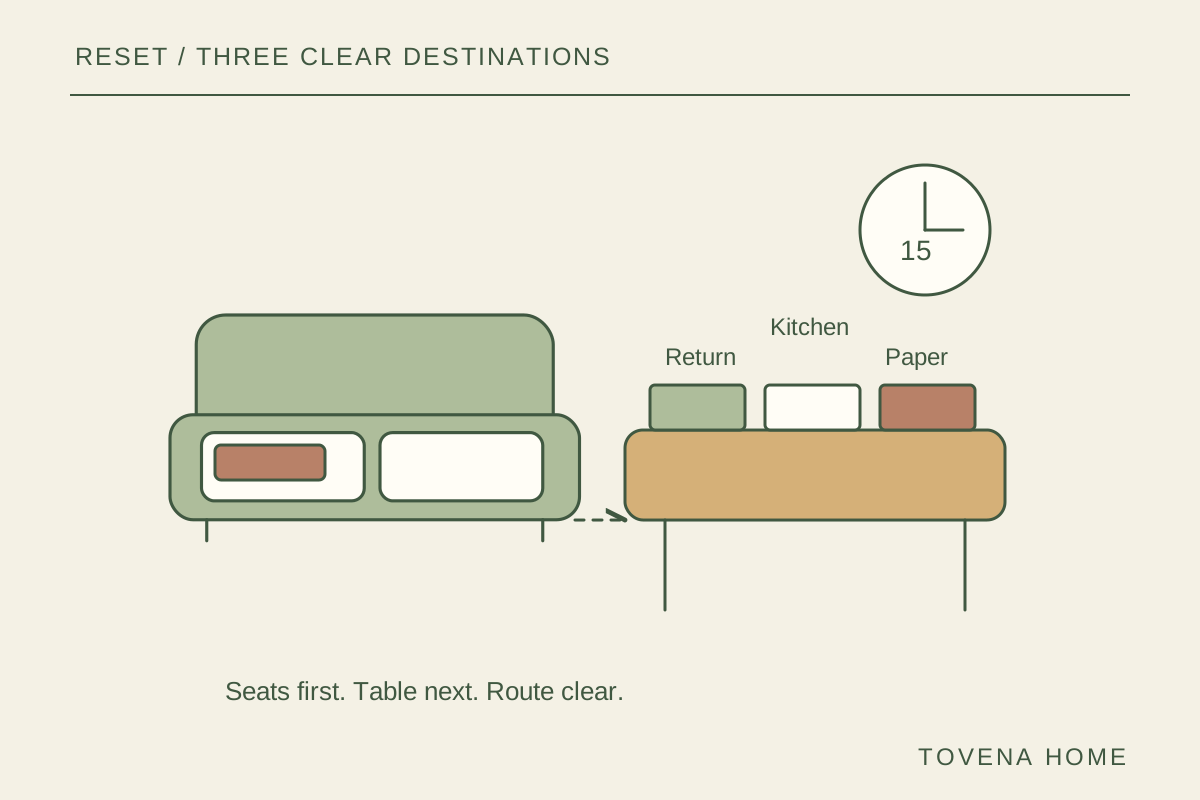
Try the plan during an ordinary week and mark the tasks that repeatedly spill over. Shorten a session, split one room or change the day rather than assuming the problem is a lack of discipline. Keep a small daily reset for dishes, stray objects and obvious mess so the weekly work starts from a usable room. There is no need to add tasks just to fill empty boxes on a planner. The schedule should make the home easier to manage, not become another thing to maintain.