
The short answer
A spray mop is usually the simpler choice for quick touch-ups and moisture-sensitive sealed floors. A spin mop is often more useful when you want a rinse-and-wring system for larger areas, tile, vinyl or several rooms at once.
Neither format is automatically better for every home. The right choice depends on the floor-care instructions, the amount of soil you normally remove and how much storage space you have.
Choose a spray mop for controlled moisture
A refillable spray mop releases solution close to the pad, so it is easier to avoid puddles and work in small sections. That makes it a practical option for frequent kitchen cleanups and sealed hardwood when the flooring manufacturer permits damp mopping.
Check the bottle capacity, trigger comfort and replacement-pad availability. A lightweight tool is only convenient if the handle and spray mechanism are comfortable to use repeatedly.
Choose a spin mop for rinsing and wringing
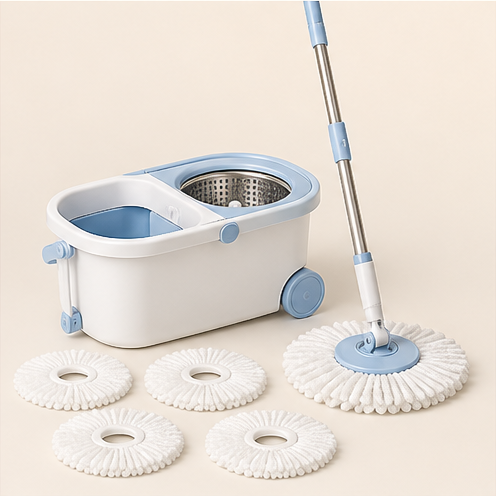
A spin bucket lets you rinse the mop head and remove more water without twisting it by hand. It can be useful for tile floors, larger rooms and households that prefer a traditional bucket routine.
Compare the bucket's filled weight, splash guard, drain design and stored footprint. If carrying water is difficult, a compact bucket or rolling base may matter more than extra accessories.
Match the tool to the room
Many homes benefit from using different tools for different jobs: a spray mop for fast daily cleanup and a spin mop for deeper scheduled cleaning. Whichever tool you choose, remove dry grit first and follow the floor maker's cleaning guidance.