List the actual job of the table
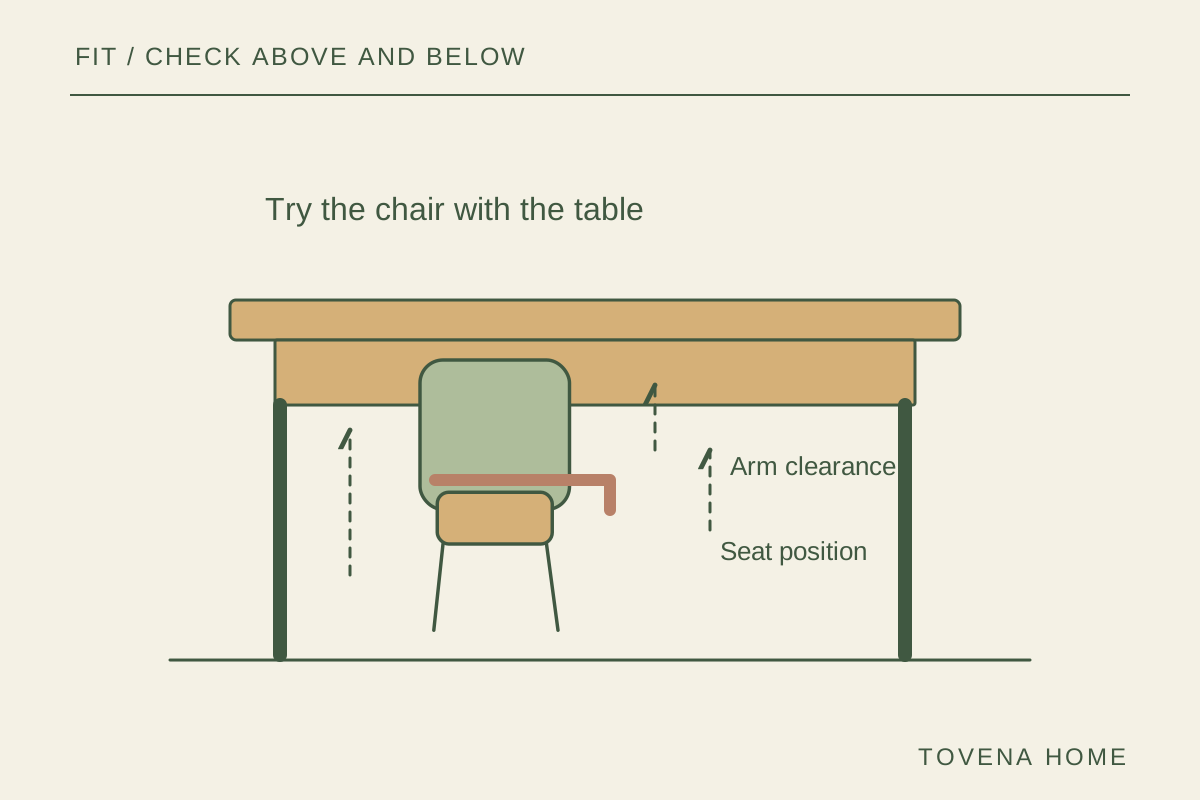
Decide whether the table needs to hold a lamp, a drink, a book or all three at once. Measure the lamp base and leave a separate stable place for the cup. Check the height from the seat you will use so reaching does not require leaning awkwardly. A very small top may look neat in an empty photograph but leave nowhere practical for daily objects. Use a piece of card to represent the proposed top before buying.
Match the outline to the route
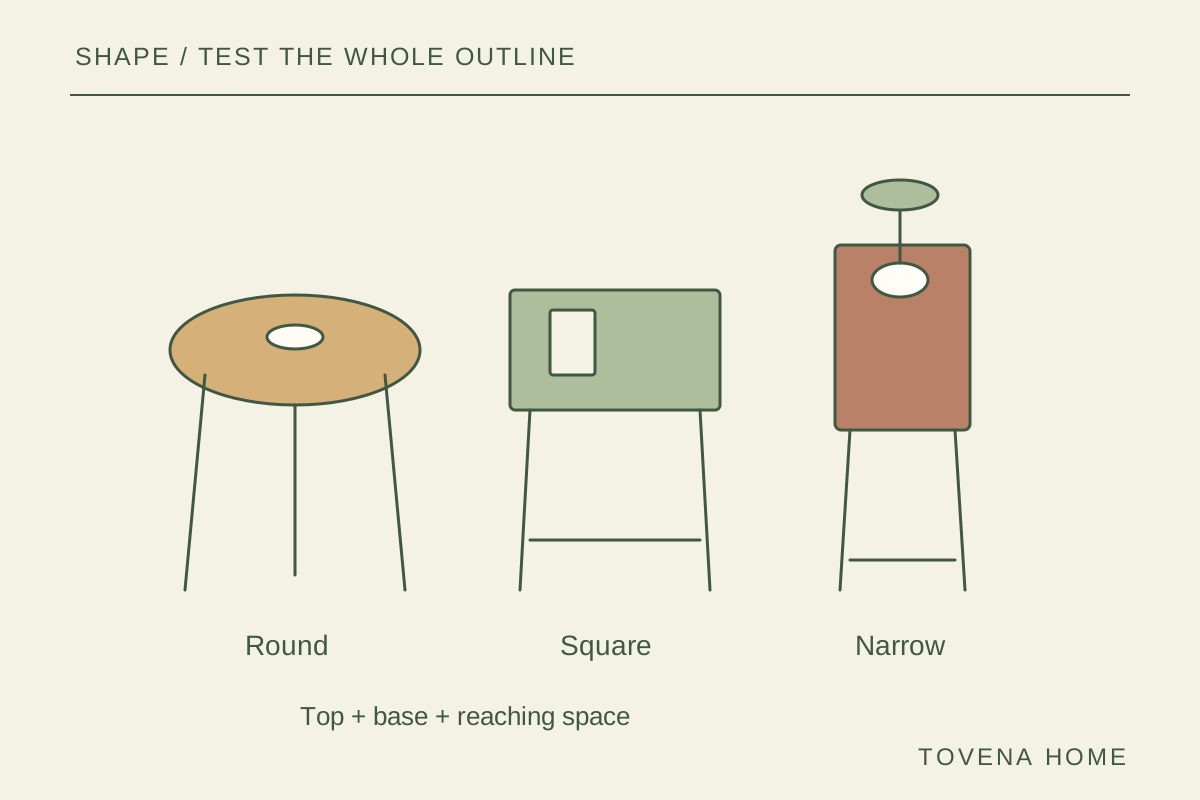
A round top can soften a turn beside the sofa, but its footprint still needs checking. A square table can sit neatly against straight furniture, while a narrow rectangle may work between a sofa and wall. Look at the base as well as the top: projecting feet may occupy space that the tabletop drawing does not show. Do not choose a shape on the assumption that it is automatically safer or smaller; test the whole outline in the room.
Choose storage with a reason
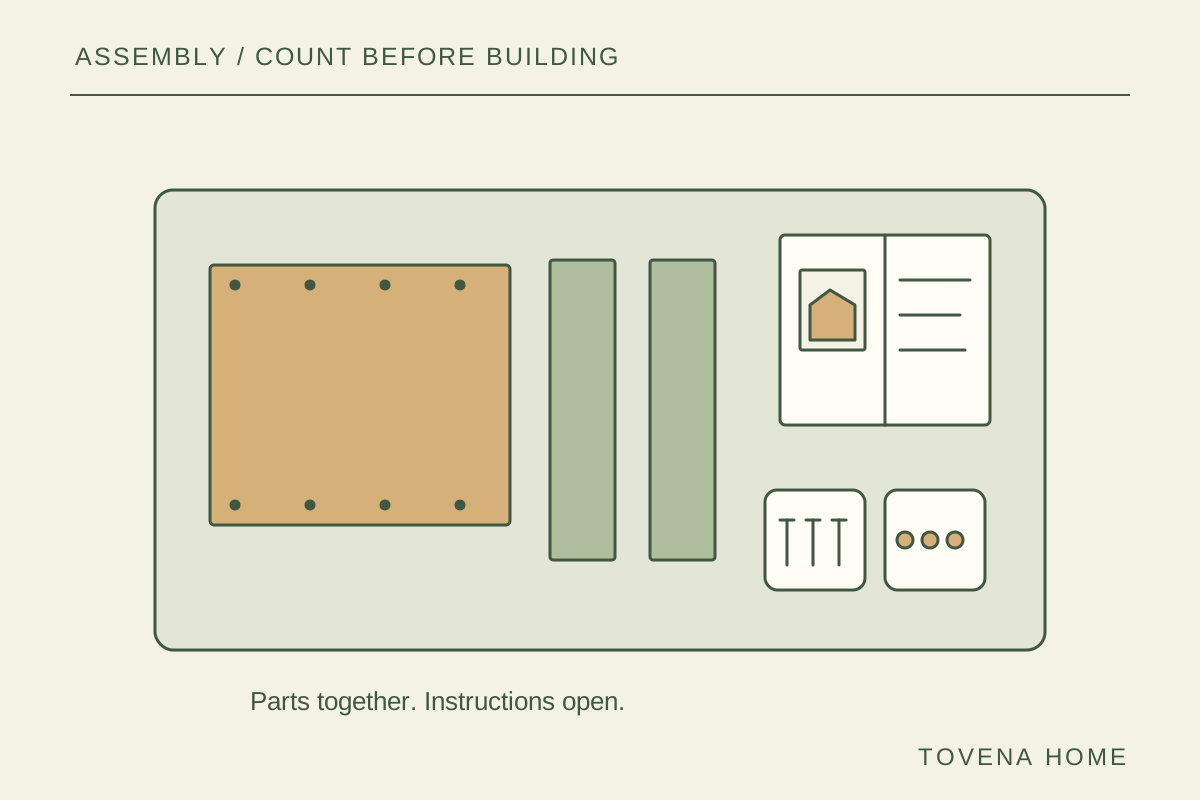
A lower shelf is useful for a book if you can reach it and it stays clear of the walking route. A drawer can hide small items, but it needs opening space beside the seat. Check that the table sits steadily on the intended surface and follow any assembly and load guidance. Once it is in place, leave a little empty top. The table has done its job when you can put a drink down easily without moving a decorative arrangement first.