Check the whole instruction sequence
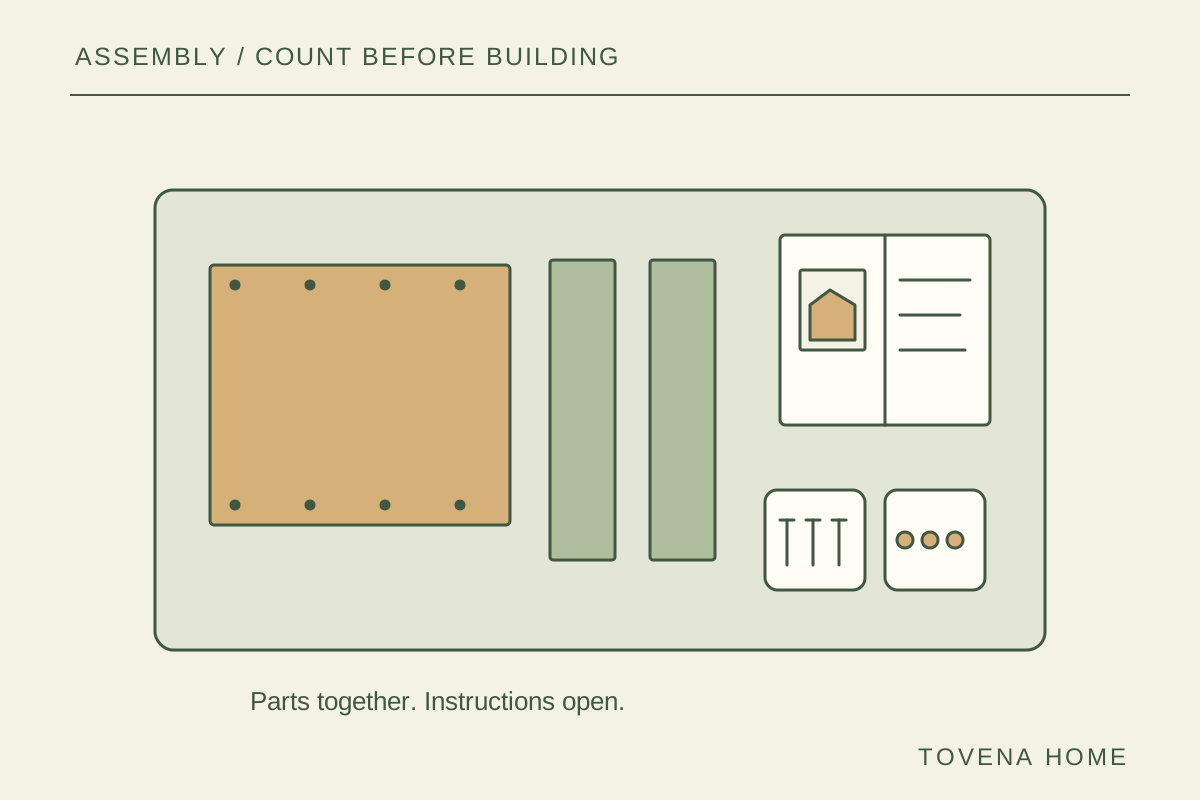
Find the correct manual for the exact model and read through to the end before starting. Note where a second person, specific tools or a change of orientation is required. Compare the parts list with the contents without mixing similar screws together. Keep small hardware in labeled containers and retain the packaging until you know nothing is missing. If a major part is damaged or absent, contact the supplier rather than improvising a substitute and hoping the next steps will work.
Make enough working room
Clear an area that fits both the laid-out parts and the movements shown in the instructions. Protect the floor with a suitable material and keep walkways usable. Do not begin across the only doorway and discover you cannot leave without stepping over panels. Plan how the completed item reaches its final position; some furniture should be assembled close to where it will stand. Keep children and pets away from loose parts, packaging and the active work area throughout assembly.
Finish every installation step
Follow the specified tightening sequence and avoid substituting a power tool where the instructions require hand tightening. Before use, check the completed item against the manual, including any wall attachment requirement. CPSC's Anchor It guidance recommends securing furniture against tip-over; use the product's instructions and appropriate wall-specific hardware rather than treating anchoring as optional decoration. If you cannot identify the wall construction or required fixing method, get suitable help. Keep the manual and spare parts labeled with the model for future moves.