Ask for specific photographs
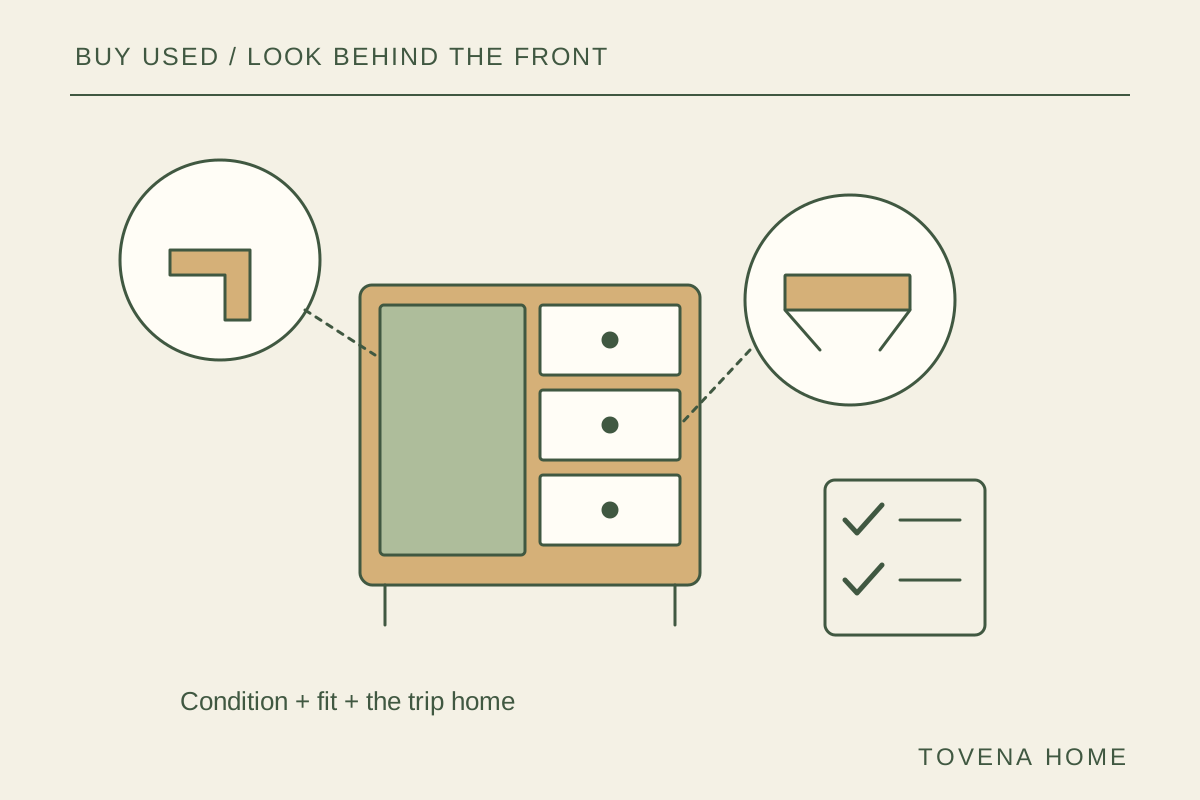
Request pictures of the underside, back, joints, drawers and any visible damage, not only the attractive front. Ask for the maker or model details when available and compare the measurements with your room and delivery route. Confirm which parts are included and whether the piece has been repaired or altered. A low price is less useful if missing hardware cannot be replaced. If the seller cannot provide basic details, keep that uncertainty in the decision rather than filling gaps with hopeful assumptions.
Inspect slowly in person
With the seller's permission, open doors and drawers and check that the piece sits as intended on a suitable level surface. Look for loose joints, swollen board, cracked parts, damaged upholstery and signs that require further assessment. Notice persistent odors without trying to mask them. Check relevant recall information using the available maker and model. Do not attempt pest treatment, structural repairs or forceful testing during a viewing. Walk away if you cannot judge whether the condition suits your home.
Calculate the whole purchase
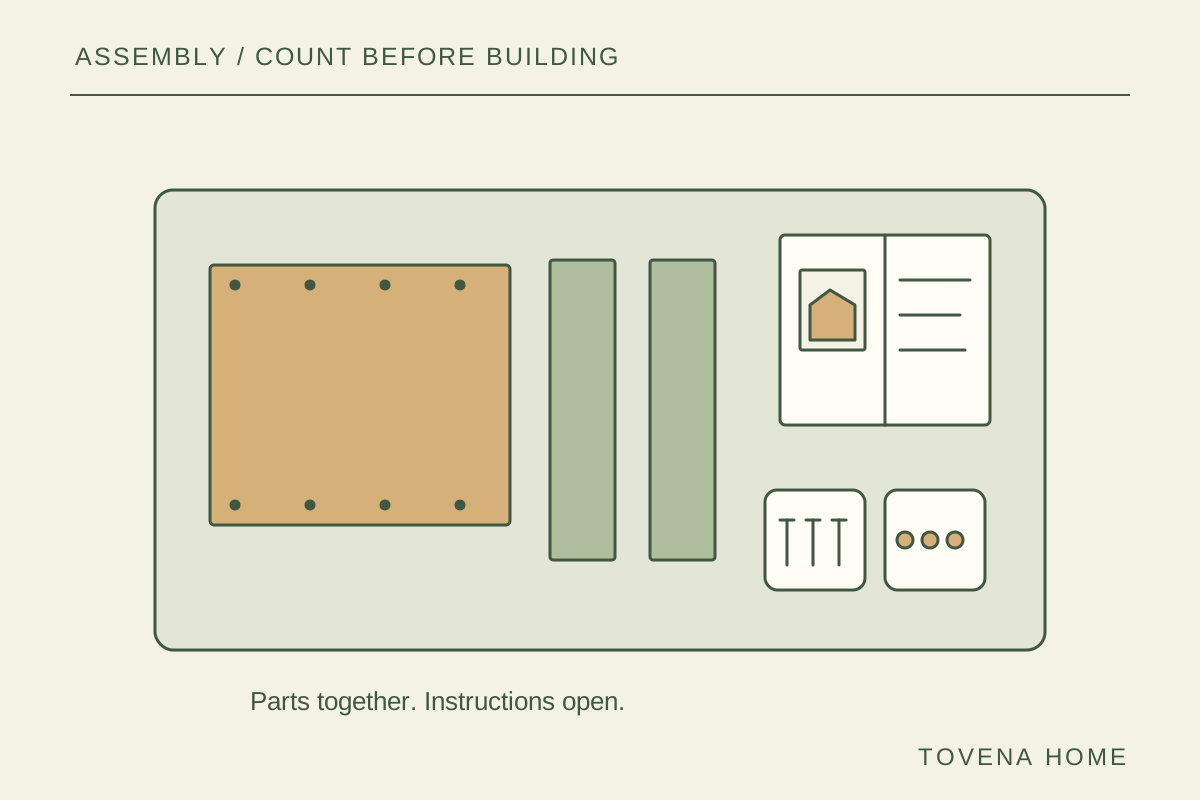
Add transport, helpers, cleaning appropriate to the material and any professional work to the asking price. Confirm pickup access, parking and whether disassembly is permitted and documented. Photograph the assembly before separating components and keep the original hardware together. Decide where the piece will stand before it arrives so it does not become a hallway obstacle. A slightly more expensive item in sound, documented condition may be the simpler purchase than an appealing project with several unknown jobs attached.