Notice where the dirt actually lands
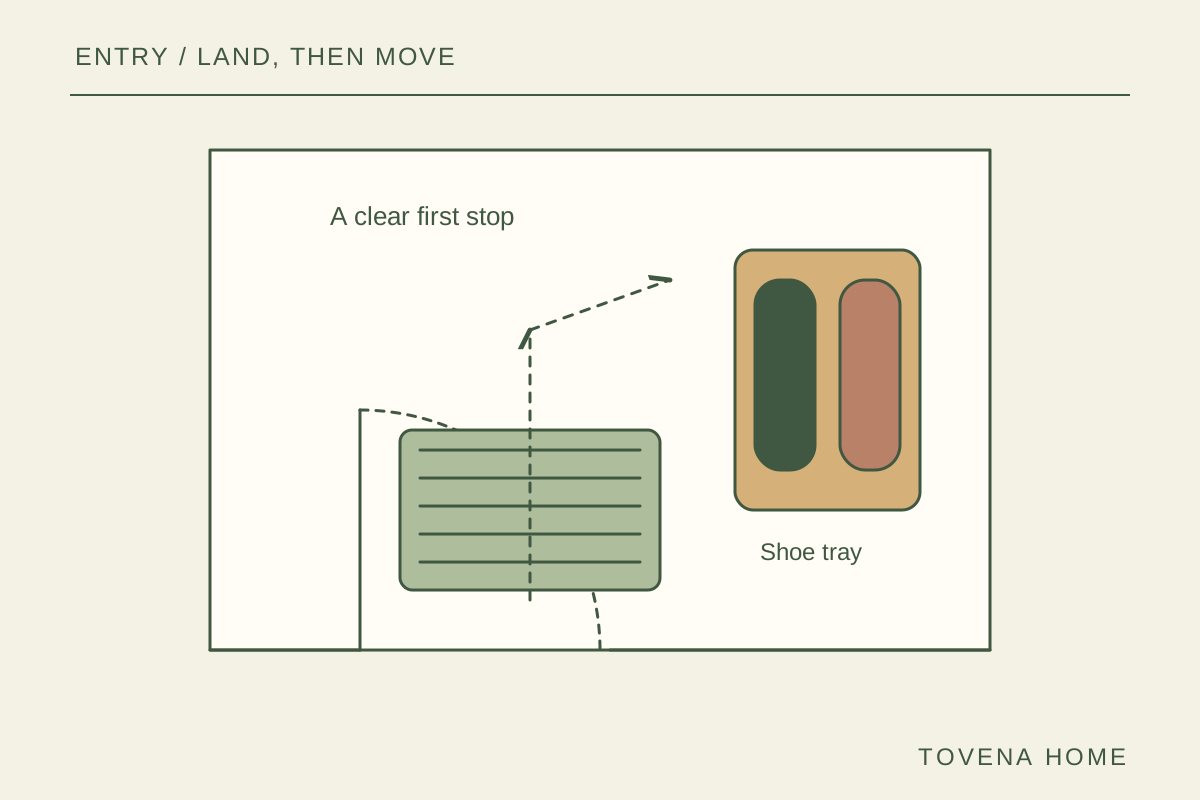
After a normal day, look at the floor between the door and the shoe storage. That line tells you more than an idealized entry photograph. A mat is useful only if people naturally step onto it and it does not interfere with the door. Choose a mat suitable for your floor and follow its care instructions. If shoes are changed inside, place the landing area before the point where people start walking toward the kitchen or sofa.
Give shoes a straightforward place
Keep everyday shoes in the easiest section of the rack and move less-used pairs elsewhere. Provide enough space that people do not leave shoes beside the rack because it is already full. A tray may help define a place for wet footwear when suitable for the floor and the footwear. Check and clean underneath it as part of the routine. Leave a comfortable place to stand or sit so changing shoes does not become a balancing act.
Add a small closing routine
At the end of the day, return stray shoes, pick up visible debris and use a floor-appropriate tool on the short entry route. Dry and store the tool properly afterward. On wet days, check the landing area more often and deal with moisture according to the floor's care guidance. If the same mess keeps appearing beyond the mat, adjust the layout before buying another cleaning device. A routine works better when the room makes the desired action easy.