Make a temporary landing place
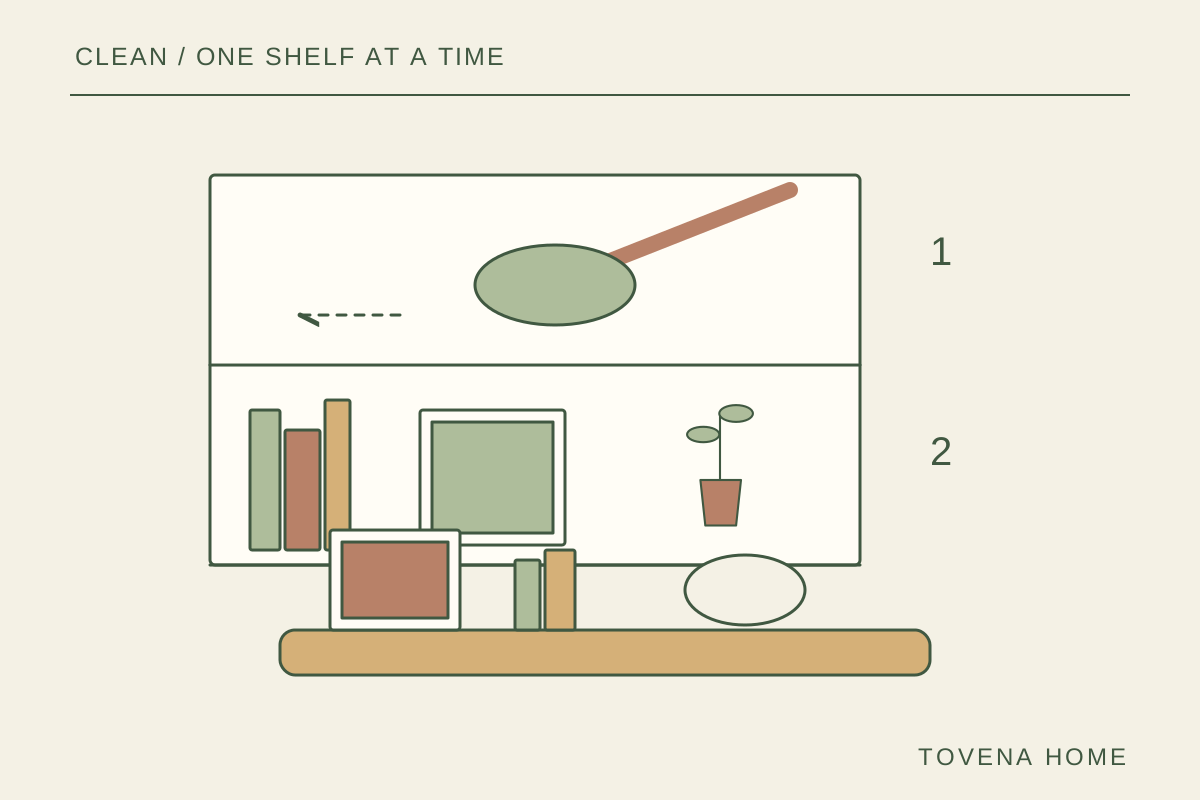
Clear a table or sturdy surface near the shelves and put down a suitable protective layer if needed. Move the objects from just one section onto it, keeping small groups together. Photograph complicated arrangements if you want to reproduce them. Do not balance a stack of books on the edge of a chair while reaching for the next item. Working in small sections takes less room and reduces the chance that the entire living room stays dismantled overnight.
Match the method to the material
Check the shelf finish and the object materials before choosing a cloth or cleaner. Dust a shelf with an appropriate soft tool, working carefully around fixings and edges. Do not spray a product across a collection of books, electronics and framed prints. Clean each object using guidance appropriate to it, and avoid damp treatment where it is unsuitable. Start with higher sections when you can reach them properly so falling dust does not undo work lower down.
Put back a little less
Return the objects only when the shelf and any cleaned items are ready for use. Leave room to get a cloth around them next time instead of packing everything tightly against the back. Separate the items that belong elsewhere and take them there immediately. If a shelf is too high to reach safely with your available equipment, leave it for a suitable setup rather than stretching from furniture. A display that is easy to maintain usually needs fewer pieces, not a more elaborate cleaning routine.