
Begin with the surface finish
Glazed ceramic and porcelain tile are generally easy to maintain, but textured tile and wide grout lines can hold debris that a flat pad passes over. Check the tile and grout manufacturer's care instructions before selecting a cleaner or adding water.
Natural stone is a separate category and may require a pH-neutral product made for that material. Do not assume a cleaner labeled for ordinary tile is suitable for stone.
Microfiber is the useful baseline
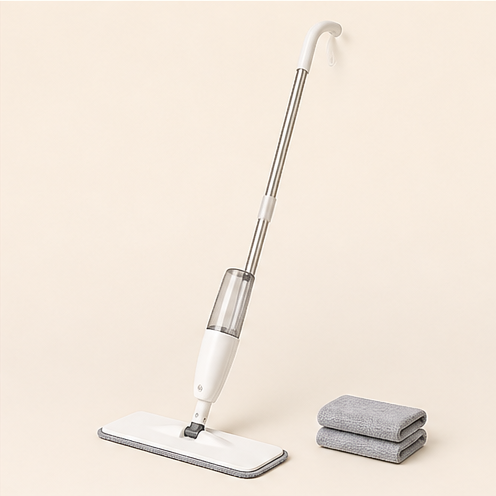
A washable microfiber pad or mop head can collect fine dust and spread cleaning solution evenly. For textured floors, a fuller mop head may reach low spots more effectively than a very flat pad.
Keep a clean replacement pad available. Once a pad is saturated with soil, continuing to mop can move residue from one section to another.
Give grout a separate pass
Mopping maintains the overall floor, but it may not remove buildup inside grout lines. Use a grout-safe brush and an approved cleaner for focused work, then rinse or wipe away the loosened residue.
Avoid aggressive tools that can scratch tile or damage grout sealer. Test an inconspicuous area first when you are unsure.
Control the final moisture
Wring the mop thoroughly and work in sections so the floor dries evenly. A spin mop provides adjustable wringing for larger areas, while a spray mop offers close control for small kitchens and entryways.