Empty one drawer, not the whole room
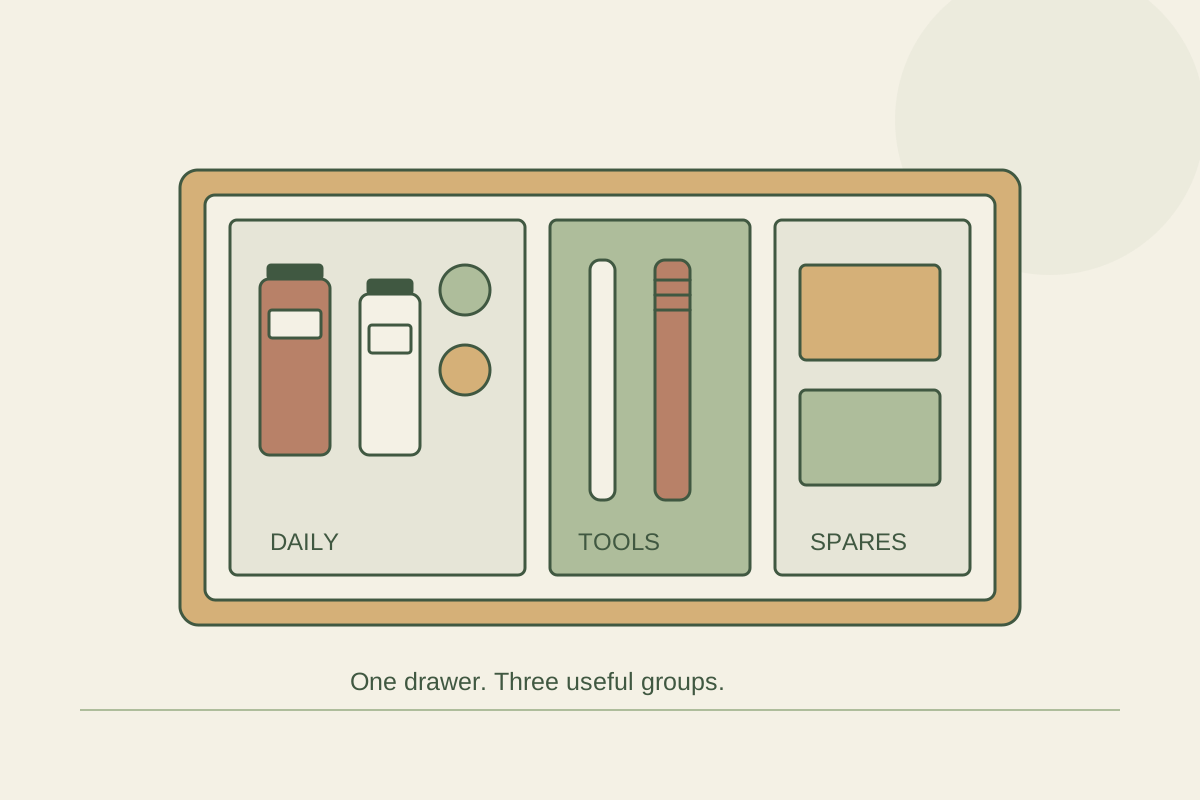
Put the contents on a clear surface and wipe the empty drawer according to its finish. Group items by the routine they support: daily grooming, occasional tools and unopened replacements. Check labels and condition, and follow appropriate disposal guidance for anything you no longer use. Do not guess that all products can be stored in a humid bathroom. Some need a different environment, so check their instructions before allocating a permanent compartment.
Build around the everyday reach
Place the daily group in the easiest section to see and reach. Use shallow containers for small items so you can identify them without rummaging. Leave room to lift a tool by its handle rather than pinching it against the side. A deep drawer may benefit from a removable upper tray, but only if accessing the lower layer remains convenient. Avoid creating a hidden basement for everything you have not decided how to use.
Check the full collection
Return items that were drying or being used elsewhere before deciding the drawer has spare capacity. Close it slowly to check tall containers and handles against the frame. Use temporary dividers first if you are uncertain about the layout. After several mornings, change the section that causes a repeated interruption rather than rebuilding the whole drawer. A working arrangement makes putting things back easy even when you are tired; it should not depend on precise decorative alignment.