Make a record before the old bulb disappears
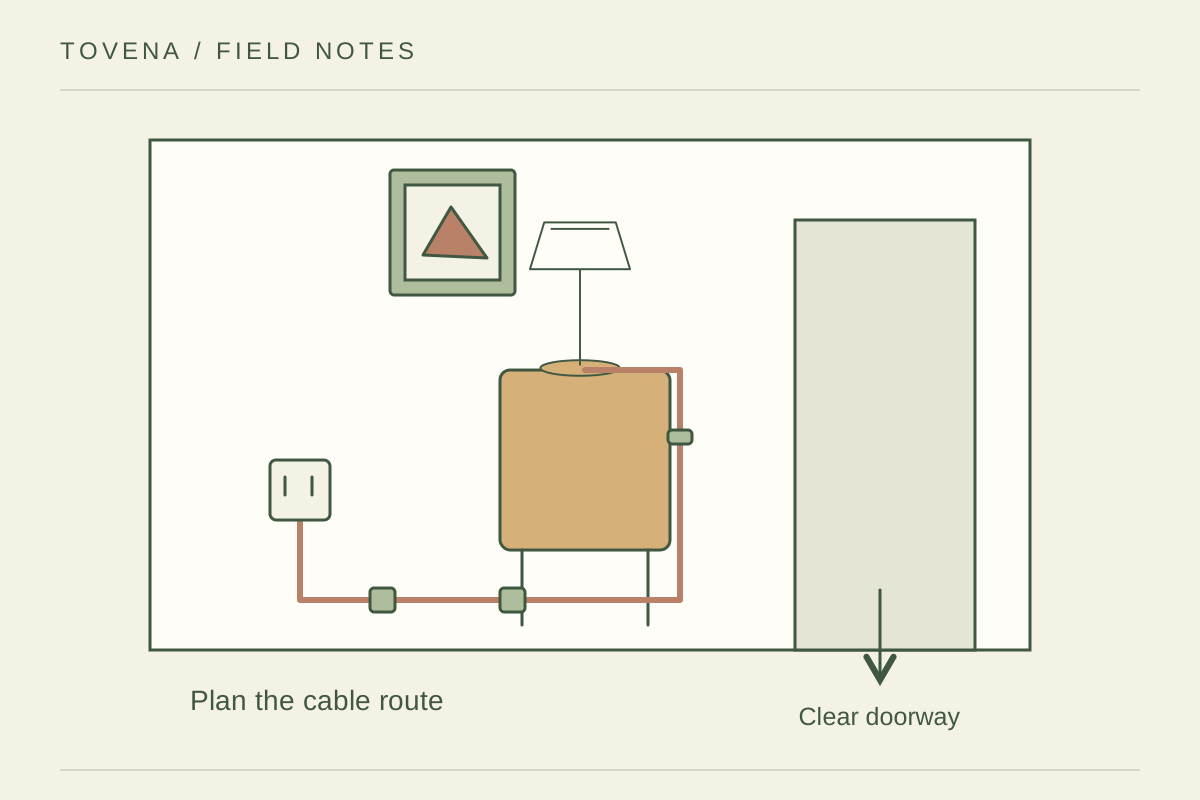
Photograph the bulb's markings and the fixture's label. Write down what you liked or disliked: a dim reading page, glare through a shade, a color that looked different from the neighboring lamp, or a control that did not behave as expected. These are separate issues, so name the problem before comparing products.
Switch off and follow the fixture's instructions for changing its bulb. If specifications are missing or unreadable, find the maker's manual or ask for suitable help rather than guessing from the socket's appearance.
Separate output from power
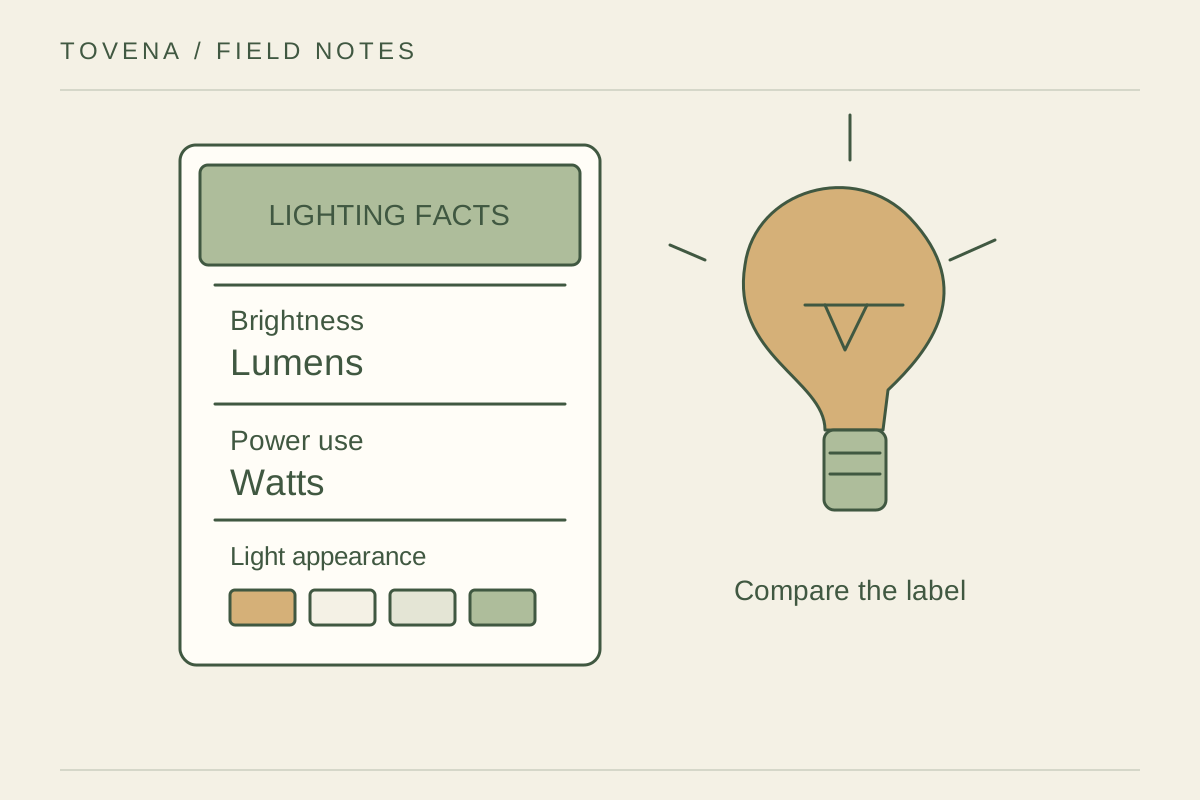
The Department of Energy recommends comparing lumens for the light output you want. The FTC explains that watts describe power use and that the Lighting Facts label separates brightness, energy, and light appearance. Its example compares about 800 lumens from a traditional 60-watt incandescent with similar output from an LED using about 9 watts; those figures illustrate a comparison, not a specification for every LED.
Start with the lumen figure of a bulb that worked in the same lamp. If you want a change, adjust that target deliberately rather than following the largest replacement number on the package.
Choose light appearance as its own decision
Read the light-appearance field instead of assuming a high-output bulb will also have the color you prefer. Take a photograph of an adjacent bulb's packaging or keep its model number so you can compare like with like. A photograph of a lit room is a poor shopping sample because the camera can change how its colors look.
For lamps usually switched on together, start with a coordinated choice and test it in the evening. For a separate task area, decide whether you want it to blend with the room or have a visibly different character.
Check the fixture conditions
Read base type, bulb dimensions, actual power rating, and the fixture's permitted specifications. Check the instructions for any enclosed fixture, dimmer, or special location. A bulb fitting into a socket is only the first part of that check. When compatibility is unclear, ask the bulb or fixture manufacturer using the exact model numbers.
Measure inside a tight shade if a physically larger bulb is under consideration. Look at the complete installed shape: the globe, neck, and base may occupy space differently even when two boxes describe a similar replacement category.
Test one location before buying the whole room
Try a small quantity in the actual fixture and keep the packaging until you have decided. Read an ordinary book, look at the screen you normally use, and check the lamp from the chair rather than only standing above it. Notice whether the bulb is exposed to view or reflected in a television.
Change one variable at a time so you know what helped. Once the result suits the task, save the model and relevant settings. A short record is more useful at the next replacement than trying to remember whether you bought the warm-looking box or the brighter-looking one.
Compare the options
| Field | Question | Do not confuse with |
|---|---|---|
| Lumens | How much light output? | Power used |
| Watts | How much power? | Brightness by itself |
| Light appearance | What color character? | Output level |
| Base + dimensions | Will it physically fit? | Complete compatibility |
| Use restrictions | Is this fixture suitable? | A similar-looking bulb |
Your checklist
0 / 6 completed
Common questions
Should I buy the same watt number as the old bulb?
Do not use that number alone to choose a replacement. Compare the light-output field first, then check actual power and the fixture's requirements. Similar brightness can come from different power use.
Will a brighter bulb solve a bad reading corner?
It may help, but first test the light's direction and whether your hand or chair blocks it. More output does not remove a reflection or put the light on the page.
Can I replace every bulb based on one successful test?
Use that test for matching fixtures and tasks, then check any exceptions individually. A different shade, enclosed fitting, control, or location can require a different choice even within the same room.